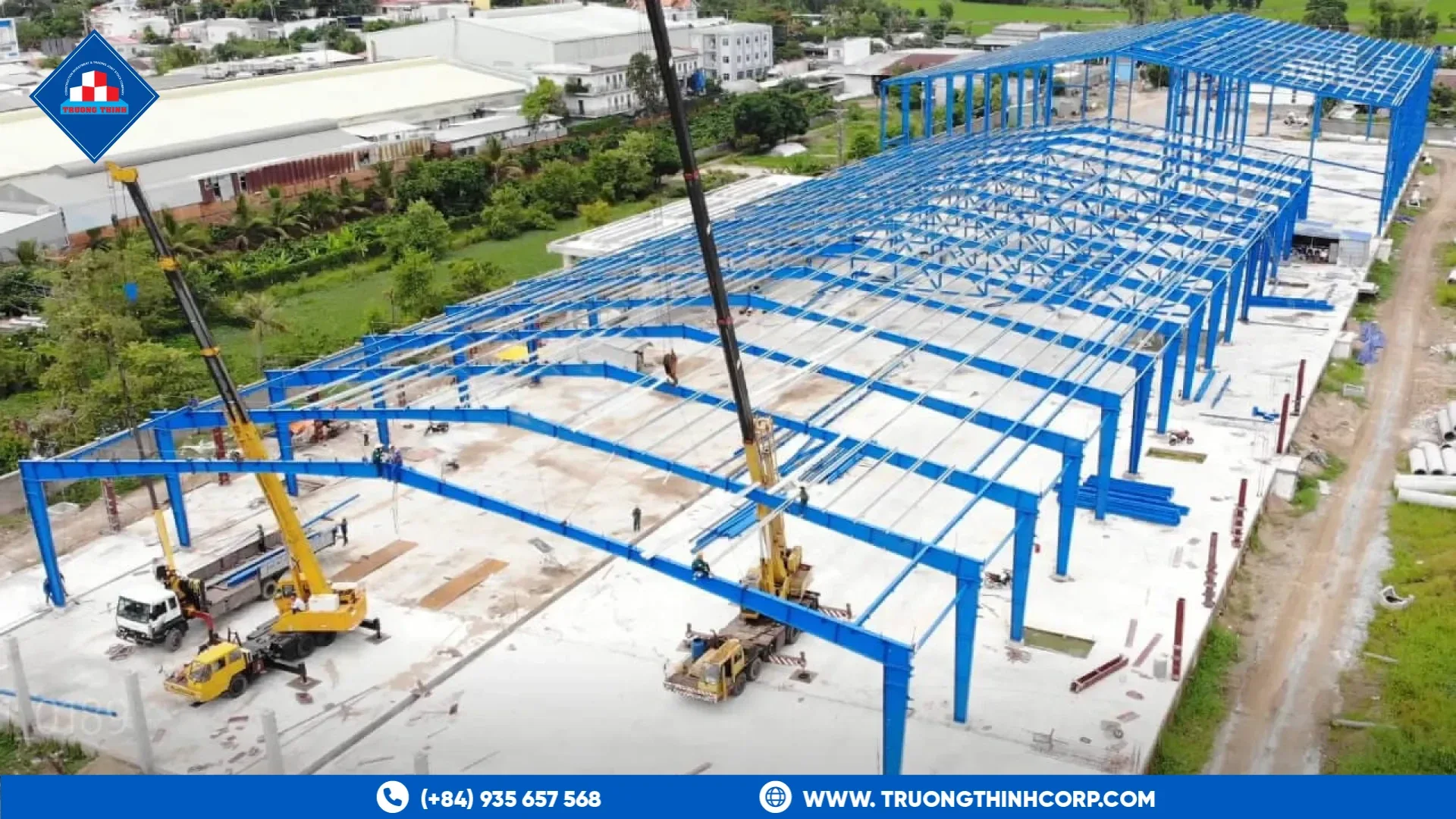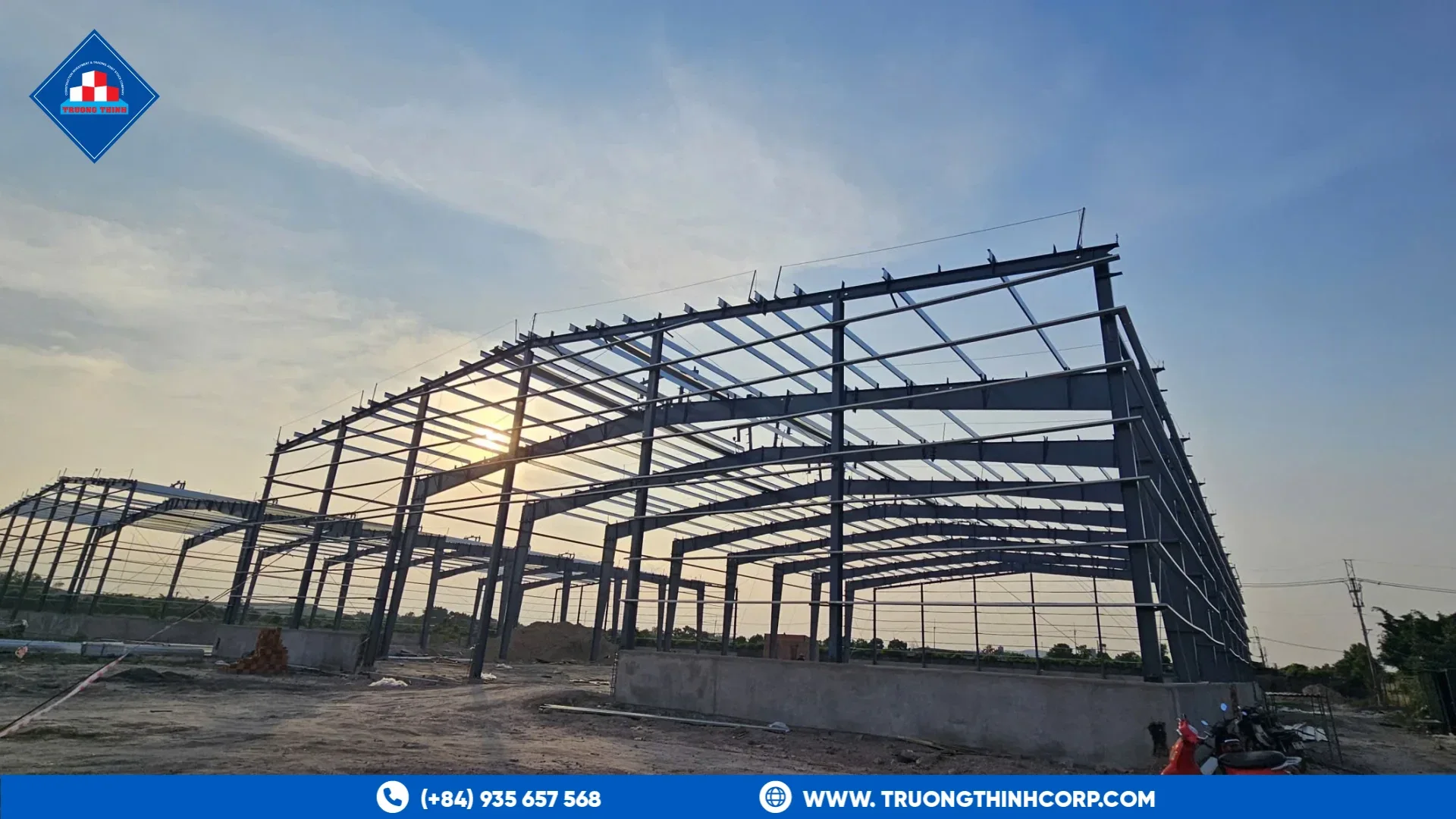


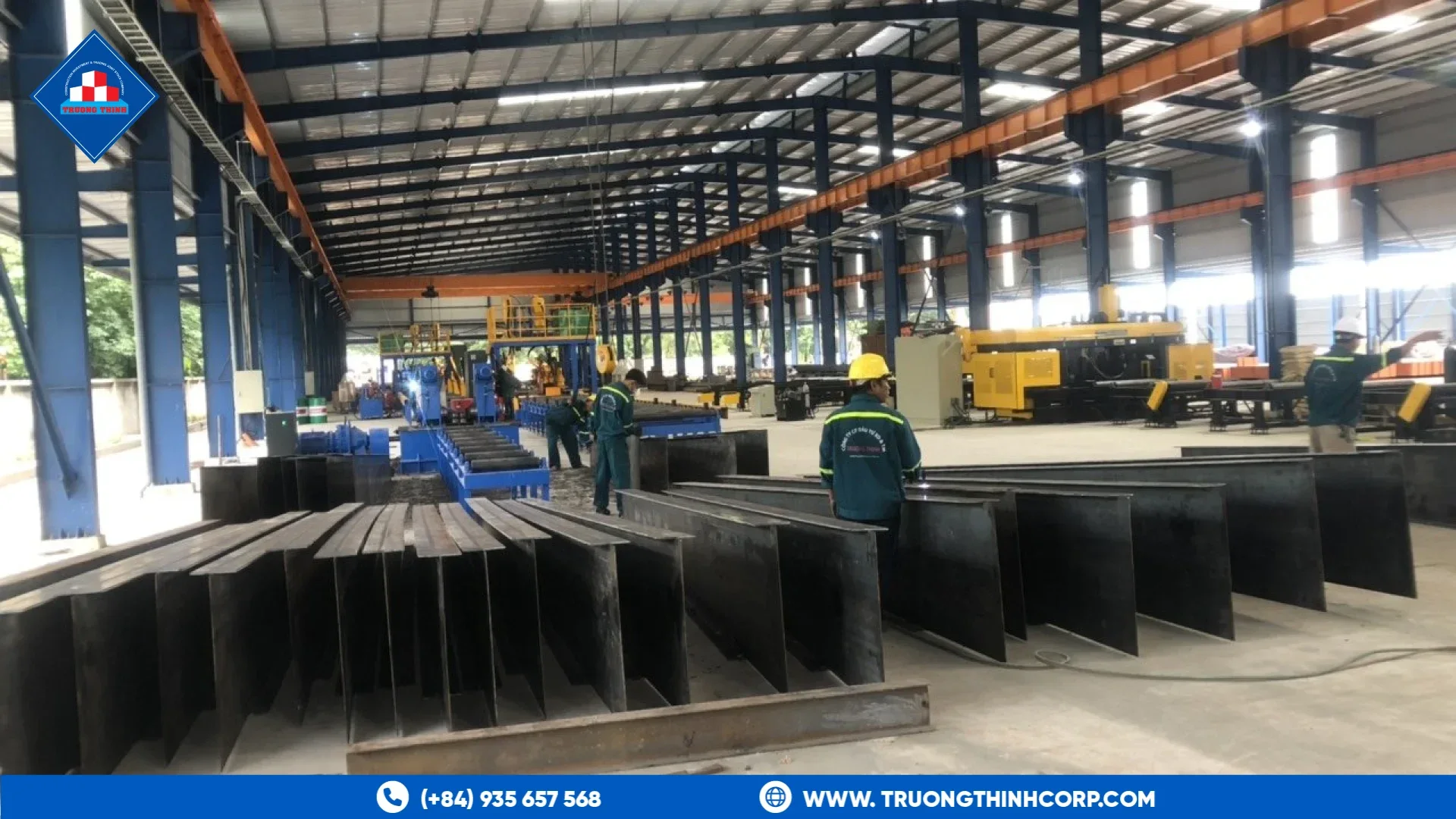
A plate girder is a large beam built up from steel plates, with a tall web and two wide flanges welded together. It is used where loads are heavy and spans are long, beyond what standard rolled sections can carry. Bridges, crane runways and long-span roofs use girders, and the principles are described in this overview of the plate girder.
How a girder carries load
The flanges carry bending as compression in the top flange and tension in the bottom flange. The web carries shear, the force that tries to slide one part of the beam past the other. A tall web gives a large lever arm between the flanges, which is why girders are deep. Because the web is thin compared with its height, it can buckle, so designers add stiffeners.
Parts of a plate girder
- Flanges. Plates at the top and bottom that resist bending.
- Web. The vertical plate that resists shear and connects the flanges.
- Stiffeners. Plates welded to the web to stop it from buckling and to carry concentrated loads at supports.
- Splices. Joints that join sections when the girder is too long to move in one piece.
- Bearing and connection details at the supports.
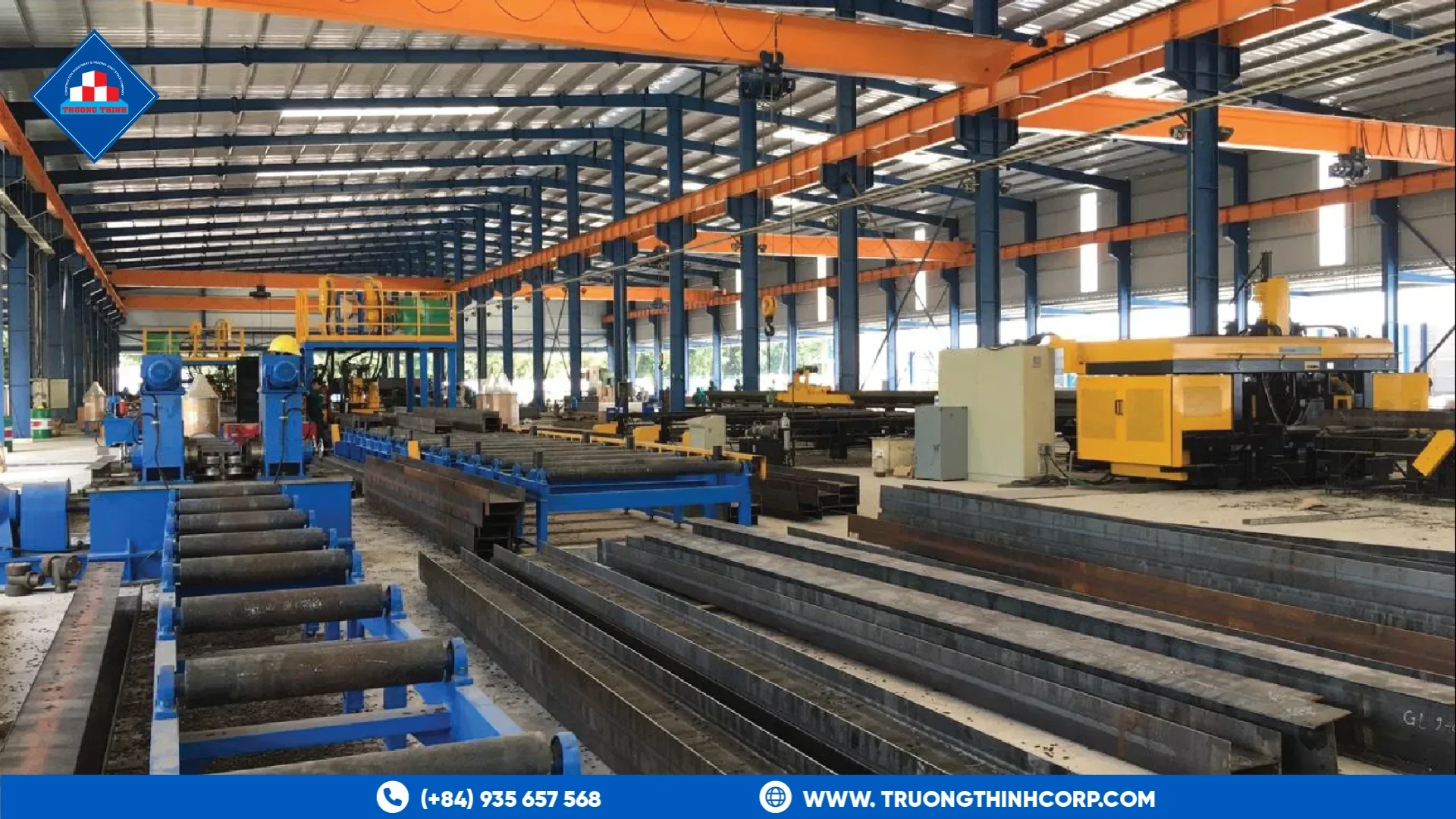
Where girders are used
Girders suit long spans with heavy loads: bridges, large industrial floors, crane girders and transfer beams. They also allow the flange and web to change along the length, saving steel where the load is low. Our guide to steel beam deflection explains why depth matters for stiffness, and our guide to crane runway beams and crane loads shows a typical heavy use.
Fabrication points for a plate girder
- Plate cutting. Accurate lengths, cambers and edge preparation.
- Fit-up. Tight contact between web and flange before welding.
- Welding. A qualified procedure, with a sequence that limits distortion.
- Stiffeners. Positioned and welded to the drawing.
- Straightening and camber. Corrected after welding and measured.
- Inspection. Visual checks and non-destructive testing of key welds.
Long welds heat the plates and shrink them, so distortion control is the main challenge. Our guides to welding procedure specifications and to non-destructive testing for steel welds show how quality is controlled.
Transport and erection
Girders are long and heavy, so transport limits decide where to splice them. Splice joints must align and carry the load. Our guide to steel truss camber and transport splits covers similar points for trusses. Lifting plans are needed for heavy pieces, as explained in steel erection safety.
Design checks that matter
Besides bending and shear, designers check the flange for local buckling, the web for buckling under concentrated loads, the welds between web and flange, and the girder for lateral stability between supports. These checks decide the plate thicknesses and the stiffener layout, and they are the reason a large girder is designed individually and not selected from a table.
What to ask a fabricator
Ask about the plate sizes and thicknesses the factory can handle, the welding equipment, the straightening capacity, the inspection plan and the experience with girders. At Truong Thinh, built-up sections are fabricated from plate, and our page on steel beam fabrication describes the process.
If your project needs large built-up beams, send the drawings, the spans and the loads, and request a fabrication quotation from our engineering team.
Frequently Asked Questions
Is a plate girder the same as a built-up H-beam?
They are built the same way, from welded plates. The term girder usually refers to larger members with tall webs and stiffeners.
Why does a girder need stiffeners?
A tall, thin web can buckle under shear and local loads. Stiffeners keep it stable.
Can a girder be tapered?
Yes. Varying the depth along the length saves steel where the forces are smaller.
Free quotation · Reply within 24 working hours
Request a quotation for plate girder
Tell us about your steel structure project. Our engineering and sales team will reply with a tailored proposal, usually within 24 working hours.
Need an answer faster? Call our engineers directly.
Mon–Fri 8:00–17:30 · Sat 8:00–12:00 (GMT+7)