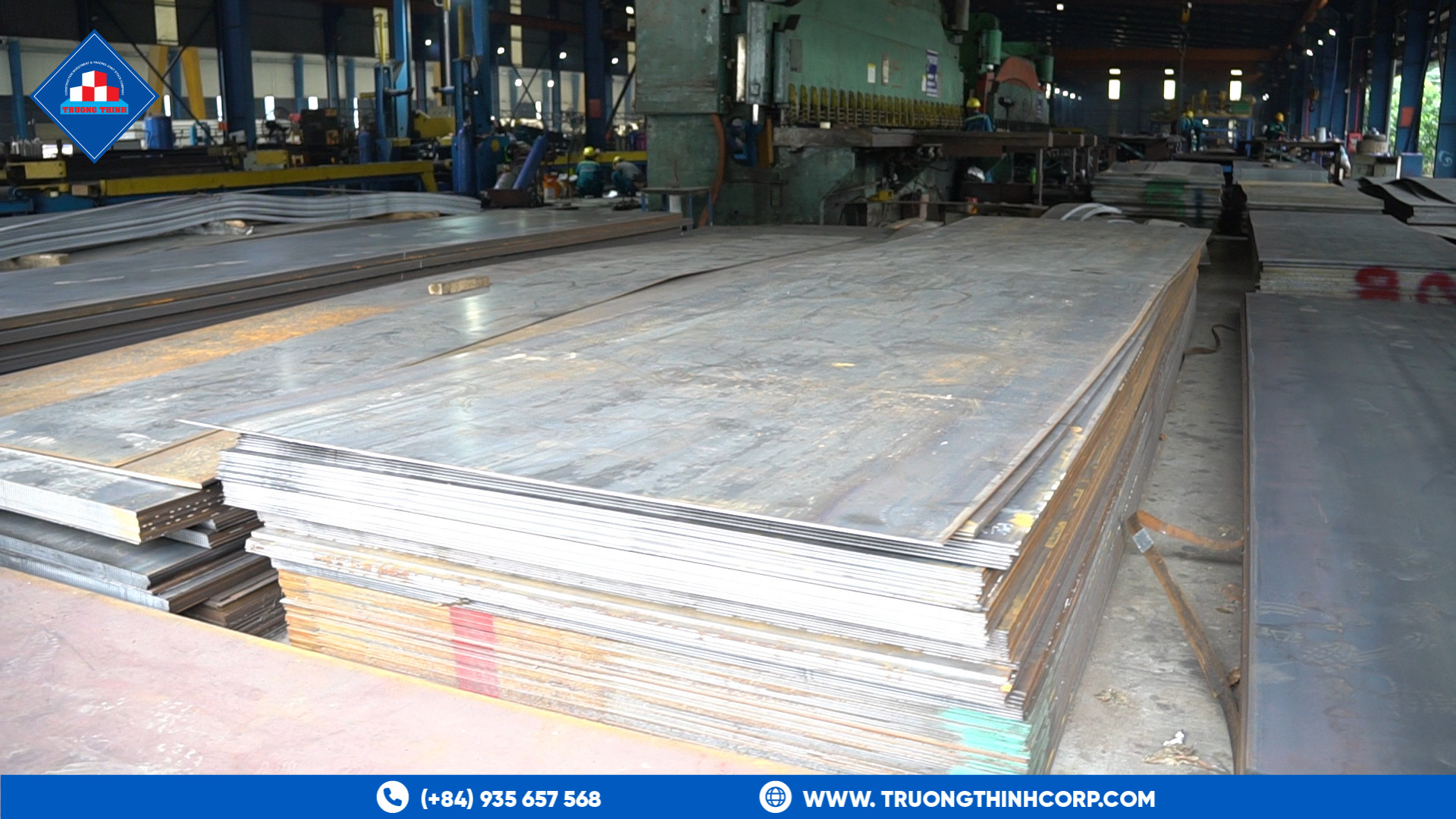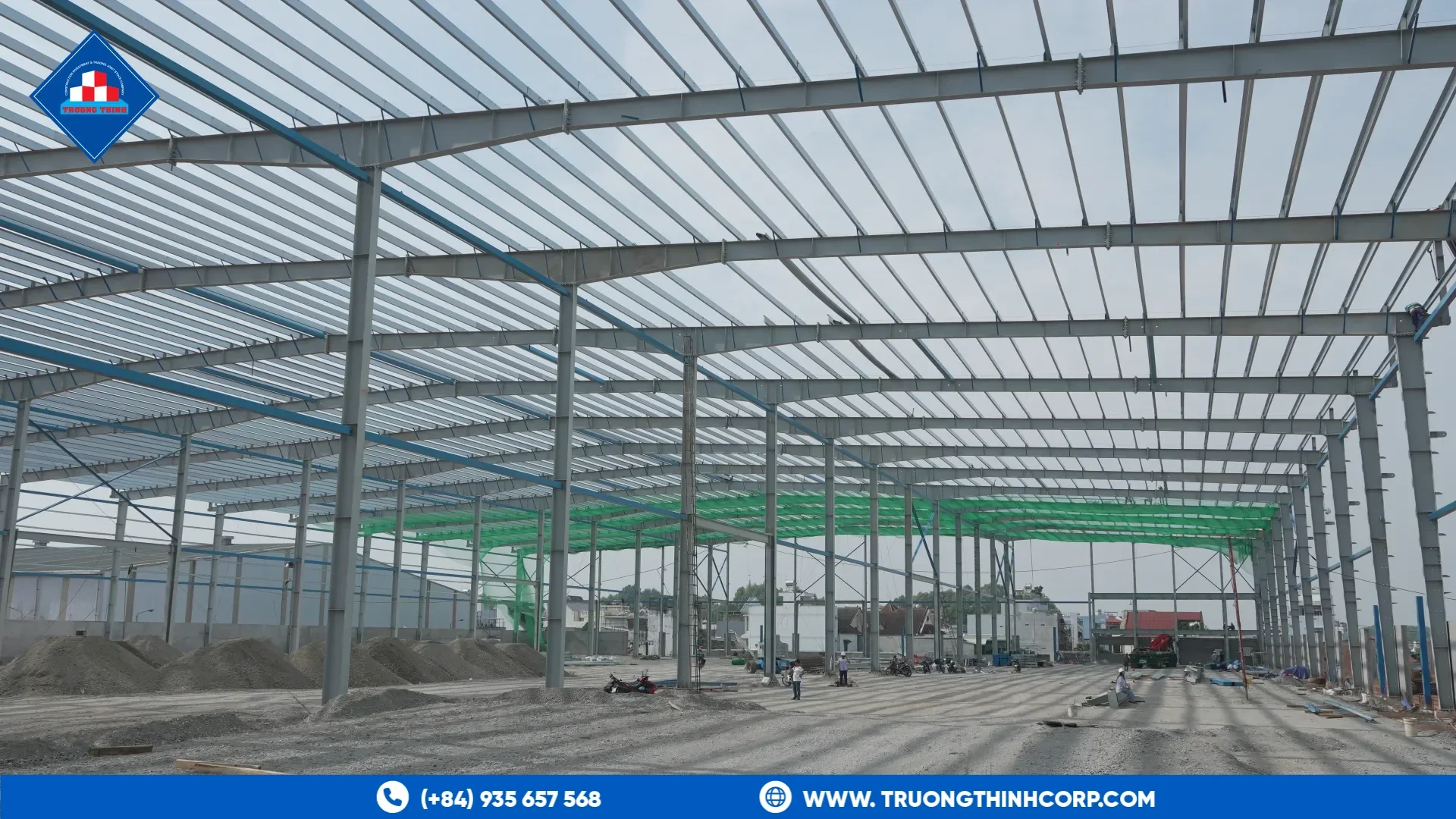


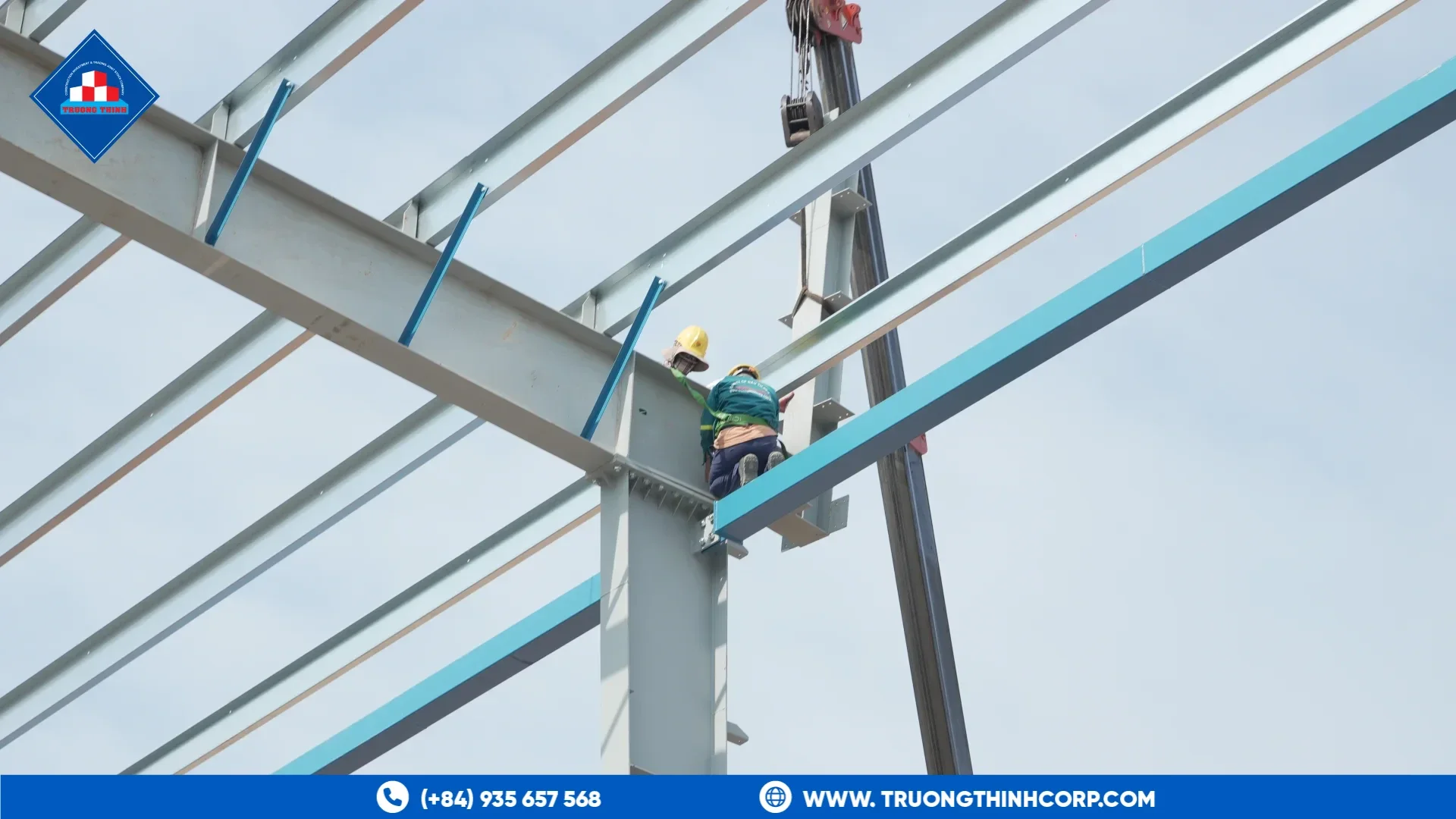
Steel truss camber is a small upward curve built into a truss so that it sits level under load. The truss is also divided into pieces that fit on a truck. Both decisions are made in the shop drawings, and both decide whether a long-span roof truss fits together on site without rework.
What steel truss camber is
Every truss deflects under its own weight and the roof load. If the truss is built perfectly straight, it ends up with a visible sag. Camber builds an opposite curve into the fabricated truss, so that under the design load it settles close to level. The principle follows from how trusses carry loads, summarized in this note on how trusses carry loads.
The engineer states the camber, usually as a movement at midspan. The fabricator builds it into the shop drawings and checks it on the jig before the truss leaves the factory.
How the fabricator builds it
Trusses are assembled on a jig that holds the chords and web members in position. Camber is introduced by adjusting the geometry of the chords, and the joints are then welded in a planned sequence to control distortion. After welding, the truss is measured for span, depth and camber, and out-of-tolerance trusses are corrected before coating.
Welding sequence matters because heat shrinks the steel. A joint welded too early or too heavily can pull the truss out of shape. Our guide to bolted and welded connections explains how the choice of connection affects fabrication.
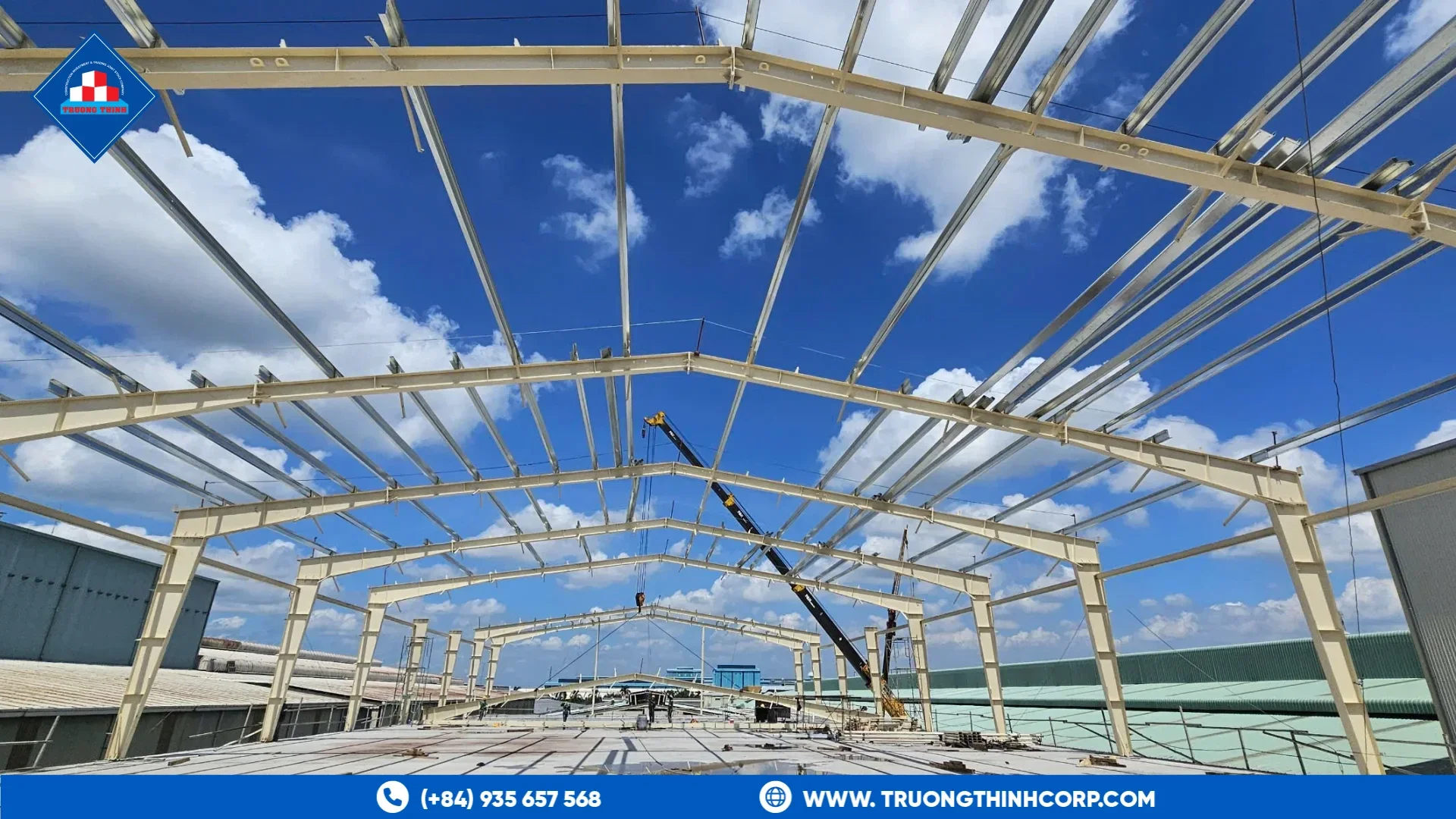
Transport splits
A long-span truss rarely travels in one piece. The length and the width of the load are limited by the truck, the route and the permits. The fabricator divides the truss into sections that can be moved, and the sections are joined on site with bolted splices or site welds.
Where to place the split depends on:
- The transport limits on the route from the factory to the site
- The crane capacity and the lifting points on site
- The location of the lowest forces in the truss, so splices carry little load
- The need to keep camber continuous across the splice
Splice plates, bolt holes and match marks must be accurate. If two halves do not meet at the correct height, the camber is lost at the joint.
Checks before the trusses leave the factory
- The span, the depth and the camber measured against the drawing
- Match marks on both sides of every splice
- Splice plates and bolts packed with the correct truss
- Coating complete and damaged areas repaired
- Lifting points marked and strong enough for the lift
Fit-up on site is much faster when these five checks, including the steel truss camber reading, are signed off at the shop. Our guide to erection sequence and temporary stability covers what happens when the truss reaches the crane.
Related guides
For the choice between trusses and beams, see steel truss or steel beam for a long-span roof. Our page on steel truss fabrication describes how we fabricate long-span trusses.
If your roof uses long-span trusses, share the span, the roof load and the delivery route, and discuss your structural design requirements with our engineering team.
Frequently Asked Questions
How much camber does a truss need?
The engineer sets it from the design loads and the span. Do not copy a value from another project.
Can a truss be delivered in one piece?
Only for short spans or where the route allows. Long trusses are normally split for transport and joined on site.
Does camber disappear when the roof is loaded?
The truss is designed to settle close to level under the design load. Fixed loads may take time to appear, so measure after the full roof load is on.
Free quotation · Reply within 24 working hours
Request a quotation for steel truss camber
Sourcing steel structures from Vietnam? Send your drawings or tonnage, destination and target schedule, and we will return an itemised export quotation, usually within 24 working hours.
Need an answer faster? Call our engineers directly.
Mon–Fri 8:00–17:30 · Sat 8:00–12:00 (GMT+7)