

Noise control in steel buildings is a design task, not an afterthought. Light steel roofs and walls can be loud in heavy rain, and machinery noise can escape through thin cladding. Both affect workers, neighbors and product quality. Planning insulation, layout and fixings early gives better results than adding fixes after complaints.
Where noise comes from
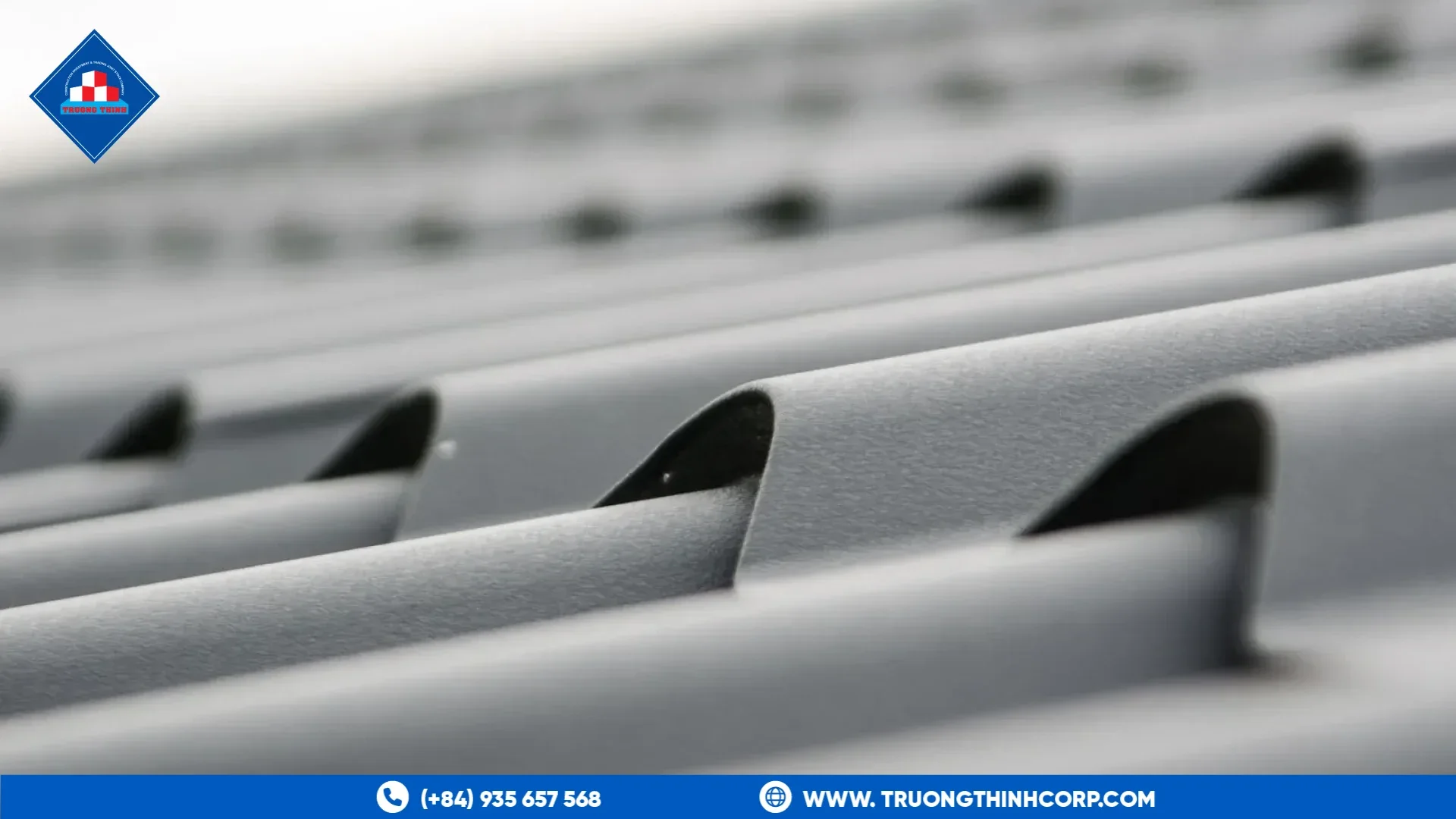
- Rain on the roof. A single steel sheet rings in rain like a drum.
- Machines and processes. Fans, compressors, presses and conveyors.
- Impacts and traffic. Forklifts, doors and loading.
- Vibration through the structure. Machines shake the frame, and the frame radiates sound.
- Leaks and gaps. Sound escapes through openings, vents and poor seals.
The basics of reducing sound are described in this overview of noise control.
Noise control in steel buildings: roof and wall solutions
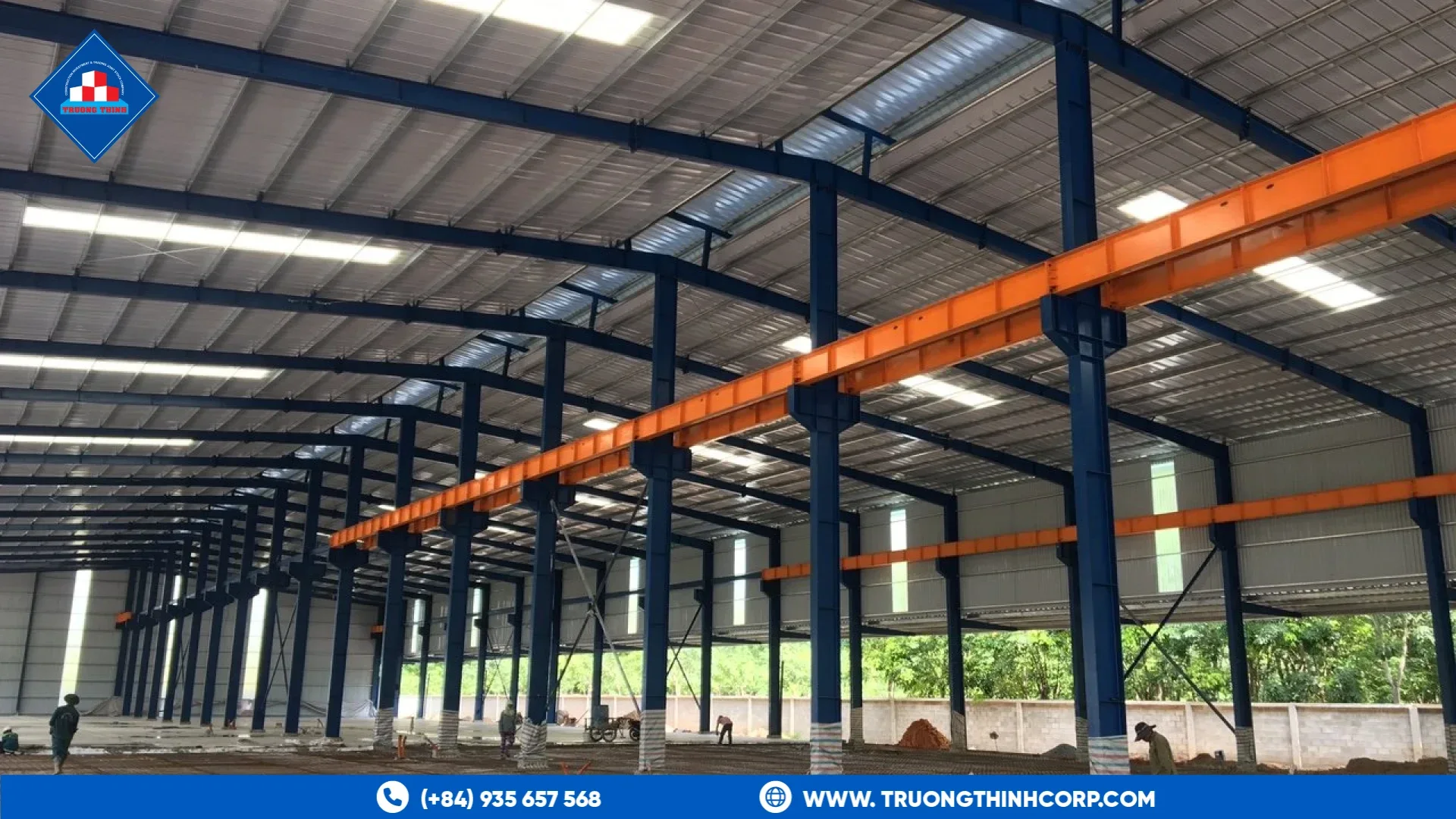
- Insulation under single-skin sheets absorbs rain noise and reduces ringing.
- Insulated metal panels have a core that damps sound. See insulated metal panels vs single-skin sheets.
- Liner sheets with absorbent material inside the wall lower reflected sound.
- Good fixings and sealing stop rattles and leaks, as covered in roof cladding profiles, insulation and fixings.
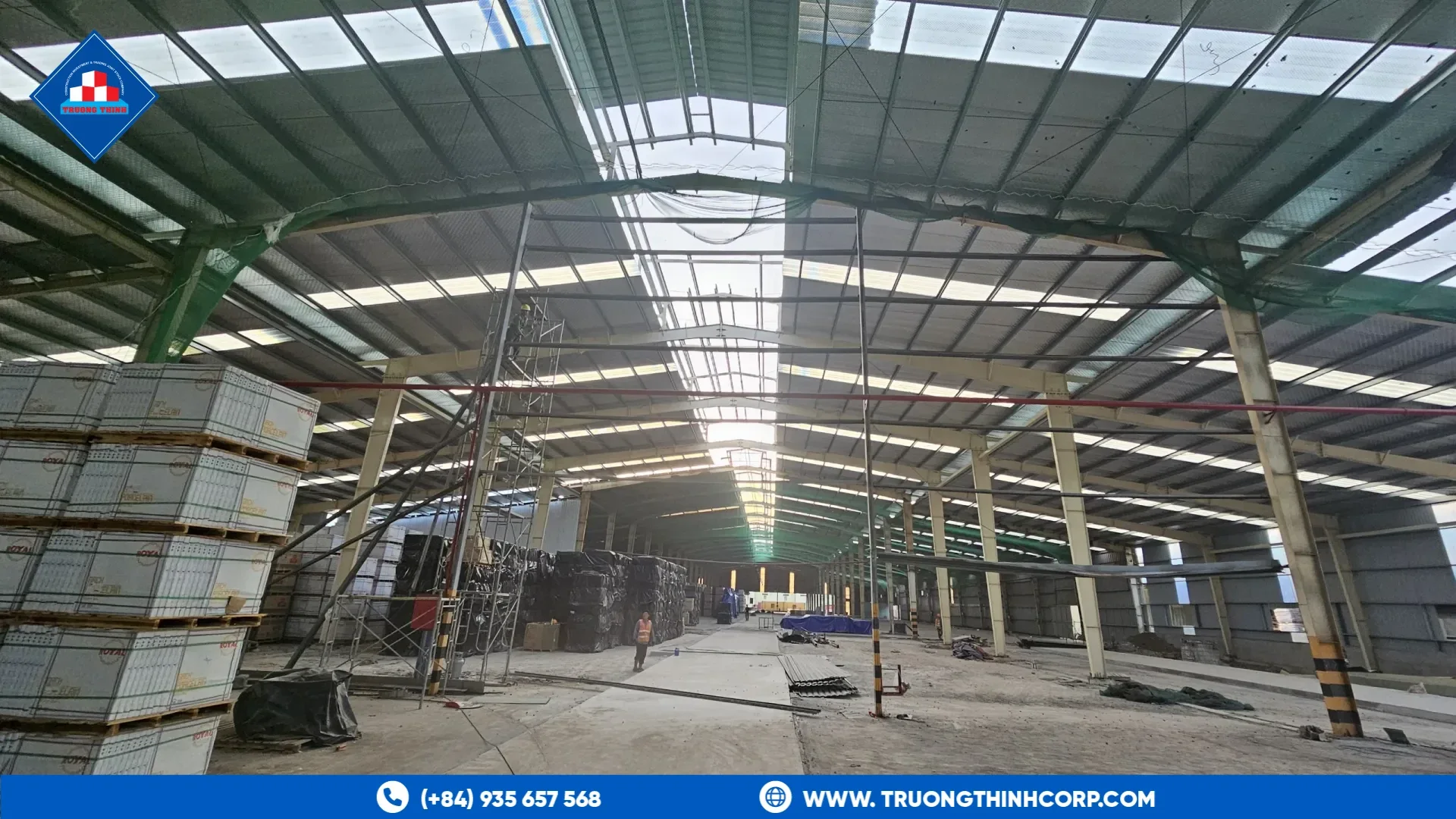
Machinery noise and isolation
Heavy or noisy equipment should be mounted on isolators and on bases separate from the frame where practical. Fans and compressors can be placed in enclosures or on a separate pad. Vibration passing into the structure can make the whole building hum. Our guide to floor vibration in steel buildings explains how vibration travels.
Layout choices
Place noisy processes away from offices and from the site boundary. Use storage areas or service zones as buffers, and keep openings away from neighbors. Plan the layout with noise in mind, as described in steel factory layout.
Openings and ventilation
Vents, louvers and doors let sound out. Use acoustic louvers or baffles where noise limits are strict, and keep door gaps small. Ventilation needs to remain effective, so balance both. See steel factory roof ventilation and daylight.
Checking the result
After handover, measure the sound levels inside and at the boundary during normal operation and during rain, and compare them with the target. If the level is too high, find the main path before adding materials: a loud fan or an open door may matter more than the roof. Fixing the biggest source first gives the best return and keeps noise control in steel buildings affordable.
Targets and rules
Noise limits for workplaces and boundaries come from local regulations. Set a target early, estimate the sound levels and check after construction. A short measurement survey after handover shows whether the building meets the target.
What to tell the designer
- The equipment and its noise levels
- The distance to neighbors and the local limits
- The use of each area, such as offices near the plant
- The roof and wall system you prefer
- Any special needs, such as recording or testing rooms
State these when you request quotations for an industrial steel building, so that acoustic features are priced in the first quotation.
Retrofit options
If noise is a problem in an existing building, options include adding insulation or a liner, replacing single skins with panels, sealing gaps, isolating machines and adding enclosures. Check the structure for added weight first.
If noise is a concern in your plant or neighborhood, share the equipment list and the site, and discuss your structural design requirements with our engineering team.
Frequently Asked Questions
Why is a steel roof so loud in rain?
A thin steel sheet vibrates under raindrops and radiates sound. Insulation or panels damp the vibration.
Do insulated panels remove all noise?
No, but they reduce rain noise and airborne sound. Gaps and openings can still let sound through.
Can I add insulation to an existing roof?
Often yes, after checking the structure and the fixings for the extra weight and the condensation risk.
Free quotation · Reply within 24 working hours
Request a quotation for noise control in steel buildings
Tell us about your steel structure project. Our engineering and sales team will reply with a tailored proposal, usually within 24 working hours.
Need an answer faster? Call our engineers directly.
Mon–Fri 8:00–17:30 · Sat 8:00–12:00 (GMT+7)