

Crane girder fatigue is the cracking of steel under repeated loading, even when each load is well below the strength of the beam. Overhead cranes run thousands of cycles a year, so runway girders can see millions over their life. Fatigue is the reason crane buildings need extra care in design, fabrication and inspection.
What fatigue is
Metal can crack if a stress is applied and removed many times. Each cycle causes tiny damage, usually at a notch or a weld, and a crack can grow until the section fails. The effect is described in this overview of material fatigue. The stress range and the number of cycles decide the risk, not just the peak load.
Why cranes are a fatigue case
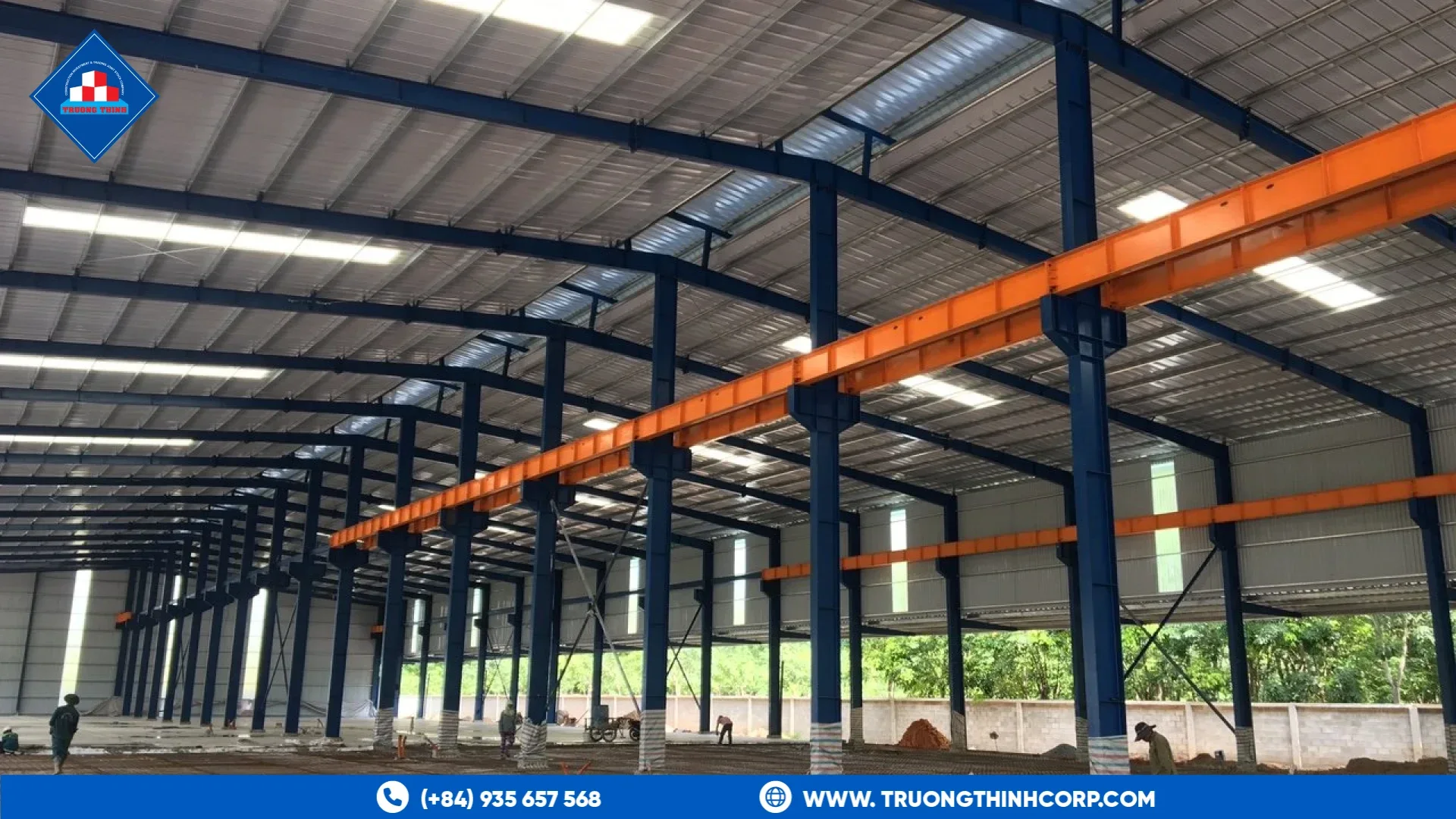
A crane wheel passes along the runway beam, loading each point many times a day. The loads include the weight lifted, the crane itself, and the lateral and braking forces. Our guide to crane runway beams and crane loads explains these loads. The crane's duty class, which describes how often it lifts and how close to its capacity, sets the number of cycles for the design.
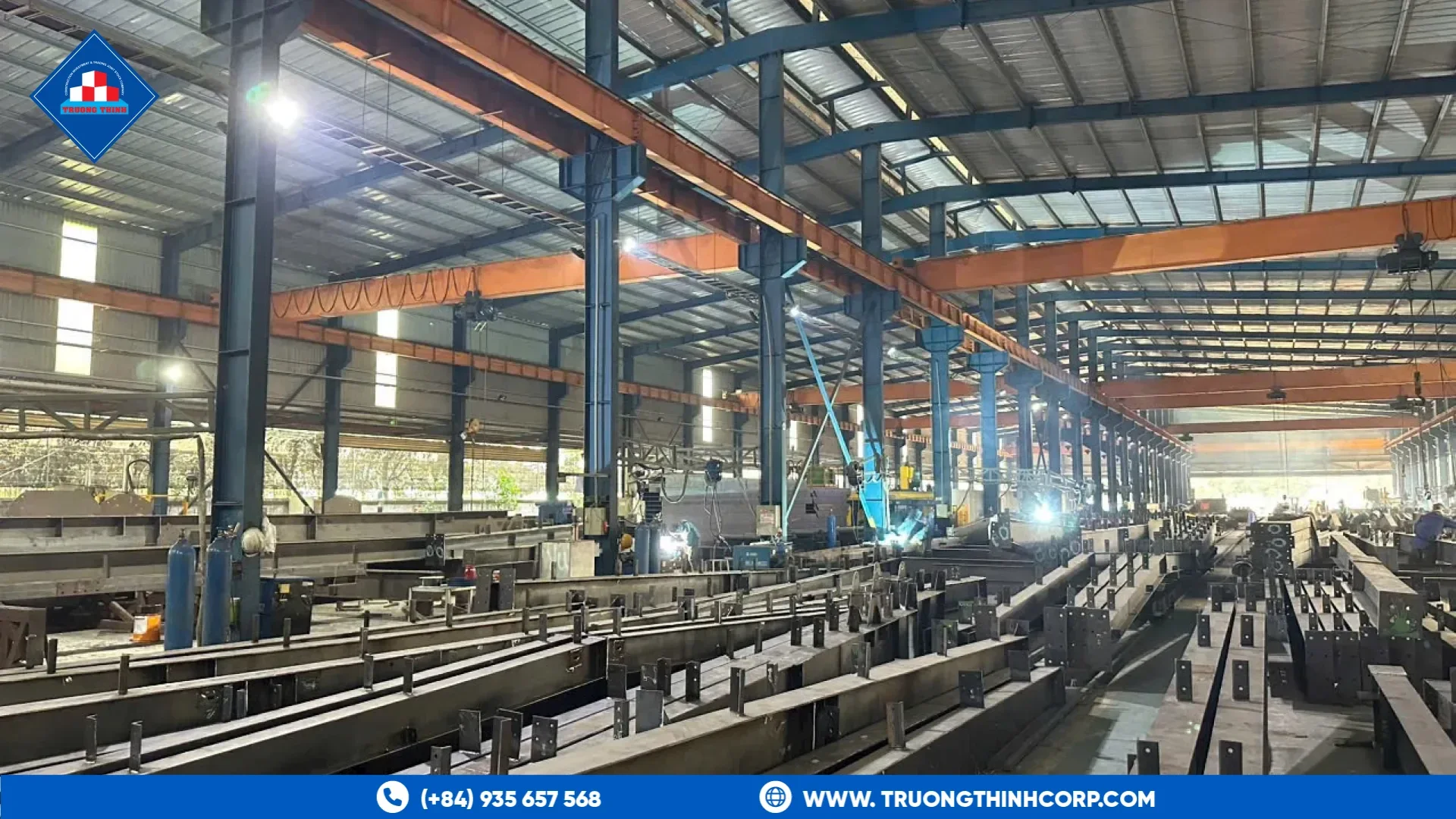
Where cracks start
Cracks usually start at details with stress concentration:
- The weld between the web and the top flange, under the wheel load
- The ends of stiffener welds
- Attachments welded to the tension flange
- Bolt holes and cut-outs in highly stressed zones
- Poor welds with undercut or lack of fusion
Our guide to welding defects in structural steel shows why weld quality matters here.
Design checks for crane girder fatigue
The designer chooses details with good fatigue behavior, checks the stress range at each detail against allowable values for the number of cycles and avoids attachments on tension flanges. Continuous welds, smooth transitions and proper stiffeners help. Fatigue limits come from the design code named in the project. See design codes for steel structures in Vietnam.
Fabrication points
- Weld quality. Qualified procedures and welders, and inspection of critical welds. See welding procedure specifications.
- Testing. Non-destructive testing of key welds. See non-destructive testing for steel welds.
- Surface finish. Grind weld ends and remove notches where the design requires it.
- Straightness and alignment. Rails and girders aligned within tolerance.
Installation and operation
Rail alignment, rail fixings and crane operation all affect fatigue. Misaligned rails and rough running cause extra stress. Keep operating records and inspect regularly, since early cracks are small and can be repaired. Overloading the crane accelerates damage.
Inspection routine
- Visual checks of welds, flanges and stiffeners at set intervals
- Checks of rail wear and alignment
- Testing of suspect locations
- Repair of cracks by a controlled procedure
- Records of results and repairs
Our guide to maintaining steel structures lists general checks.
What to tell the designer
Give the crane capacity, span, duty class, expected number of lifts, speed and any special loads. If the plant may change, say so. When planning a steel structure factory with cranes, state the duty at the start. Our design brief guide includes crane questions.
If your plant uses overhead cranes, share the crane data and the duty class, and discuss your structural design requirements with our engineering team.
Frequently Asked Questions
Can fatigue happen at low stress?
Yes. Repeated stress cycles can crack steel even when the stress is well below the yield strength.
Does a higher grade steel fix fatigue?
Not much. Fatigue life depends mostly on the detail and the stress range, not on the steel grade.
How often should crane girders be inspected?
It depends on the duty class and the code. Set the interval with the engineer and record every inspection.
Free quotation · Reply within 24 working hours
Request a quotation for crane girder fatigue
Tell us about your steel structure project. Our engineering and sales team will reply with a tailored proposal, usually within 24 working hours.
Need an answer faster? Call our engineers directly.
Mon–Fri 8:00–17:30 · Sat 8:00–12:00 (GMT+7)