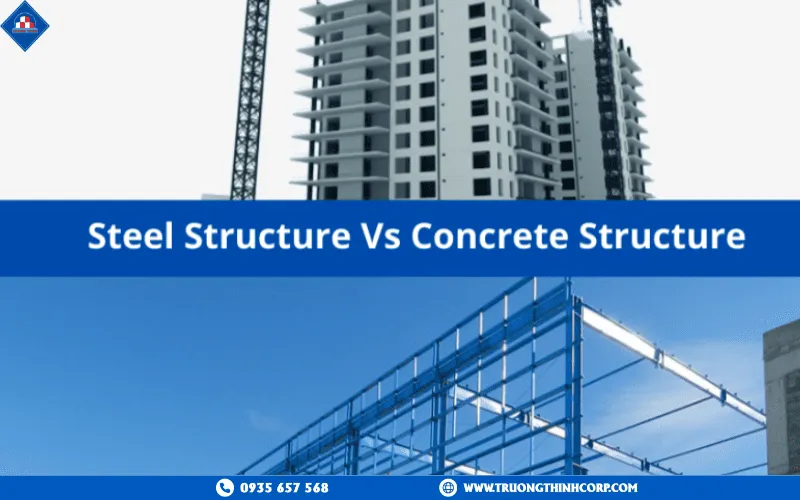


Steel and concrete aren’t competing for the same job — steel wins on strength-to-weight and speed, concrete wins on fire resistance and per-cubic-meter cost, and most buildings above a few stories end up using both. The real decision isn’t “which material,” it’s “which material for which part of this specific structure.”
1. Where each material’s mechanical strength actually matters
Structural strength isn’t one number — steel and concrete excel at opposite load types, which is exactly why reinforced concrete exists as a hybrid.
1.1 Tensile strength versus compressive strength
Steel’s tensile strength and strength-to-weight ratio let it span further with less material — a steel beam can carry the same load as a much heavier concrete one, which is why long, column-free spans favor steel. Concrete’s real strength is compressive — it resists crushing loads well but is weak in tension on its own, which is precisely why rebar (steel again) gets embedded inside it.
1.2 Fire resistance is concrete’s real structural advantage
Concrete’s mass gives it inherent fire resistance — typical ratings reach 2–4 hours without any added treatment. Bare structural steel loses a significant share of its yield strength above roughly 500°C and needs intumescent coating or fire-rated board to hit the same rating, which is an added cost and design step concrete doesn’t require.
1.3 Ductility under seismic and dynamic load
Steel’s ductility — its ability to deform substantially before fracturing — lets a steel frame absorb seismic energy through controlled yielding rather than sudden failure. Unreinforced concrete is comparatively brittle and needs specific seismic detailing (adequate rebar confinement, ductile connections) to achieve a similar margin of safety in earthquake-prone zones.
1.4 Load path and space efficiency
Steel’s lower self-weight reduces the load reaching the foundation, which is what makes wide-open floor plates for factories or showrooms practical. Concrete’s mass works in its favor where sound insulation and vibration damping matter more than open space. Both approaches have to comply with TCVN in Vietnam or Eurocode internationally — the standards don’t favor one material, the application does.
2. Where the real cost difference comes from
Material price per ton is the smallest part of the cost comparison — schedule and foundation size usually decide it.
2.1 Material cost versus installed cost
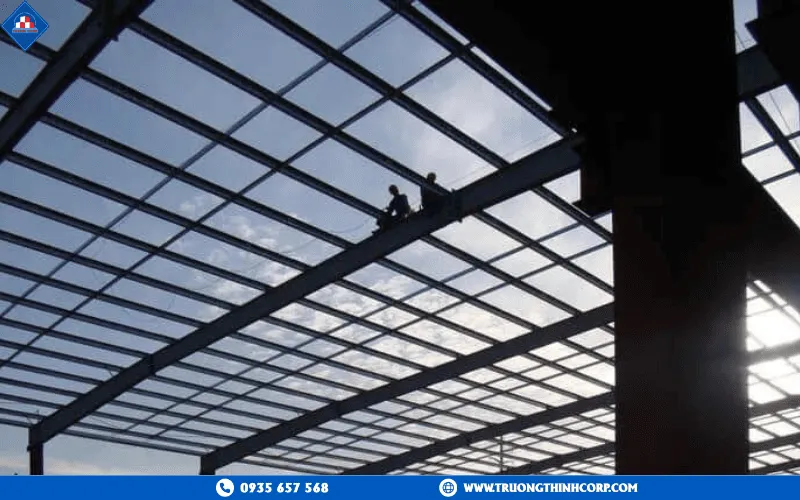
Steel costs more per ton, but its prefabricated nature cuts labor and formwork spending — costs that concrete carries on every project. Concrete is cheaper by volume but needs more manpower, curing time, and finishing labor, which stretches the schedule and adds cost that doesn’t show up on the material invoice.
2.2 Schedule is where steel usually wins outright
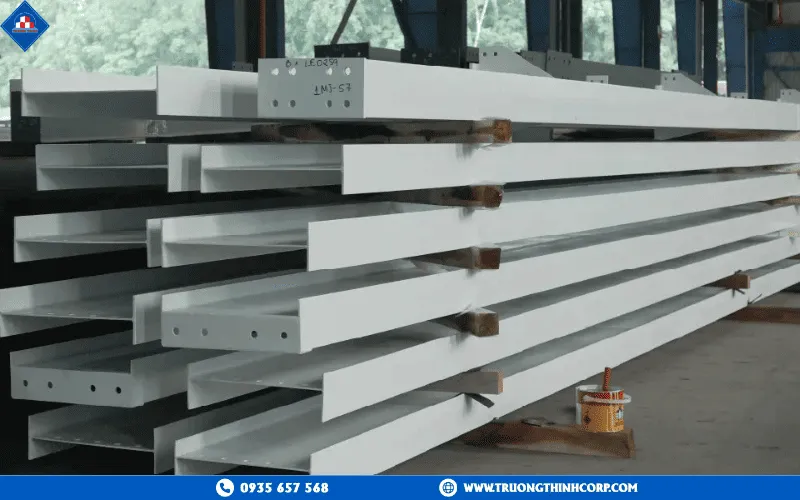
Steel members arrive prefabricated and go up on a repeatable bolt-and-lift sequence; concrete requires sequential casting and curing between pours. Truong Thinh Corp’s 25,000 m² factory and 1,200-ton monthly capacity means fabrication runs in parallel with site preparation, rather than waiting on it — a scheduling advantage concrete’s wet-cure process can’t replicate.
2.3 Maintenance cost over the building’s life
Steel needs periodic repainting and corrosion inspection; concrete needs crack monitoring and waterproofing renewal, particularly at construction joints. Neither is maintenance-free — Truong Thinh Corp’s ISO 9001:2015-managed fabrication is built around minimizing the steel side of that equation through correct coating specification up front.
2.4 Real numbers: a 5-story, 3,000 m² commercial building
For a typical mid-rise commercial project of this scale:
- Steel structure: approximately USD 420–480 per m² (including protective coating)
- Concrete structure: approximately USD 350–400 per m² (including formwork and curing)
Steel’s higher per-square-meter figure is usually offset by faster completion and a lighter foundation — the total project economics often favor steel even though the line-item material cost doesn’t.
3. How each material actually ages
Both materials reach 50+ year service lives when specified and maintained correctly — they just fail differently when they aren’t.
3.1 Corrosion versus rebar corrosion
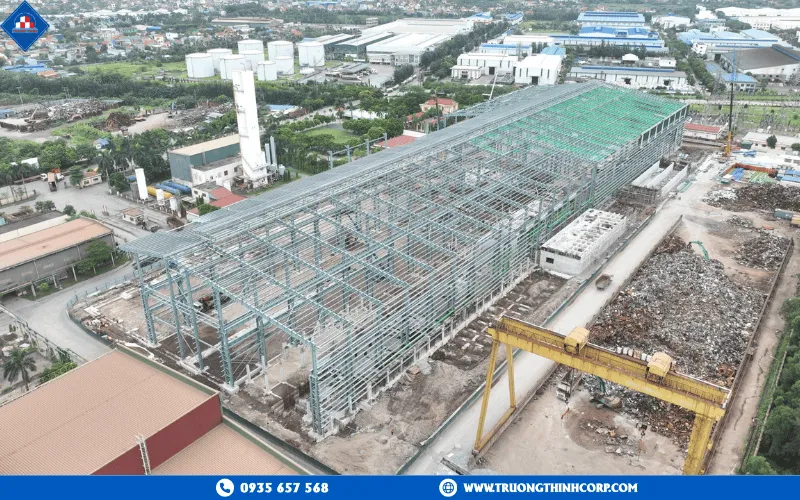
Exposed steel corrodes visibly and predictably — galvanizing and epoxy coatings manage it directly. Concrete resists surface moisture well, but if cracks let water reach the embedded rebar, that steel corrodes invisibly and expands, cracking the concrete from the inside — a failure mode that’s harder to catch early than surface rust on exposed steel.
3.2 Fatigue behavior under repeated load
Under cyclic loading — bridges, crane runways, industrial floors — steel’s fatigue behavior is well understood and designed around specific connection detail categories. Concrete performs excellently under static load but is less forgiving of repeated dynamic stress unless specifically detailed for it.
3.3 What inspection actually catches early
Steel structures benefit from inspection and repainting on a five-to-ten-year cycle — checking weld toes, bolt connections, and coating thickness at edges. Concrete needs periodic crack sealing before water reaches the rebar. Both, done on schedule, support the 50–80 year lifespans either material is capable of.
3.4 Managing steel risk in humid or coastal sites
For projects in high-humidity or marine environments, Truong Thinh Corp inspects welds, connections, and coating thickness on a defined schedule rather than leaving it to chance — the difference between steel that lasts 70 years and steel that needs early remediation is almost entirely in this maintenance discipline.
4. Flexibility for a building that will change over time
Few buildings stay exactly as designed for their full service life — how easily a structure adapts is itself a cost factor.
4.1 Span capability and usable floor area
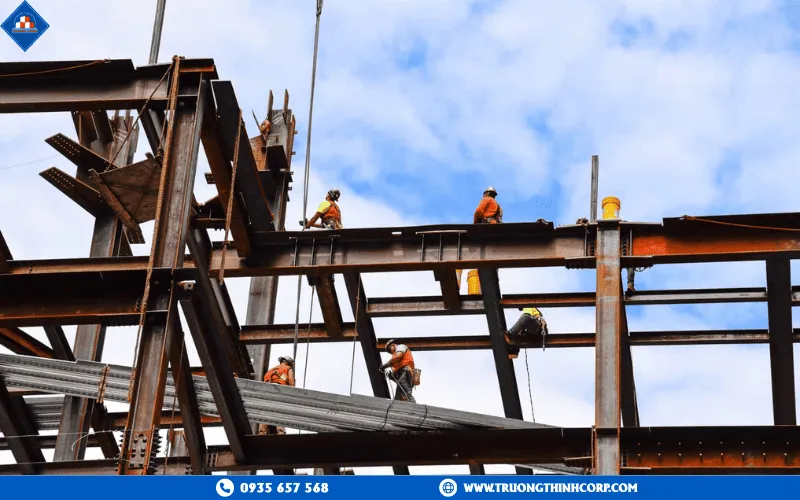
Steel can achieve clear spans up to roughly 60 meters, which is why it’s the default for prefabricated factories, warehouses, and arenas. Concrete needs more frequent columns at that scale, trading usable floor area for structural simplicity.
4.2 Dismantling, relocation, and recycling
Bolted steel connections can be dismantled and the components reused or recycled — steel is one of the most recycled construction materials globally. Concrete, once cast, is effectively permanent; demolition produces debris rather than reusable material.
4.3 Matching material to building type
Industrial buildings, bridges, and high-rise towers where speed and span matter favor steel. Low-rise housing, basements, and infrastructure where thermal mass and acoustic insulation matter favor concrete — neither is universally correct.
4.4 Hybrid structures: using both where they’re each strongest
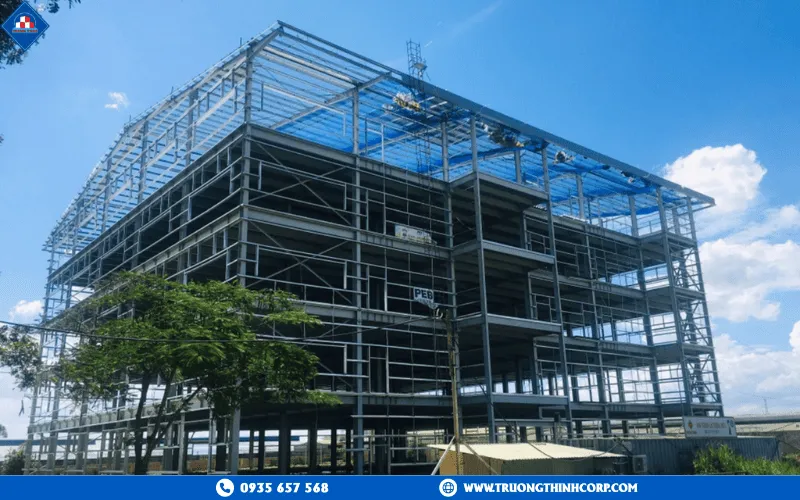
Most efficient tall or large-scale buildings aren’t pure steel or pure concrete — a steel frame paired with a concrete core or composite floor lets each material carry the load it handles best. Truong Thinh Corp applies this hybrid approach regularly in office towers and mixed-use developments, rather than treating the choice as either/or.
5. Choosing the right structure for your project
Neither material is universally superior — the right choice depends on span, budget, schedule, and what the building actually needs to do.
5.1 Summary of advantages and limitations
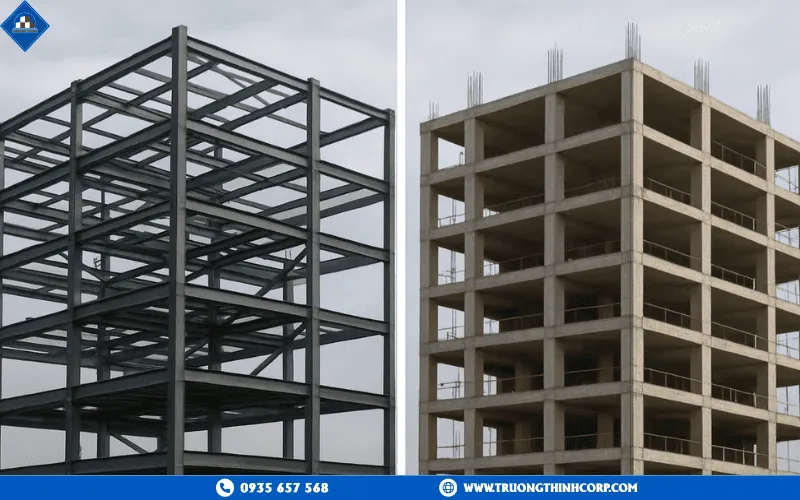
| Criteria | Steel Structure | Reinforced Concrete |
| Strength-to-Weight Ratio | Excellent | Moderate |
| Fire Resistance | Medium (requires coating) | Very High |
| Construction Speed | Very Fast | Slow |
| Maintenance | Regular repainting | Crack repair |
| Flexibility | High | Limited |
| Average Lifespan | 50–70 years | 60–80 years |
5.2 Three steps to selecting the right material
- Define project priorities: cost, schedule, or long-term performance.
- Match the material’s properties with environmental and structural needs.
- Consult engineers for design simulation and cost optimization — including whether a hybrid approach beats a single-material design.
5.3 Professional consultation with Truong Thinh Corp
With nearly twenty years of experience in steel design, fabrication, and construction, Truong Thinh Corp provides engineering consultation grounded in real project data rather than a default recommendation — because the honest answer is that no material is universally “better,” only better matched to a specific project’s loads, budget, and schedule.
By working with experienced consultants like Truong Thinh Corp, investors gain the confidence that every structural decision supports long-term value, performance, and sustainability. For project consultation, please contact Truong Thinh Corp with email: sale@truongthinhcorp.com.