

Anchor bolts and base plates are small parts that decide whether a steel frame goes up smoothly. A bolt out of position by a small margin can stop a column from sitting on its base. The remedy on site is slow and expensive, so setting out the bolts correctly before the concrete is poured pays for itself.
Anchor bolts and base plates: how the two parts work together
The anchor bolts connect the column base to the foundation. The base plate spreads the column load over the concrete and carries the bolt holes. The overall idea is described in this note on anchor bolts. Pinned bases mainly resist vertical load and shear. Fixed bases also resist moment, so they need heavier plates, stiffeners and bolts.
Setting out the anchor bolts
Accuracy starts with the template.
- Use a rigid template made to the base plate drawing, so that the bolts hold their pattern during the pour
- Set the position, the level and the projection of the bolts to the tolerance in the project specification
- Protect the threads and keep the bolts plumb
- Survey the bolts after the concrete has set, and send the as-built result to the fabricator before the steel ships
A survey before delivery is the lowest-cost check on the project. If a bolt is out of tolerance, the fabricator can adjust the base plate holes in the shop. Doing it on site delays the erection.
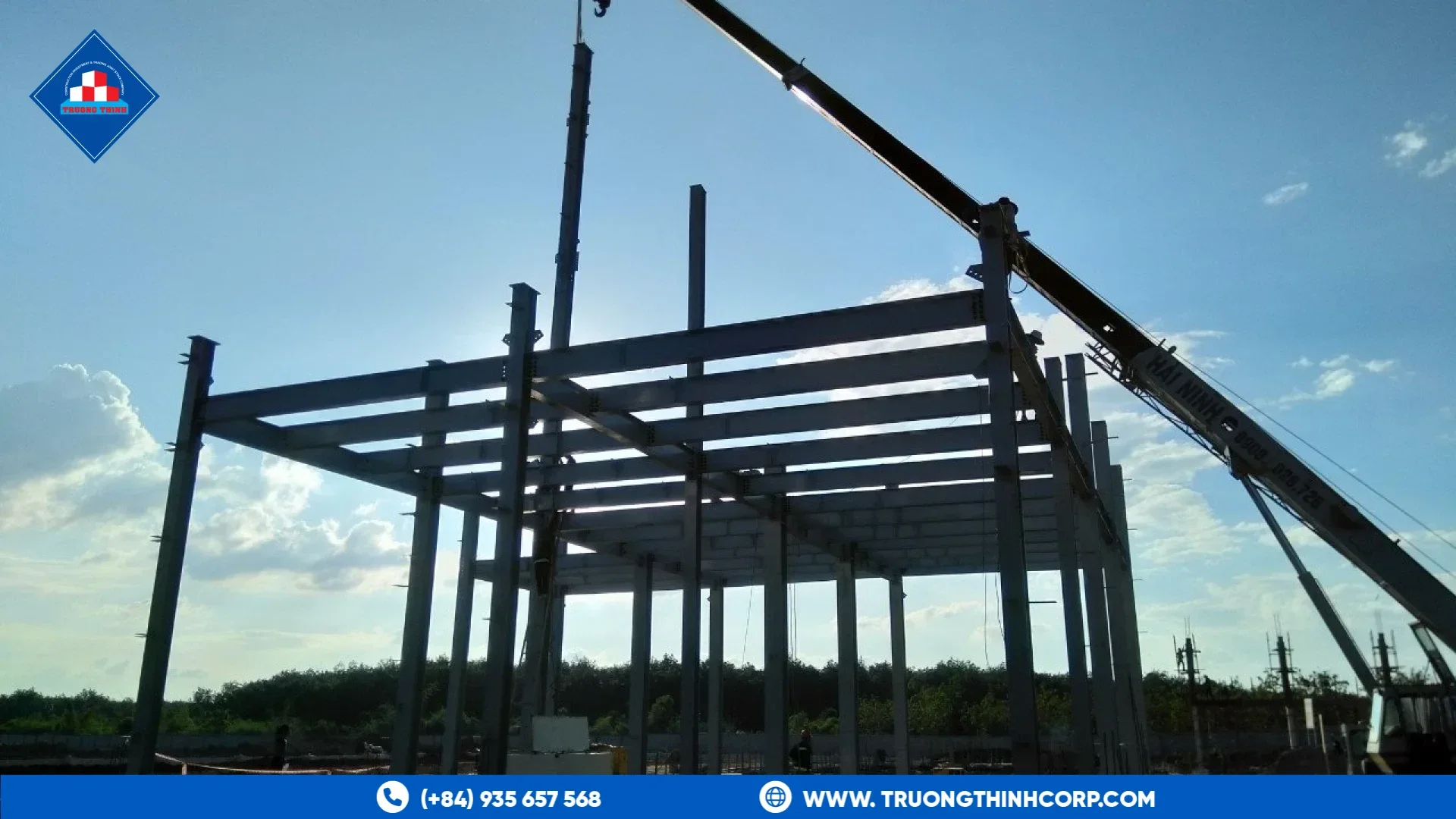
Base plate design points for anchor bolts and base plates
Base plates are fabricated with the column, and several details matter for fit-up:
- Holes sized with the allowance the specification gives for bolt position
- Washer plates where larger holes are used for adjustment
- Level bearing surfaces, so the plate sits evenly
- Stiffeners where the column load or moment needs them
- A grout hole or gap for the non-shrink grout below the plate
Our guide to steel column fabrication covers base plates and welded sections in more detail.
Levelling and grouting
Columns are normally levelled on nuts or shims, then grouted. The grout transfers the load to the foundation and protects the bolts from corrosion, so it should fill the space completely. Do not release the temporary supports until the engineer confirms what is required in the erection sequence, which our guide to erection sequence and temporary stability explains.
Common problems
- Bolts out of position or tilted, usually from a template that moved
- Projection too short for the nut and washer plus the plate thickness
- Concrete pedestals poured at the wrong level
- Damaged threads, which stop the nut from seating
Any correction, such as bending or heating bolts, needs the approval of the engineer. Do not improvise on site.
What to agree before the pour
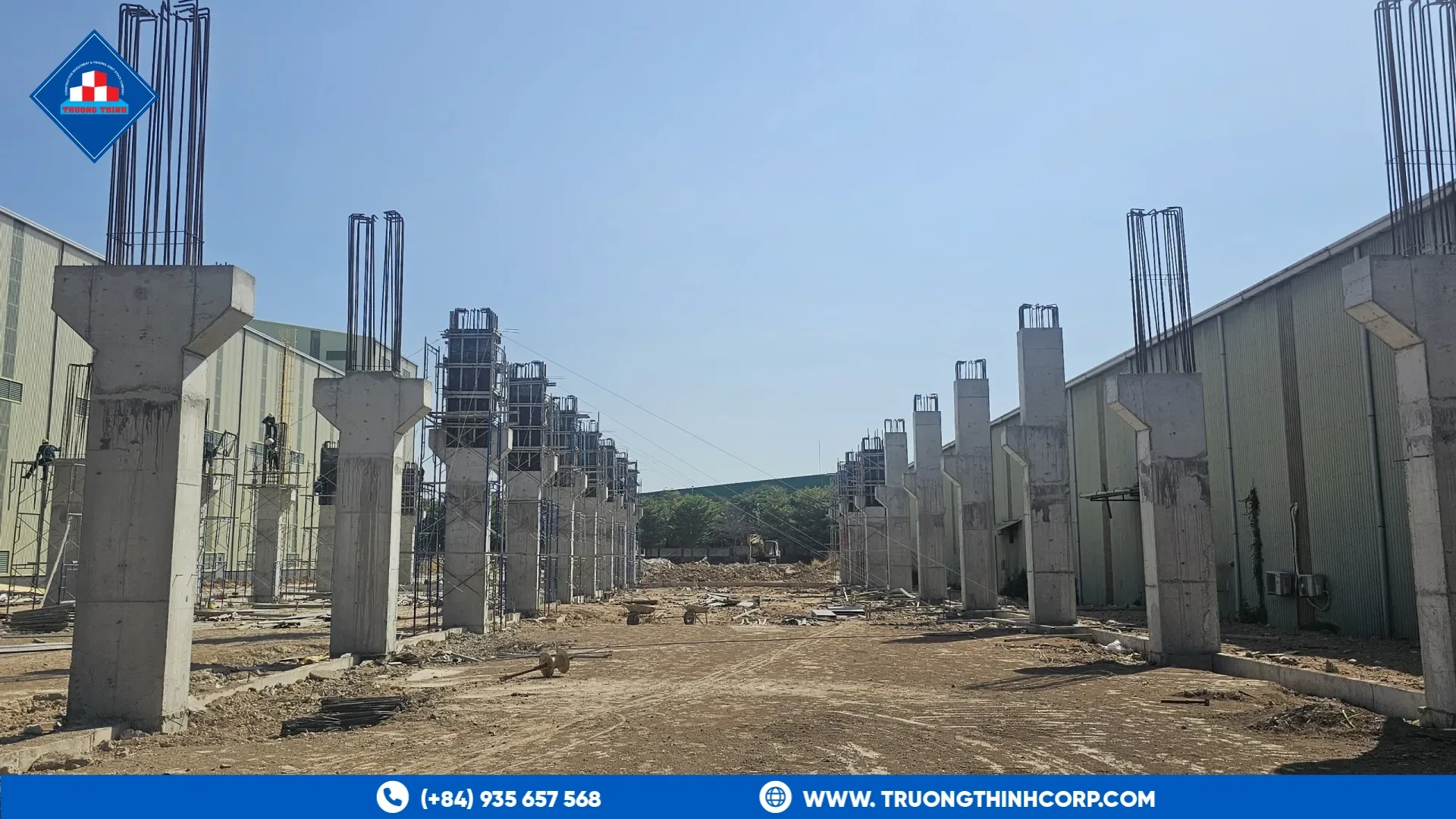
Agree who sets out the bolts, to what tolerance and who surveys them. Write the answer into the foundation drawing note, so that the civil contractor and the steel supplier read the same instruction about anchor bolts and base plates. If you plan to extend the building later, record the bolt layout of the end columns, as explained in our article on planning a steel building for future expansion.
If you are planning foundations for a steel frame, share the column layout and base reactions, and discuss your structural design requirements with our engineering team.
Frequently Asked Questions
What happens if an anchor bolt is out of position?
The engineer decides the remedy. Common options are enlarging the base plate holes with washer plates, drilling new holes in a modified plate or installing post-fixed anchors. Each needs an engineering check.
Who supplies the anchor bolts?
It depends on the contract. They are often supplied with the steel package so that grade and length match the drawings. Confirm the scope in the quotation.
When should the bolts be surveyed?
After the foundation concrete has set and before the steel is delivered. The result goes to the fabricator so that any deviation is dealt with in the shop.
Free quotation · Reply within 24 working hours
Request a quotation for anchor bolts and base plates
Tell us about your steel structure project. Our engineering and sales team will reply with a tailored proposal, usually within 24 working hours.
Need an answer faster? Call our engineers directly.
Mon–Fri 8:00–17:30 · Sat 8:00–12:00 (GMT+7)