

Most “advantages and disadvantages” comparisons of steel structures spend 80% of the word count on advantages and treat the disadvantages as a quick list of solved problems. The honest version is more useful: steel’s real disadvantages are specific, manageable, and worth understanding in detail precisely because they’re manageable — not brushed past.
1. What steel genuinely does better than the alternatives
Steel’s advantages are real and well-documented — the useful question is which ones actually apply to your specific project, not a generic list.
1.1 Strength-to-weight ratio
Steel carries more load per unit weight than any common structural material, which is what makes long spans, tall buildings, and lighter foundations possible simultaneously. At Truong Thinh Corp, this advantage is realized through ISO 9001:2015-certified fabrication where design calculations translate directly into as-built performance, not just theoretical material properties.
1.2 Schedule compression
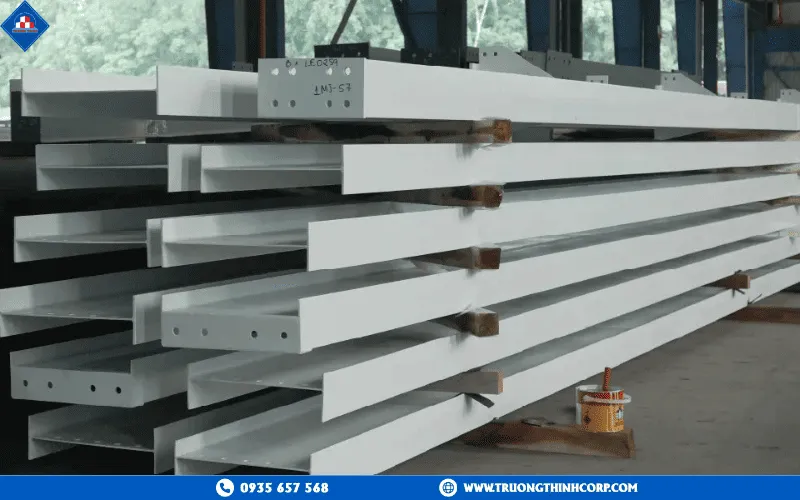
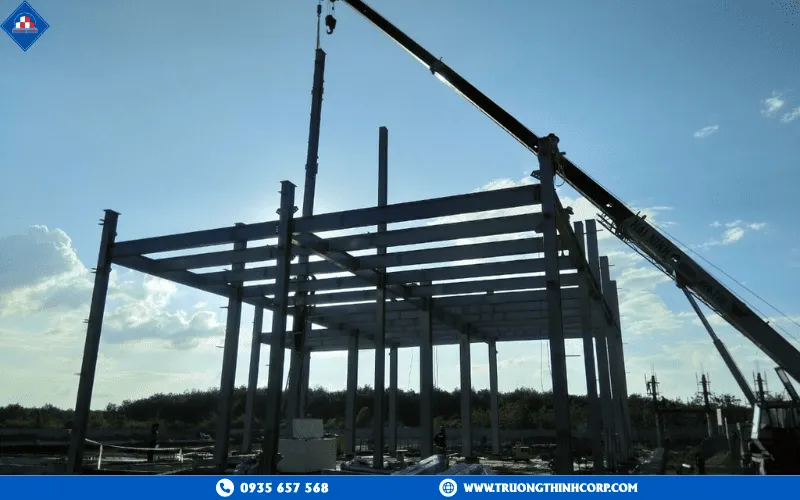
Prefabrication moves fabrication off the critical path — components arrive ready to erect rather than requiring on-site casting and curing. Project timelines commonly shorten by up to 40% compared to conventional concrete construction, which directly affects how soon a facility starts generating revenue.
1.3 Design freedom that concrete makes expensive
Steel enables large, open spaces that are genuinely difficult and costly to achieve in concrete — shopping centers, tall buildings, and factories all benefit from clear spans without a forest of interior columns.
2. What steel actually costs you, specifically
These are real limitations, not marketing footnotes — each one requires a specific engineering answer, and skipping that answer is where steel structures actually fail.
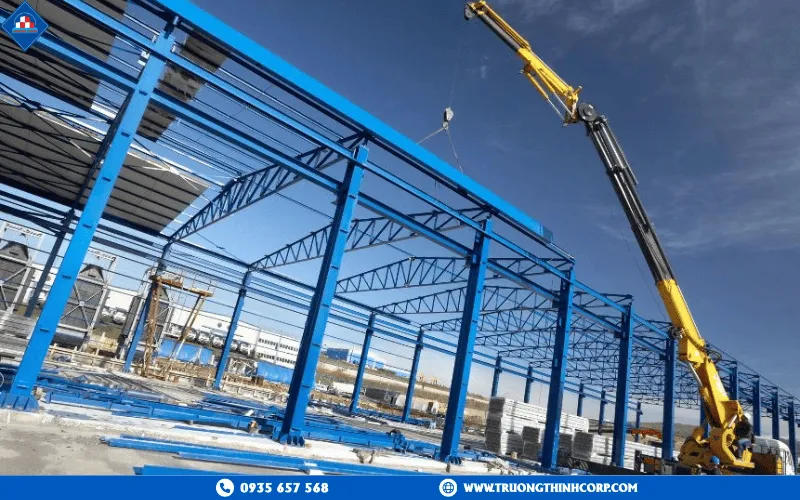
2.1 Corrosion in humid, marine, or chemical environments
Unprotected steel corrodes measurably faster in Vietnam’s humid coastal climate than in temperate regions. Truong Thinh Corp addresses this with multi-layer epoxy coating or hot-dip galvanizing specified to the site’s actual exposure category — done correctly at fabrication, this extends service life past five decades with minimal upkeep, but it is not optional the way marketing copy sometimes implies.
2.2 Fire performance requires active protection
Steel loses a substantial share of its yield strength above roughly 500°C — unlike concrete, which is inherently fire-resistant. This isn’t a flaw to minimize; it’s a design requirement: fire-resistant coatings, intumescent paint, or gypsum cladding sized to the occupancy’s actual fire rating, specified from the start rather than added as an afterthought.
2.3 Higher unit material cost
Steel typically costs more per ton than concrete’s raw materials — that’s real, not a myth to be argued away. The lifecycle economics (schedule, foundation size, maintenance) often offset it, but “steel is more economical overall” and “steel is cheaper upfront” are two different claims, and conflating them undermines trust with an investor doing the math themselves.
2.4 Thermal expansion needs designed-in movement joints
Long steel runs expand and contract with temperature more than most owners expect — a detail that has to be designed into expansion joints and connection tolerances at the outset. Skipping this on a long-span roof or facade is a common source of unexpected stress cracking at cladding interfaces years after handover.
2.5 Erection needs certified welders and correct sequencing
Steel erection quality depends on welder certification and correct bolt-torque/weld sequencing — a skills-dependent process, unlike concrete’s more forgiving on-site tolerances. Truong Thinh Corp’s erection teams work to a documented sequence and inspection sign-off precisely because this variable, unmanaged, is where connection defects originate.
3. Where steel’s trade-offs are worth accepting
The applications where steel dominates are exactly the ones where its advantages outweigh the specific costs above.
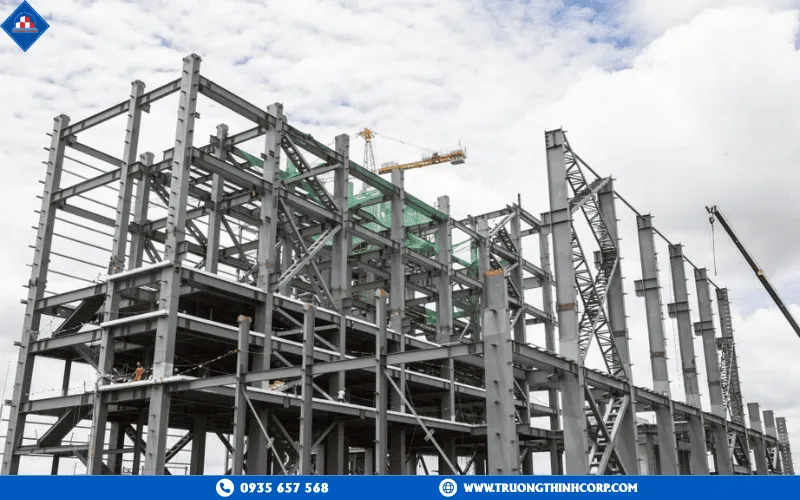
3.1 Industrial and commercial buildings
Factories, warehouses, logistics centers, and offices benefit from steel’s speed and open floor plates enough to justify its coating and fire-protection requirements as a standard cost of doing business. Truong Thinh Corp’s completed projects — Dak R’tih Hydropower Plant, DABACO Animal Feed Factory, Dam Gia Hotel M&E — reflect this pattern.
3.2 Infrastructure and landmark architecture
Bridges, towers, arenas, and stadiums need steel’s long-span capability badly enough that the fire and corrosion protection cost is a rounding error against what the structure couldn’t achieve otherwise.
3.3 Sustainability, at end of life, not just during construction
Steel’s recyclability is a genuine end-of-life advantage that concrete demolition doesn’t offer in the same way — steel components can be recovered and reprocessed rather than becoming inert debris, a real factor in total lifecycle environmental cost.
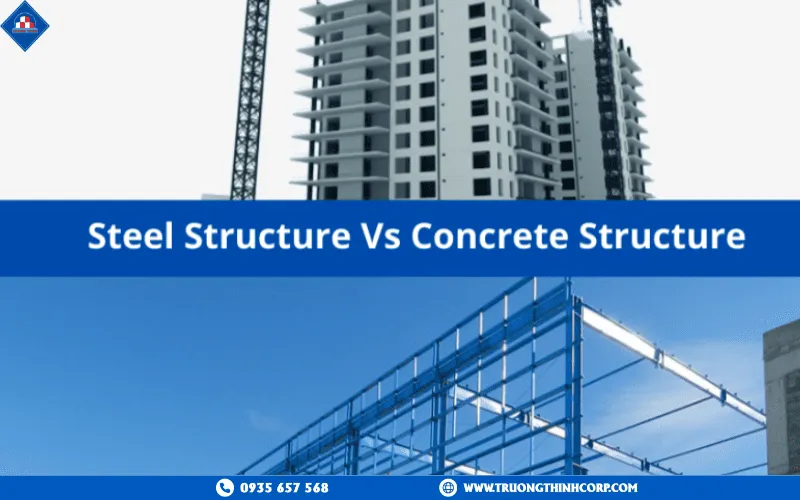
4. Steel versus concrete, honestly
Neither material is universally better — the trade-offs above are exactly what should drive the choice project by project.
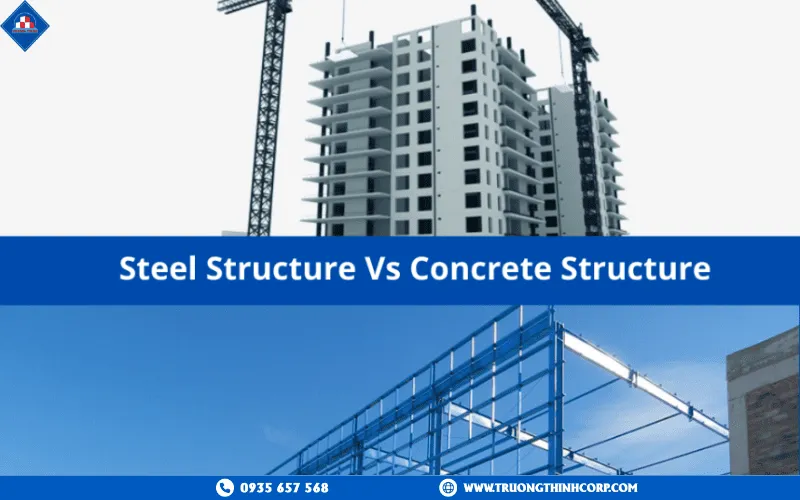
4.1 Where the 10–15% upfront premium gets absorbed
Steel’s typical 10–15% higher upfront cost is usually absorbed by shorter construction time and earlier operational revenue — a real financial argument, not a hand-wave, but one that depends on the project actually needing the schedule advantage.
4.2 Soil conditions can decide the question outright
On weak or soft soil, steel’s lower self-weight directly reduces foundation cost and risk in a way that can make the material choice obvious regardless of the other trade-offs.
Steel’s disadvantages are real, specific, and manageable — corrosion, fire performance, upfront cost, thermal movement, and erection skill requirements each have a direct engineering answer, not a marketing dismissal. Truong Thinh Corp designs for these trade-offs explicitly rather than glossing over them, which is what makes the resulting structure reliable rather than just fast. If you’re looking for a trusted partner in steel structure design and fabrication, contact Truong Thinh Corp today via sale@truongthinhcorp.com.
Weighing steel for your project?
Truong Thinh Corp helps investors get the most from steel construction while managing its trade-offs. Get an expert assessment and a free quotation for your project.
Frequently Asked Questions
What are the main advantages of steel structures?
High strength-to-weight ratio, up to 40% faster construction, wide column-free spans, and end-of-life recyclability are steel’s most concrete advantages.
What are the real disadvantages of steel structures?
Higher unit material cost, required fire protection, corrosion risk without coating, thermal-expansion detailing, and dependence on certified welding — each manageable with correct specification, but each real.
Do the advantages of steel outweigh the disadvantages?
For most industrial and commercial buildings, yes — but the honest answer depends on soil conditions, schedule pressure, and fire/corrosion exposure at your specific site, not a blanket rule.
How does Truong Thinh manage steel’s disadvantages?
Through exposure-matched coating systems, fire-rated protection sized to occupancy, designed-in thermal movement joints, and certified welding crews working to a documented erection sequence.