

Floor vibration in steel buildings is the movement of a floor under footsteps, machines or traffic. A floor can be strong enough and still feel lively underfoot, or shake sensitive equipment. Vibration is a serviceability issue, like deflection, and it is best handled during design, since cures after construction are costly.
Why steel floors can vibrate
Steel floors are light compared with concrete slabs, and they span long distances with fewer supports. A light, flexible floor has a lower natural frequency and less damping, so footsteps can excite it. The general idea is described in this overview of vibration. People notice movement even when the stress is low.
Sources of vibration in steel warehouses and plants
Steel warehouses with mezzanines, plants with fans and presses, and offices above workshops all see these effects.
- Footfall. Walking, running or group activity on offices, mezzanines and walkways.
- Machines. Fans, pumps, compressors and presses that run at fixed speeds.
- Traffic. Forklifts and trolleys on a mezzanine or raised floor.
- Outside sources. Roads, rail and nearby plant.
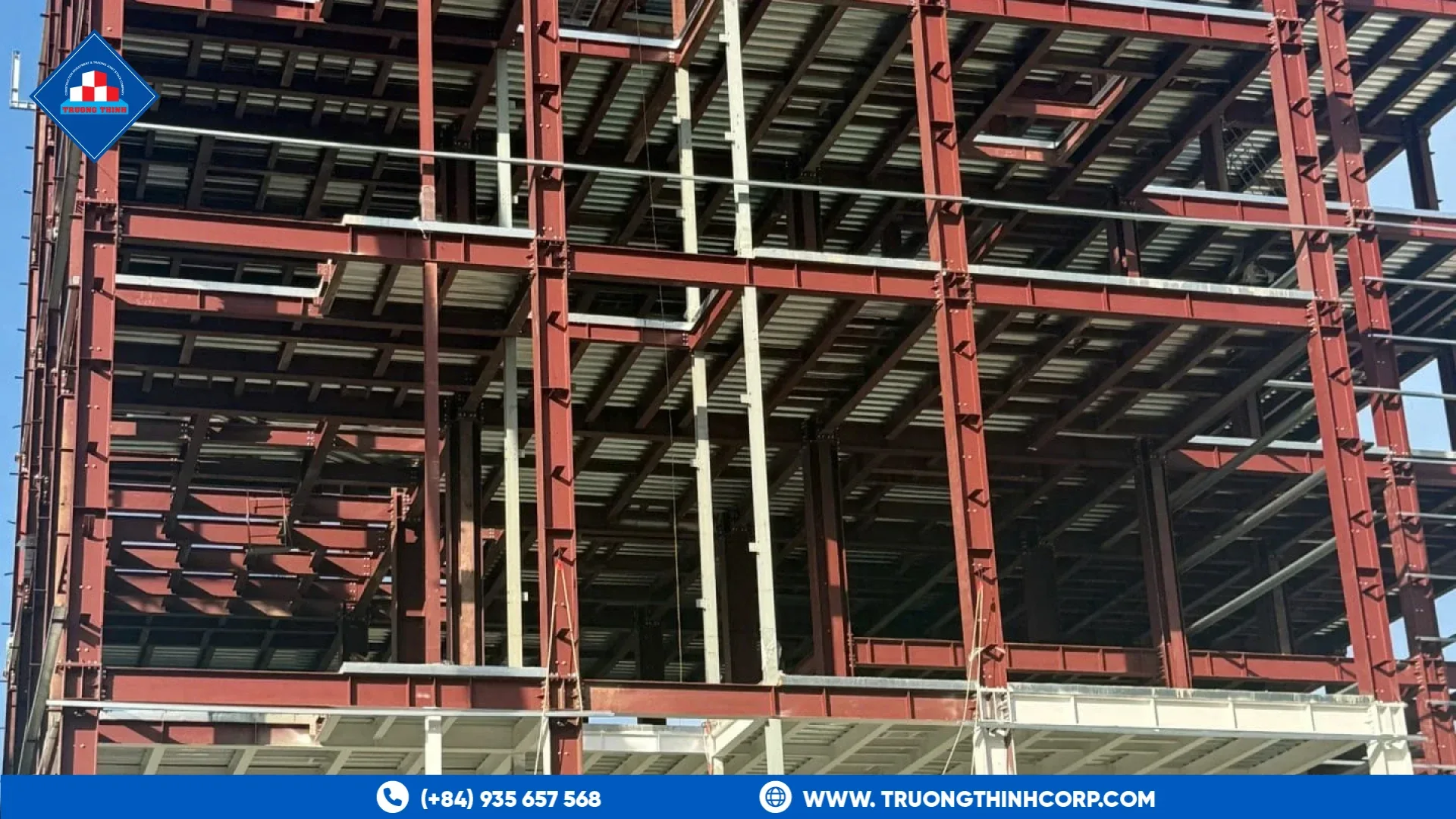
How designers check floor vibration in steel buildings
The designer estimates the natural frequency and the response of the floor to the expected sources, and compares it with limits for the use. Offices, laboratories and electronics plants have different limits. Heavy industry floors tolerate more. The method and limits come from the design code or from guidance named in the project. Our article on design codes for steel structures in Vietnam explains how to name the governing documents.
Ways to reduce vibration
- Increase stiffness with deeper beams or closer spacing. See steel beam deflection.
- Add mass, for example a thicker slab, which lowers the response.
- Add damping, through partitions, finishes or dedicated dampers.
- Isolate the source, by mounting machines on isolators or separate bases.
- Change the layout, moving sensitive equipment to a stiff area close to columns.
Mezzanines and raised floors
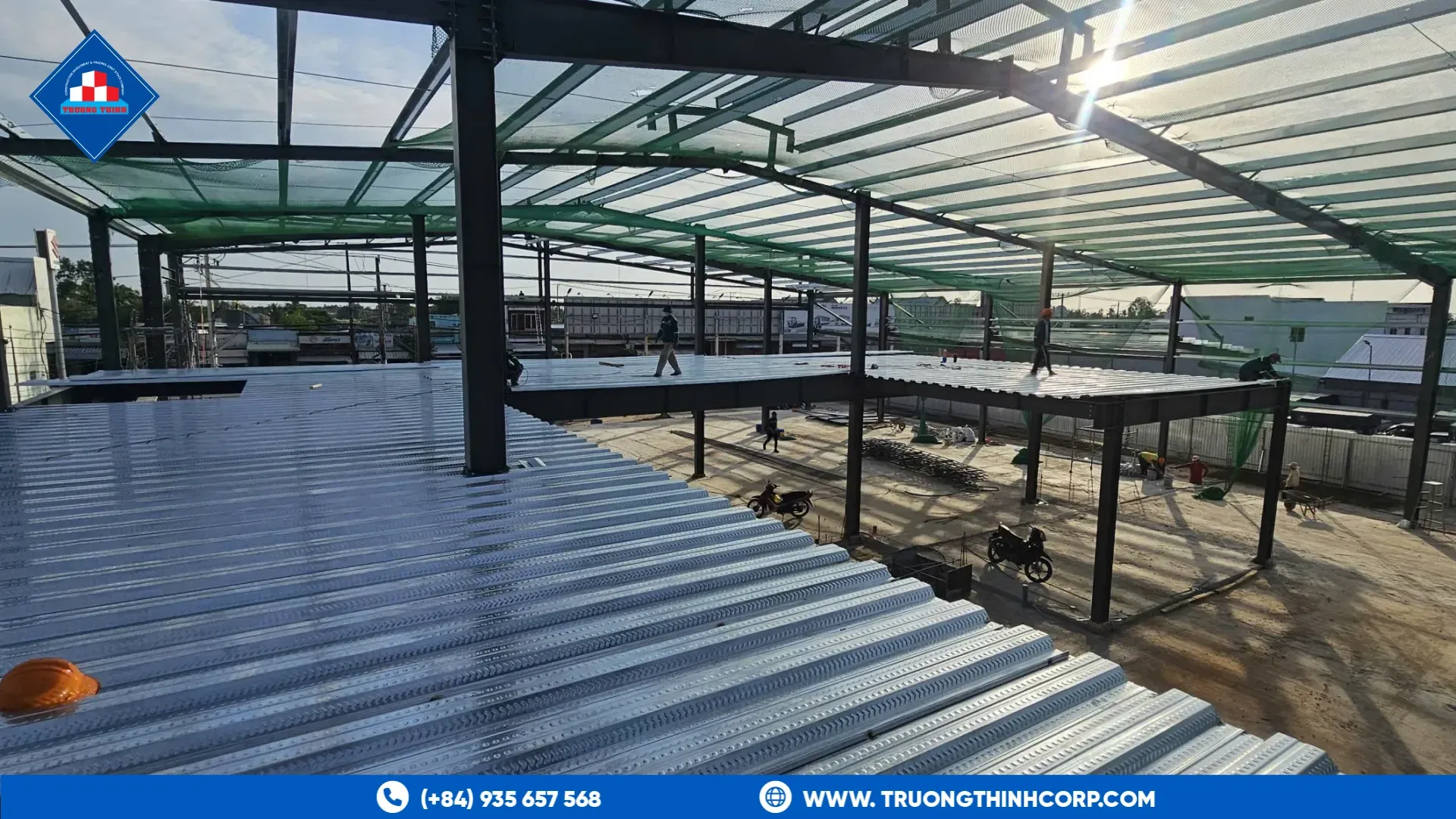
Mezzanines in warehouses often carry forklifts and people over open space. Check their vibration and deflection together, and design the supports for the traffic. Our guide to steel mezzanine floors for warehouse expansion describes the main design points. For steel warehouses, the extra floor level should be planned at the start, as covered in steel warehouse design.
A short example
Imagine a mezzanine in a warehouse that carries office space above a loading area. People walk across it all day, and a forklift passes below. Without a check, the floor may feel lively and make the lighting shake. A modest increase in beam depth, or a thicker slab, can solve it at small cost during design. The same fix after handover would need strengthening works and disruption to the operation.
What to tell the designer
- The use of each floor and the equipment on it
- The machine speeds and weights
- The sensitivity of any instruments
- The traffic, including forklifts and crowds
- Future changes in use
Checking after construction
If vibration is a concern, ask for a test or a walk-through before handover. Measurements show whether the floor performs as expected. Record the results in the building file.
If you have equipment or footfall that may cause vibration, share the floor layout and the loads, and discuss your structural design requirements with our engineering team.
Frequently Asked Questions
Is floor vibration dangerous?
Rarely dangerous. It is mainly a comfort and equipment issue, but excessive movement can damage finishes or instruments.
Can vibration be fixed after the building is finished?
Sometimes, by adding stiffness, damping or isolation. It is usually cheaper to design for it.
Does a concrete slab on steel deck help?
Yes. The slab adds mass and stiffness. The details depend on the composite design.
Free quotation · Reply within 24 working hours
Request a quotation for floor vibration in steel buildings
Tell us about your steel structure project. Our engineering and sales team will reply with a tailored proposal, usually within 24 working hours.
Need an answer faster? Call our engineers directly.
Mon–Fri 8:00–17:30 · Sat 8:00–12:00 (GMT+7)