

The bolt tightening methods used on a steel project decide how much force each bolt carries and how the joint behaves. Some joints only need the bolts to be snug. Others need a controlled pretension so that the plates grip each other. The specification states which, and the site must follow it and record the result.
Snug-tight and pretensioned joints
In a snug-tight joint, the plies are brought into firm contact and the bolts carry the load by bearing. In a pretensioned joint, the bolts are tightened to a specified tension, so the load can pass by friction between the plates as well. The general principles are explained in this note on how bolted joints work.
Pretension is normally required where joints see vibration, load reversal or where slip must be limited. The engineer decides this for each connection and shows it on the drawings.
Common bolt tightening methods
- Snug-tight. Tighten with a few impacts of an impact wrench, or the full effort of a person with a spud wrench, until the plies are in contact.
- Turn-of-nut. After snug-tight, turn the nut a specified fraction of a turn. The rotation sets the tension.
- Calibrated wrench. Torque is set from a calibration test on sample bolts. The wrench must be checked often.
- Tension control bolts. The bolt has a splined end that twists off when the specified tension is reached, which makes inspection visual.
- Direct tension indicators. Special washers show by their gap how much tension has been applied.
Each method has its own checks. The project specification names the allowed methods and the standard they follow.
Why the method matters
A joint tightened by a wrong method may be under-tensioned, which risks slip, or over-tensioned, which can damage the bolt. Wrenches drift out of calibration, and bolts and nuts need correct lubrication and storage. The condition of the faying surfaces matters for friction joints. Our guide to bolted and welded connections shows where bolting is the better choice.
Preparing the joint
- Check the bolt grade, length and washers against the drawings
- Keep faying surfaces clean and free of paint, oil or scale where friction is required
- Align holes without forcing, and do not enlarge them without approval
- Tighten in a planned sequence, from the stiffest part of the joint outward
- Mark each bolt after tightening, so that inspectors can see it was done
Inspection and records
Inspection should follow the method. For turn-of-nut, check the marking. For calibrated wrenches, check the torque on a sample. For tension control bolts, check that the end has twisted off. Keep a record of the tools, the bolt lots and the results, since these records are part of the handover pack.
Where this fits in erection
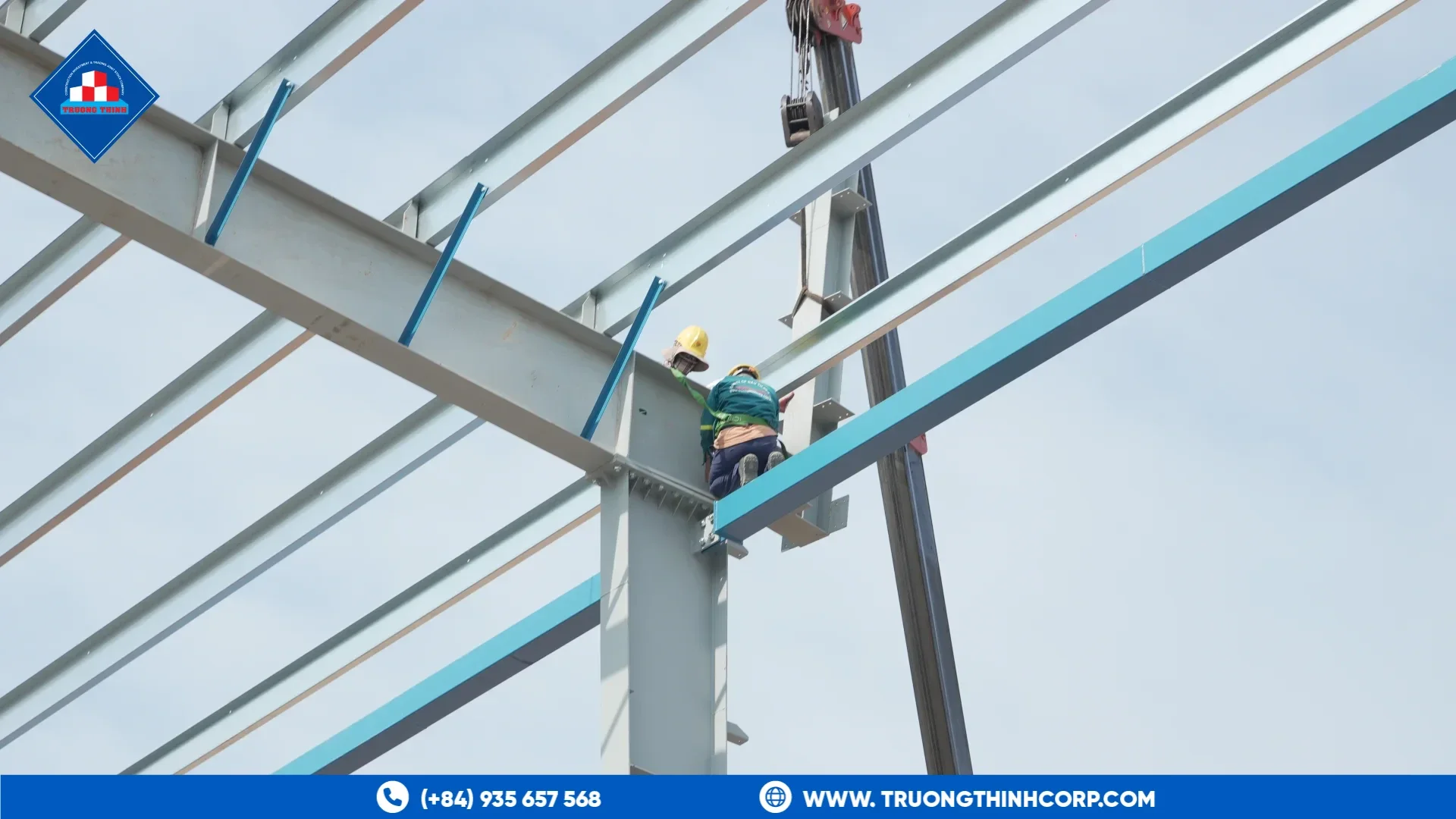
Bolt tightening takes place after members are positioned and before temporary bracing is removed. Our guide to erection sequence and temporary stability shows the order. The base is set before the frame, as described in anchor bolts and base plates.
What to ask a fabricator
When you compare each steel structure fabrication company, ask which bolt tightening methods it supports, how it supplies and labels bolts and what records it keeps. Our technical specifications outline the bolting references we use.
If you need to confirm the bolting requirements for a steel package, send the connection details and the specification, and discuss your structural design requirements with our engineering team.
Frequently Asked Questions
Do all structural bolts need to be pretensioned?
No. Only joints that the engineer specifies as pretensioned need it. Many joints are designed as snug-tight.
Can a standard torque wrench be used?
Only if it has been calibrated for the bolt lot and checked regularly. Without calibration, torque is not a reliable measure of tension.
Can bolts be reused?
Pretensioned bolts should not normally be reused. Follow the specification and the manufacturer’s guidance.
Free quotation · Reply within 24 working hours
Request a quotation for bolt tightening methods
Tell us about your steel structure project. Our engineering and sales team will reply with a tailored proposal, usually within 24 working hours.
Need an answer faster? Call our engineers directly.
Mon–Fri 8:00–17:30 · Sat 8:00–12:00 (GMT+7)