

A pre-shipment inspection is the last check before fabricated steel leaves the factory. It confirms that the members match the drawings, that welds and coatings are complete and that marking and packing are correct. Problems found at the factory are cheap to fix. Problems found at the site, after shipping, are not.
Why a pre-shipment inspection pays off
Once the steel is in a container or on a truck, every correction costs time and freight. A short, planned inspection catches most of the issues that lead to disputes. It also gives the buyer a record of the condition of the steel at handover. The idea of checking products against requirements is part of quality control in any industry.
The 8 checks
- Dimensions. Length, depth, hole position and straightness checked against the drawing, on a sample or on all members as agreed.
- Welds. Visual checks and non-destructive testing where the specification requires them. Weld records match the inspection plan.
- Material documents. Mill certificates and tracking codes match the members. Our guide to mill test certificates lists what to verify.
- Surface preparation and coating. Blast grade, coating thickness and coverage at edges and welds. See Sa 2.5 blast cleaning.
- Bolts and small parts. Correct grade, quantity and labels for each connection.
- Marking. Each member carries its mark, readable after coating. See steel member marking and packing lists.
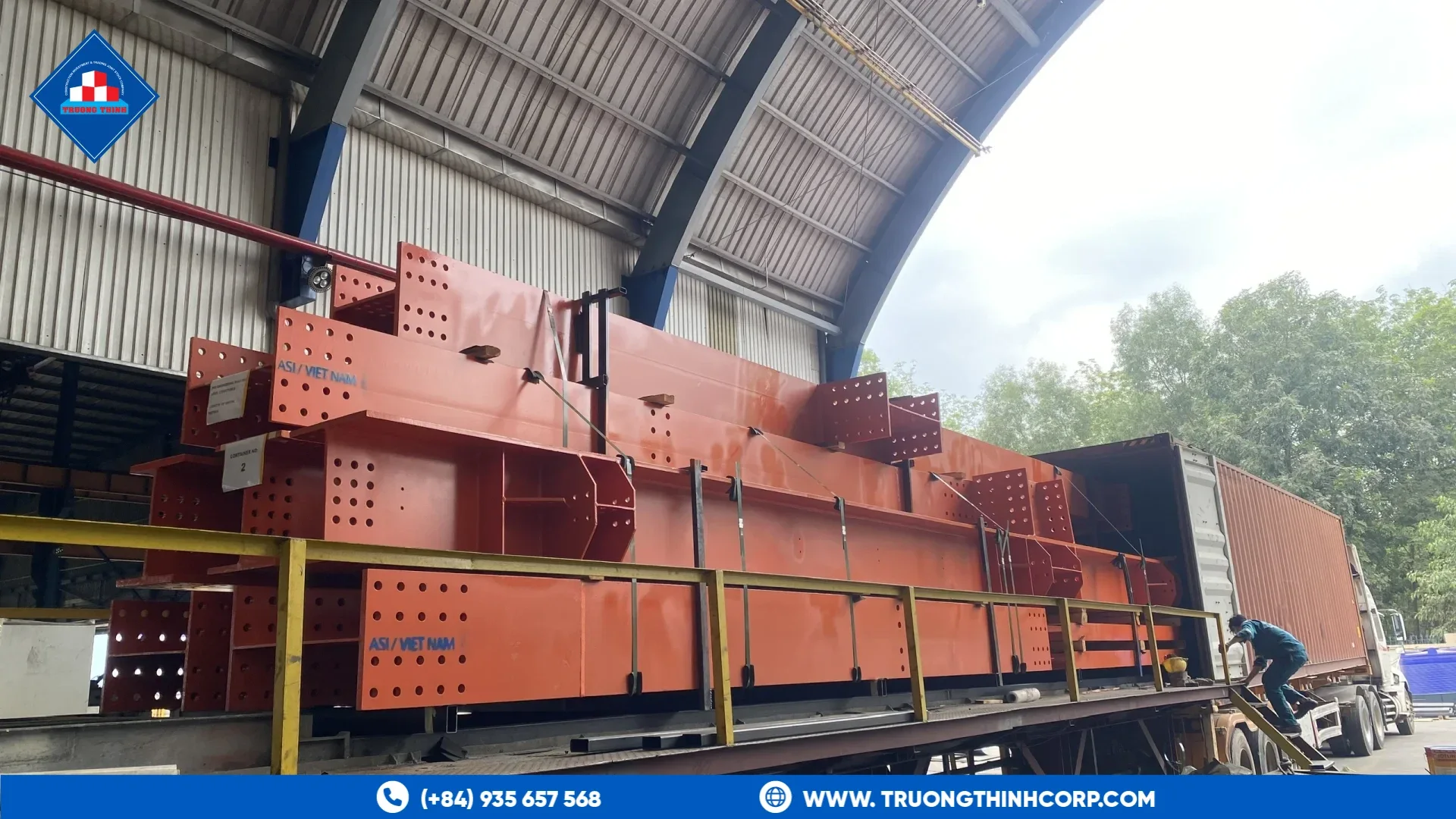
- Packing and protection. Bundles, supports and padding prevent damage and bending. Coated surfaces are protected.
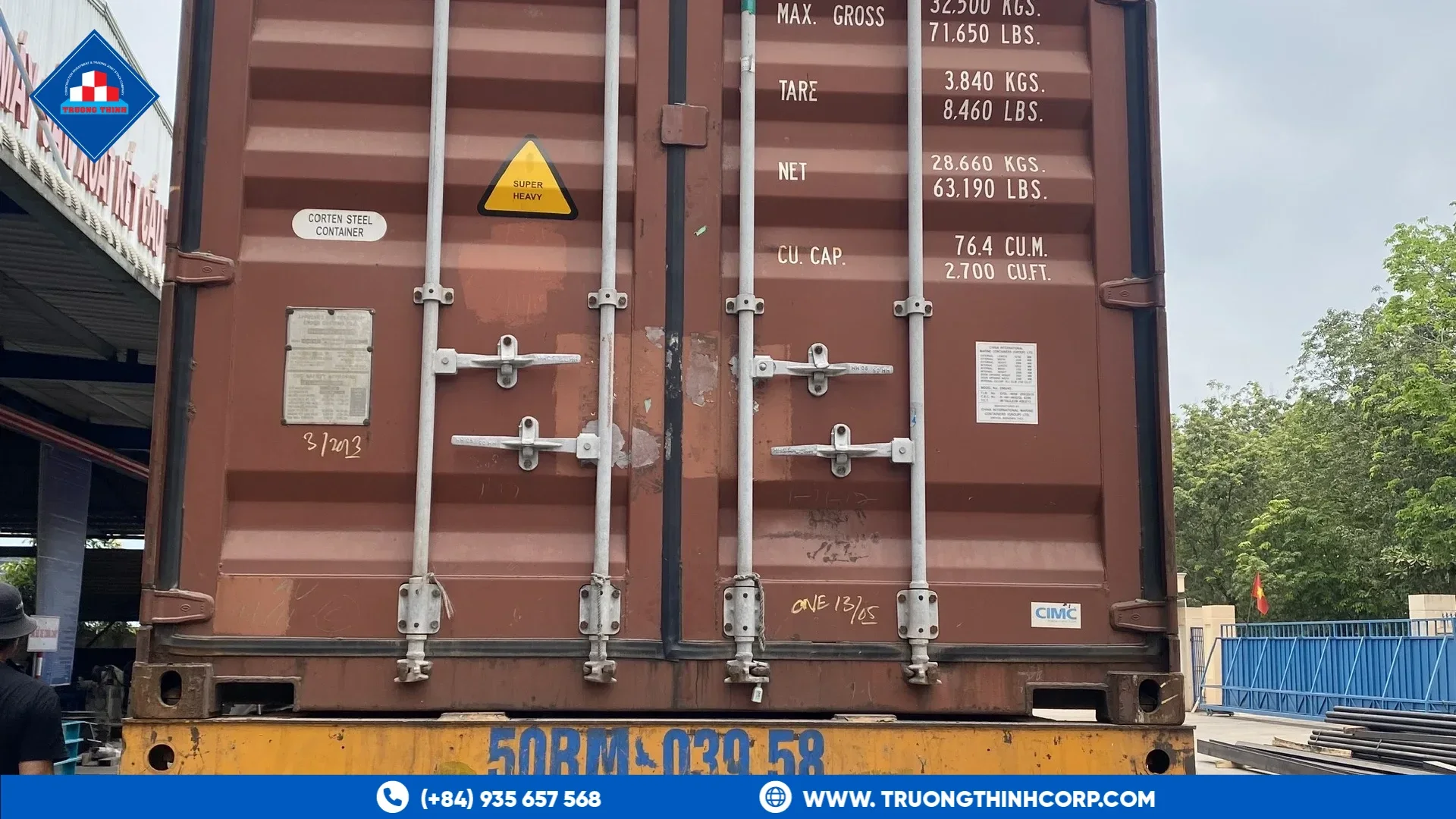
- Loading plan. The sequence follows the erection order, and the load is secured.
Common findings
Typical findings are bolt holes slightly out of position, missing marks after coating, damaged coating at the edges, loose packing that lets members rub, and documents that do not match the member list. None of them is serious on its own, but each can stop work on site. Ask for the findings list with the inspection report, and keep it with the shipment file for future reference and for any warranty discussion. A checklist and a photo record make them easy to close out before the container is sealed.
Who inspects
The fabricator's quality department does the first inspection. The buyer or an independent inspector can witness it or repeat it. Agree the scope, the hold points and the report format before production starts. At Truong Thinh, the quality control department inspects dimensions, welds and coatings before delivery, and our guide to steel factory quality control describes the process.
Documents to keep
Keep the inspection report, photos of the packed load, the packing list and the material certificates together. They help if a claim arises, and they are needed for handover. For export shipments, read our guide to structural steel export from Vietnam.
Choosing a supplier
When you compare a steel structure manufacturer, ask to see a sample pre-shipment inspection report. A supplier with a routine will show it in minutes. Our guide on how to choose a steel structure manufacturer has more questions to ask.
If you need fabricated steel delivered to a site, send the drawings, the destination and the schedule, and request a fabrication quotation from our engineering team.
Frequently Asked Questions
Should every member be inspected?
It depends on the risk and the contract. Critical members are often inspected one by one, and others by sample. Agree the plan beforehand.
Can a third party do the pre-shipment inspection?
Yes. Many buyers appoint an independent inspector. Give them access to the drawings, the specification and the factory.
What happens if the inspection finds a defect?
The member is corrected or replaced and rechecked before shipment. Record the defect and the correction.
Free quotation · Reply within 24 working hours
Request a quotation for pre-shipment inspection
Tell us about your steel structure project. Our engineering and sales team will reply with a tailored proposal, usually within 24 working hours.
Need an answer faster? Call our engineers directly.
Mon–Fri 8:00–17:30 · Sat 8:00–12:00 (GMT+7)