

Sa 2½ is the surface preparation grade most often specified before painting structural steel. It is also one of the most misunderstood. Buyers see “Sa 2.5” on a quotation or a coating data sheet and assume it means “clean steel.” The standard is more specific than that, and the result depends on what happens before and after the blast.
What Sa 2.5 means under ISO 8501-1
ISO 8501-1 defines visual grades of blast-cleaned steel. Sa 2½ is described as very thorough blast cleaning. After blasting, the steel should be free of visible oil, grease, dirt, mill scale, rust, paint and foreign matter. Any residues should appear only as slight stains in the form of spots or stripes.
The standard is judged visually against reference photographs, so the grade is a clear, repeatable target rather than a subjective one. It is still a visual grade. Surface profile, dust level and salt contamination are measured separately, using other parts of the ISO 8501 and ISO 8503 series.
Why the grade matters for coating adhesion
Paint and other coatings need a clean, slightly roughened surface to bond. Mill scale and rust that remain under a coating lift over time, and oil or salt left on the steel can cause blistering. Where a coating fails early on structural steel, the usual causes are incomplete blasting, a surface that re-rusted before priming, or contamination introduced after blasting.
Surface profile is part of the specification
Blasting produces a surface profile: the peak-to-valley texture the coating grips. The profile must suit the coating system. Too smooth and adhesion suffers; too deep and the coating may not cover the peaks at the specified thickness. Profile is measured with comparators or instruments under ISO 8503 and should be stated in the project specification or the coating manufacturer’s data sheet.
Timing and environment
Three practical points decide whether a good blast turns into a good coating:
- Blast after fabrication welding and grinding. Weld spatter, sharp edges and grinding marks should be dealt with first, because blasting cannot fix them.
- Prime within the specified window. Clean steel re-rusts quickly in humid air. Coating manufacturers specify a maximum time between blasting and priming, often a matter of hours in humid conditions.
- Check dew point before blasting and coating. Many coating specifications require the steel surface to be at least 3 °C above the dew point. Confirm the exact requirement against the coating data sheet and the project specification.
What to specify
For a clear specification, state the following:
- The blast grade: Sa 2½ under ISO 8501-1 (or the equivalent near-white grade under another standard, if the project uses one)
- The surface profile range and the measurement method
- The coating system and the maximum time to prime
- The inspection method, including visual assessment and dry film thickness (DFT) measurement, and who signs the report
Near-white metal blast cleaning under SSPC-SP 10 is commonly treated as comparable to Sa 2½. The two are different standards with different wording. Name the one that governs the project.
Shop blasting and site touch-up
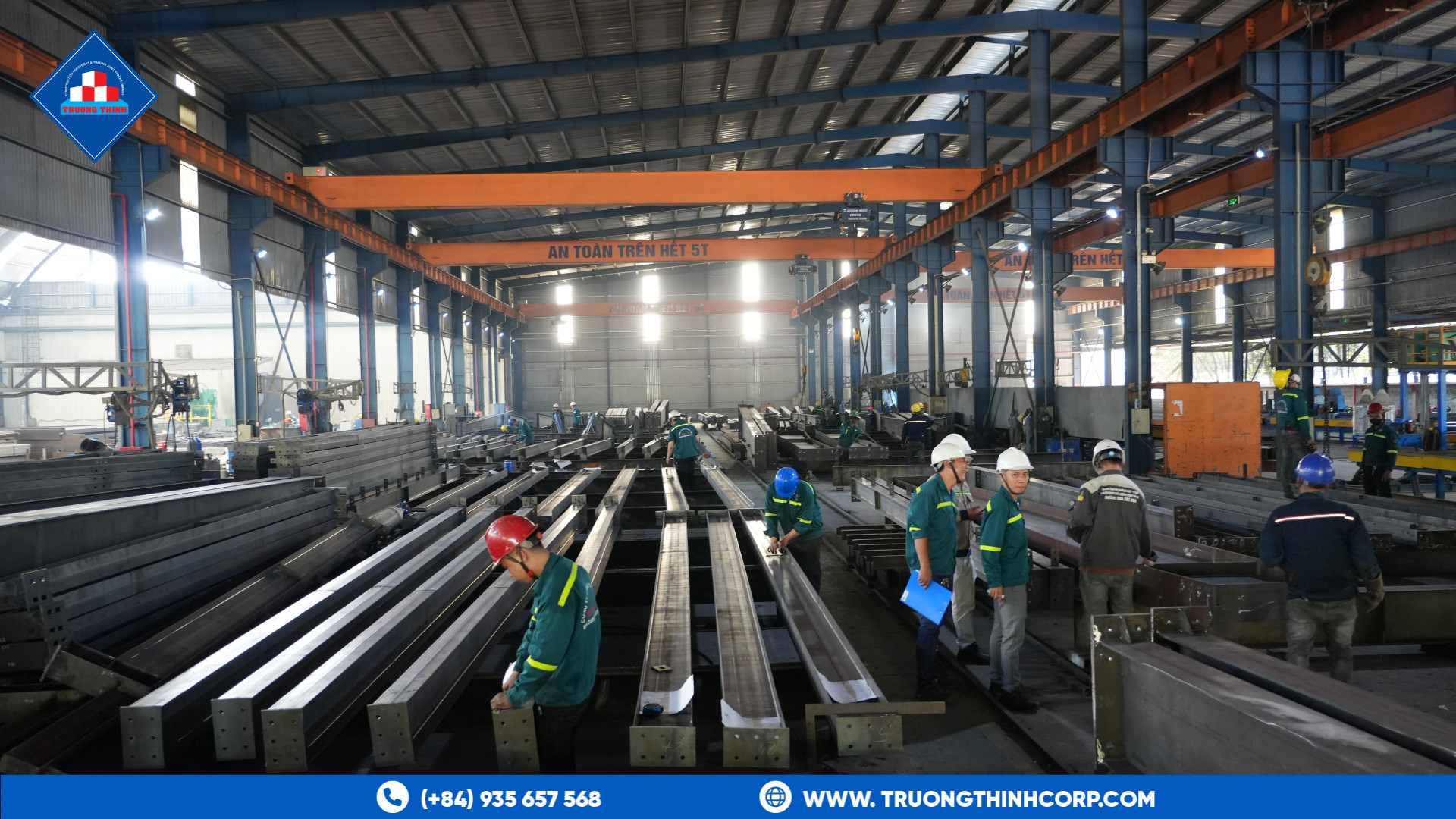
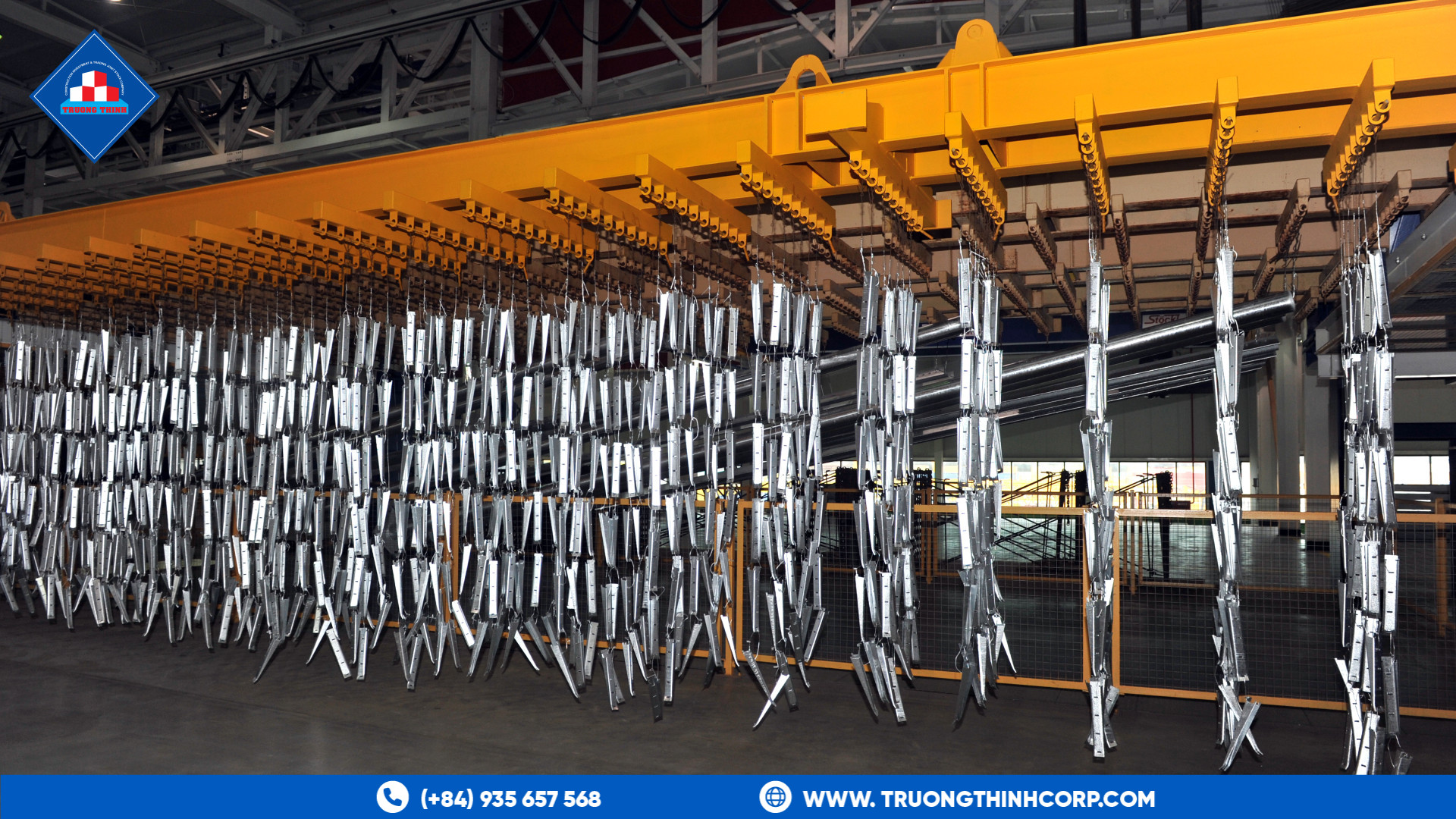
Shop blasting in a controlled environment is more consistent than blasting on site. Field welds, bolt connections and damaged areas after erection still need preparation to the same grade and then recoating. The specification should state how touch-up is handled, because the joints are where coating failures often start.
How Truong Thinh applies this
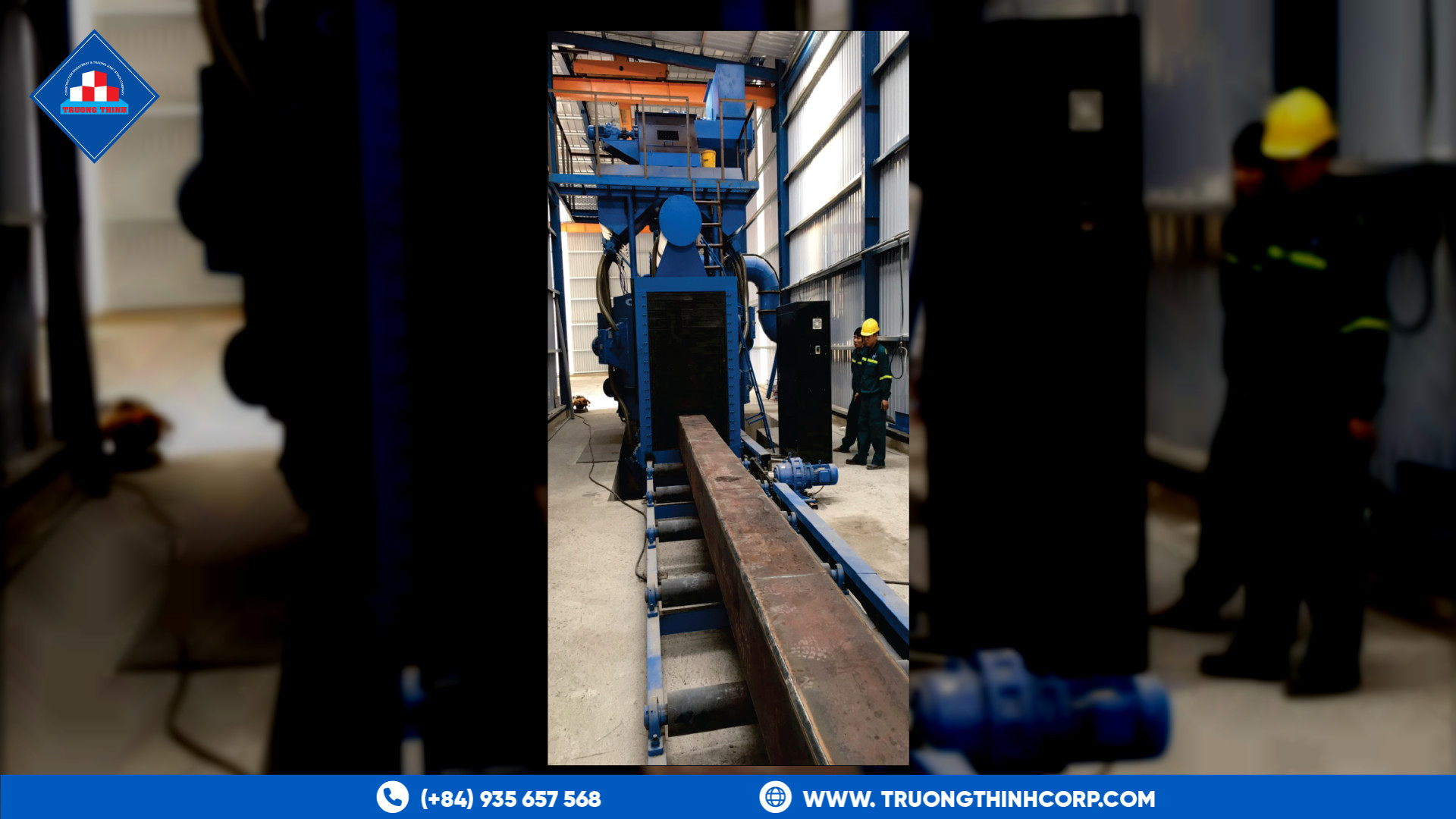
Truong Thinh’s public website describes shot-blasting chambers at its Ho Chi Minh City plant, with surfaces prepared to Sa 2.5 under ISO 8501-1. The company also describes dry film thickness checks using calibrated equipment, with reports issued per batch.
Frequently asked questions
Is Sa 2.5 the same as Sa 2½? Yes. Sa 2.5 is the same grade written without the fraction symbol. Use whichever notation your specification uses, consistently.
Does a good blast grade guarantee coating performance? No. Coating performance depends on the complete system: profile, surface condition before blasting, timing, environment, paint application and film thickness. Sa 2½ is one controlled step in that system.
Should painting be specified over galvanizing? That is a separate decision. Galvanized surfaces are prepared differently, and they need their own specification. Our guide to hot-dip galvanized steel structures covers their design requirements.
Next step
If you are preparing a coating specification for a steel structure, send the environment, design life and coating system with your drawings. Our engineering team can check whether the surface preparation requirements are consistent across the specification.
Contact the Engineering Team to discuss your coating and surface preparation requirements.
Related reading: column fabrication, base plates and welded sections.
Free quotation · Reply within 24 hours
Request a quotation for sa 2.5 blast cleaning
Tell us about your steel structure project. Our engineering and sales team will reply with a tailored proposal, usually within 24 hours.
Need an answer faster? Call our engineers directly.
Mon–Fri 8:00–17:30 · Sat 8:00–12:00 (GMT+7)