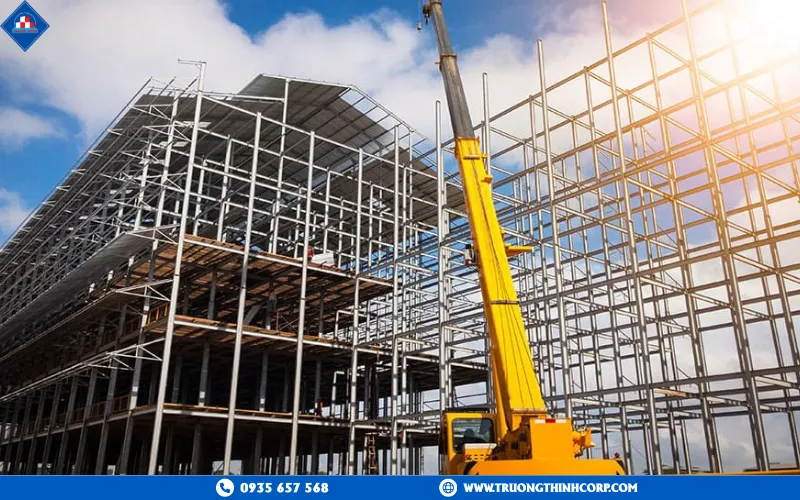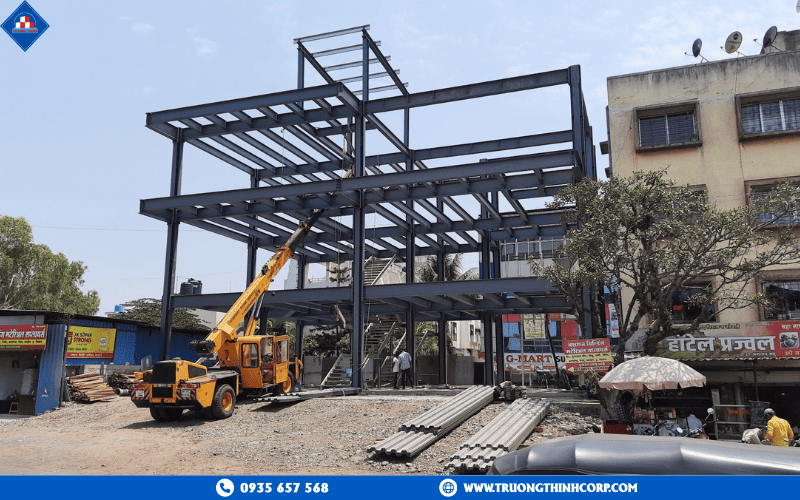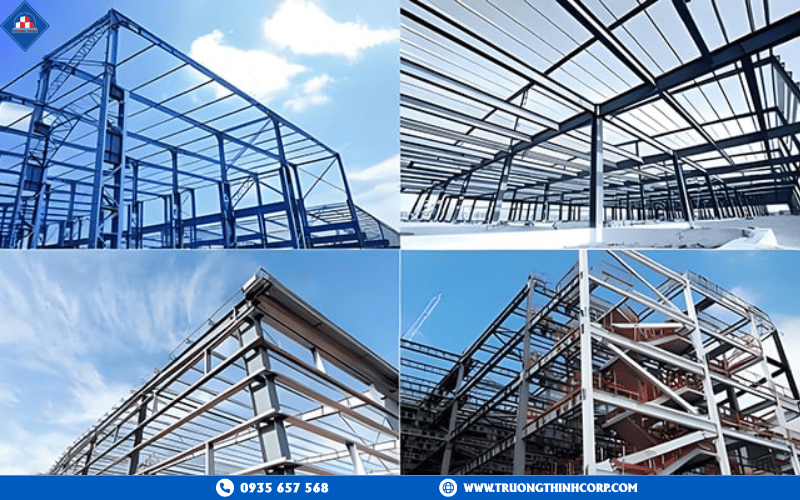


steel structures are the optimal solution for modern event facilities, providing large, column-free spaces, high safety, and fast construction. Designed to handle heavy loads, suspended systems, and flexible layouts, steel structures offer superior long-span performance and long-term adaptability. In this article, TruongThinhCorp shares expert insights to help investors and contractors deliver efficient, durable, and future-ready convention hall projects.
1. Why structural requirements matter in convention hall construction
In convention halls construction, structural requirements are significantly more demanding than those of standard commercial or industrial buildings. Understanding these requirements is the first step toward selecting an appropriate structural solution.
1.1 Large-span and column-free space
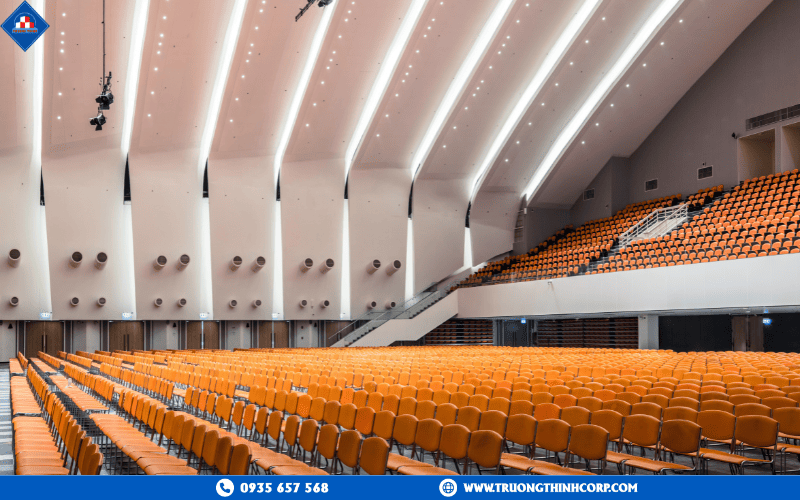
One of the defining characteristics of convention halls is the need for large-span, column-free interiors. These open spaces allow organizers to configure exhibition booths, seating arrangements, and event layouts without physical obstructions. Steel structures are particularly well suited to this requirement, as they can efficiently span long distances using trusses, space frames, or hybrid systems.
By minimizing internal columns, steel structures improve sightlines, enhance crowd circulation, and maximize the usable floor area. This spatial flexibility directly increases the functional and commercial value of convention halls.
1.2 Load, vibration and structural performance
Convention halls are subject to complex load conditions, including high live loads from dense crowds, suspended lighting and sound systems, and temporary exhibition structures. In addition, vibration control and deflection limits are critical to ensure occupant comfort and structural safety.
Steel structures offer a high strength-to-weight ratio, allowing engineers to design lightweight yet robust systems that effectively resist loads while controlling vibration and deflection. This performance is particularly important for large-span roofs, where excessive movement can affect both safety and user experience.
1.3 Importance of structural system selection
The selection of a structural system has a direct impact on construction cost, safety, and lifecycle performance. An optimized steel structural system can reduce foundation loads, shorten construction schedules, and simplify future expansion or renovation. For convention hall developers, the right system selection is a strategic decision that influences long-term operational efficiency and return on investment.
2. What are steel structures in convention halls?
To fully understand their value, it is important to define the scope and application of steel structures in convention hall projects.
2.1 Definition and scope
steel structural systems in convention halls refer to load-bearing systems primarily composed of structural steel elements, including columns, beams, trusses, and bracing components. These systems form the main structural framework of the building, supporting roofs, floors, and suspended loads while transferring forces safely to the foundations.
Steel structures are commonly used in main convention halls, exhibition pavilions, entrance atriums, and large-span roof systems, where conventional reinforced concrete solutions become inefficient or impractical.
2.2 Key steel structural components
The main components of steel convention hall structures include steel columns and beams that form the primary frame, roof trusses or space frames that enable long spans, and bracing systems that provide lateral stability. Connection details, such as bolted and welded joints, play a critical role in ensuring structural integrity, ease of installation, and long-term durability.
Each component is engineered and fabricated to precise tolerances, allowing for accurate assembly and reliable performance under demanding conditions.
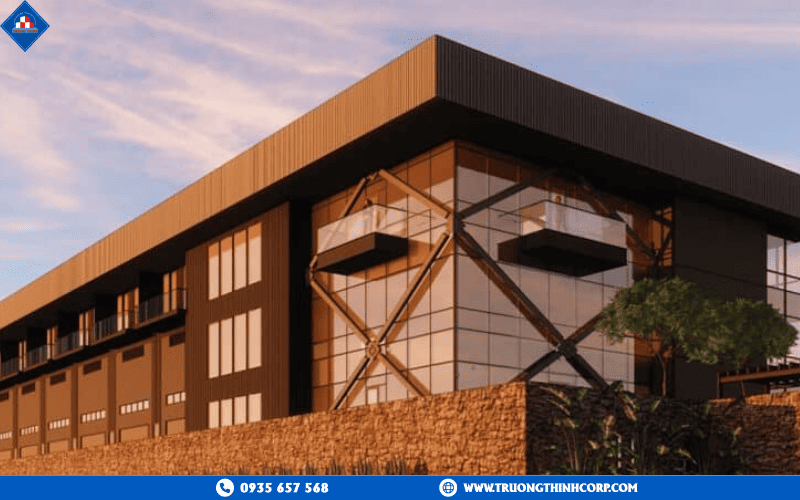
2.3 Typical applications in convention and exhibition buildings
Steel structures are widely applied in main halls, exhibition areas, large lobbies, and covered outdoor spaces. Their adaptability makes them suitable for both permanent facilities and expandable convention complexes that must respond to evolving functional requirements.
3. Steel structural systems for convention halls
Different steel structural systems can be applied depending on span requirements, architectural intent, and project constraints.
3.1 Portal frame systems
Portal frame systems are commonly used for convention halls with medium spans. They offer a simple, cost-effective solution with relatively straightforward fabrication and erection processes. While portal frames have limitations in very large spans, they are well suited for secondary halls, service areas, or auxiliary spaces within convention complexes.
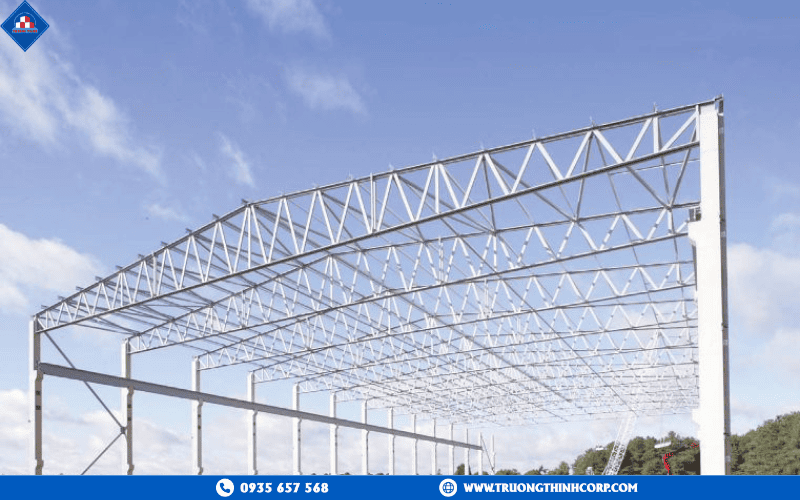
3.2 Truss systems for large-span roofs
For large-span roofs, truss systems such as roof trusses and arch trusses are among the most widely adopted solutions. These systems efficiently distribute loads and allow long spans while maintaining structural efficiency. Truss systems also provide convenient locations for suspending lighting, sound equipment, and exhibition installations, making them ideal for multifunctional convention halls.
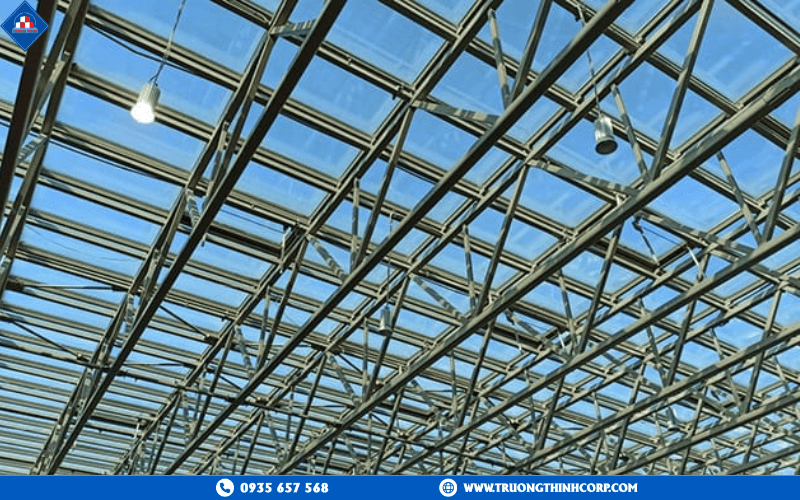
3.3 Space frame and hybrid systems
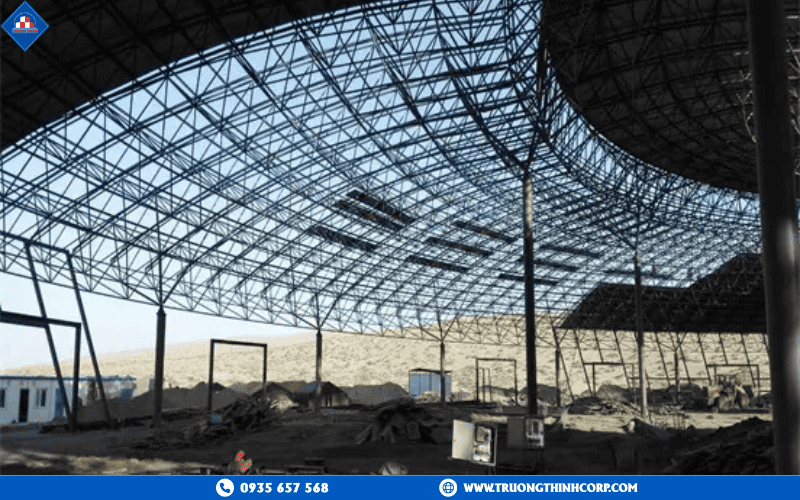
Space frame systems are often used in large-scale or architecturally iconic convention halls where very long spans and visual impact are required. These three-dimensional systems offer excellent load distribution, structural redundancy, and design flexibility. Hybrid solutions combining steel and concrete are also common, leveraging the strengths of both materials to optimize performance, cost, and constructability.
4. Design standards and structural safety in convention halls
Safety and compliance with design standards are critical in convention hall construction due to high occupancy levels and public use.
4.1 International and local design codes
Steel structures in convention halls are designed in accordance with recognized international standards such as AISC, Eurocode, and ASTM, as well as local regulations including TCVN. These standards define material properties, load combinations, and design methodologies to ensure consistent safety and performance.
4.2 Wind, seismic, and fire design considerations
Large-span roofs are particularly sensitive to wind effects, requiring careful analysis of uplift forces and structural stability. In seismic regions, steel structures provide advantages in ductility and energy dissipation. Fire resistance is another key consideration, addressed through fireproof coatings, fire-resistant cladding, and compliance with fire safety regulations for assembly buildings.
4.3 Coordination between structure, architecture, and MEP
Effective coordination between structural, architectural, and MEP systems is essential to avoid conflicts during construction. Steel structures support this coordination through precise prefabrication and clear integration paths for mechanical and electrical systems, reducing rework and improving construction efficiency.
5. Fabrication and construction process of steel convention halls
The construction process is a decisive factor in the success of convention hall projects.
5.1 Off-site steel fabrication
Steel components are typically fabricated in controlled factory environments, ensuring high precision, consistent quality, and reliable performance. Off-site fabrication allows foundation works and steel production to proceed in parallel, significantly reducing overall project timelines.
5.2 Transportation and on-site erection
Despite the large size of structural components, careful logistics planning enables efficient transportation and installation. On-site erection of steel structures is faster and safer than many traditional construction methods, particularly for large-span systems. Modern lifting equipment and erection techniques ensure accuracy and safety throughout the construction process.
6. Advantages of steel structures in convention halls
The growing adoption of steel structures in convention halls is driven by their clear technical and economic advantages.
6.1 Long-span capability and spatial flexibility
Steel structures excel in creating large, unobstructed spaces that can be easily reconfigured for different types of events. This flexibility allows convention halls to adapt to changing market demands and maximize utilization throughout their lifespan.
6.2 Construction speed and cost efficiency
Prefabrication and rapid on-site erection significantly shorten construction schedules, allowing convention halls to be completed and commissioned faster. Reduced construction time lowers indirect costs and improves project cash flow, making steel structures an economically attractive solution.
6.3 Expandability and lifecycle value
Steel structures support future expansion, renovation, and functional upgrades with minimal disruption. Their durability and adaptability contribute to lower lifecycle costs, making them a sustainable long-term investment for convention hall owners and operators.
steel structures in convention halls provide a proven solution for creating large, safe, and flexible event spaces that meet the demanding requirements of modern convention facilities. By combining long-span capability, fast construction, and long-term cost efficiency, steel structures help convention hall projects achieve both technical excellence and sustainable value. With extensive experience in steel structure design, fabrication, and installation for large-scale convention and exhibition buildings, Truong Thinh is well positioned to deliver optimized, reliable steel solutions tailored to each project’s needs. To ensure safety, performance, and lasting value for your convention hall investment, contact us to discuss your steel structure construction requirements.
Planning a convention or event hall?
Truong Thinh Corp builds and exports large-span steel structures for convention halls and event centers — vast, column-free spaces delivered fast. Get a free quotation.
Frequently Asked Questions
Why are steel structures ideal for convention halls?
Convention halls need huge, obstruction-free floor areas; steel trusses and frames achieve very large clear spans that concrete cannot match economically.
What span can steel achieve for a convention hall?
Steel truss systems can span 60 metres and beyond, creating vast column-free halls for events, exhibitions and conferences.
How quickly can a convention hall be built with steel?
Prefabricated steel is erected far faster than concrete — important for venues working to fixed opening or event dates.
Does Truong Thinh export convention-hall steel structures?
Yes. We fabricate in Vietnam and export complete large-span structures with logistics and on-site technical support.