

A tower structure — whether an observation tower or a telecom support structure — is one of the few building types where wind, not gravity load, is almost always the governing design case. A tall, slender steel structure with comparatively little self-weight is far more sensitive to wind loading than the same amount of steel arranged into a low, wide building frame.
1. Why wind governs tower design
As a structure gets taller and more slender, the ratio of wind force to structural self-weight increases, which is why tower design starts from the site’s design wind speed and the tower’s height and shape, then sizes the lattice or monopole section to resist that wind case — gravity loads from equipment and access platforms matter, but rarely govern the primary structure’s sizing the way they would in a building.
1.1 Lattice vs. monopole structural forms
A lattice tower (an open, triangulated steel frame) presents less solid surface area to the wind than a monopole (a single tapered tubular or built-up shaft) of the same height, which generally makes lattice construction more material-efficient for taller towers, while a monopole has a smaller footprint and is often preferred where ground space is limited or the tower needs a cleaner appearance.
1.2 Equipment loading must be fixed before the tower is fabricated
Telecom towers in particular carry antennas, dishes, and equipment platforms whose weight, wind area, and mounting height all feed directly into the tower’s design — a tower fabricated without a confirmed, complete equipment loading schedule risks being unable to safely carry equipment added later without reinforcement.
2. What to lock in before fabrication
| Item | Why it has to be fixed early |
|---|---|
| Site design wind speed and terrain category | Directly sets the governing load case for the entire structure |
| Full equipment loading schedule (antennas, platforms, future additions) | Underestimating future equipment loads is one of the most common causes of costly tower reinforcement later |
| Foundation type and soil conditions | A tall tower’s overturning moment under wind load places significant demand on the foundation design |
| Coating specification | Towers are fully weather-exposed with limited maintenance access, which typically favors hot-dip galvanizing |
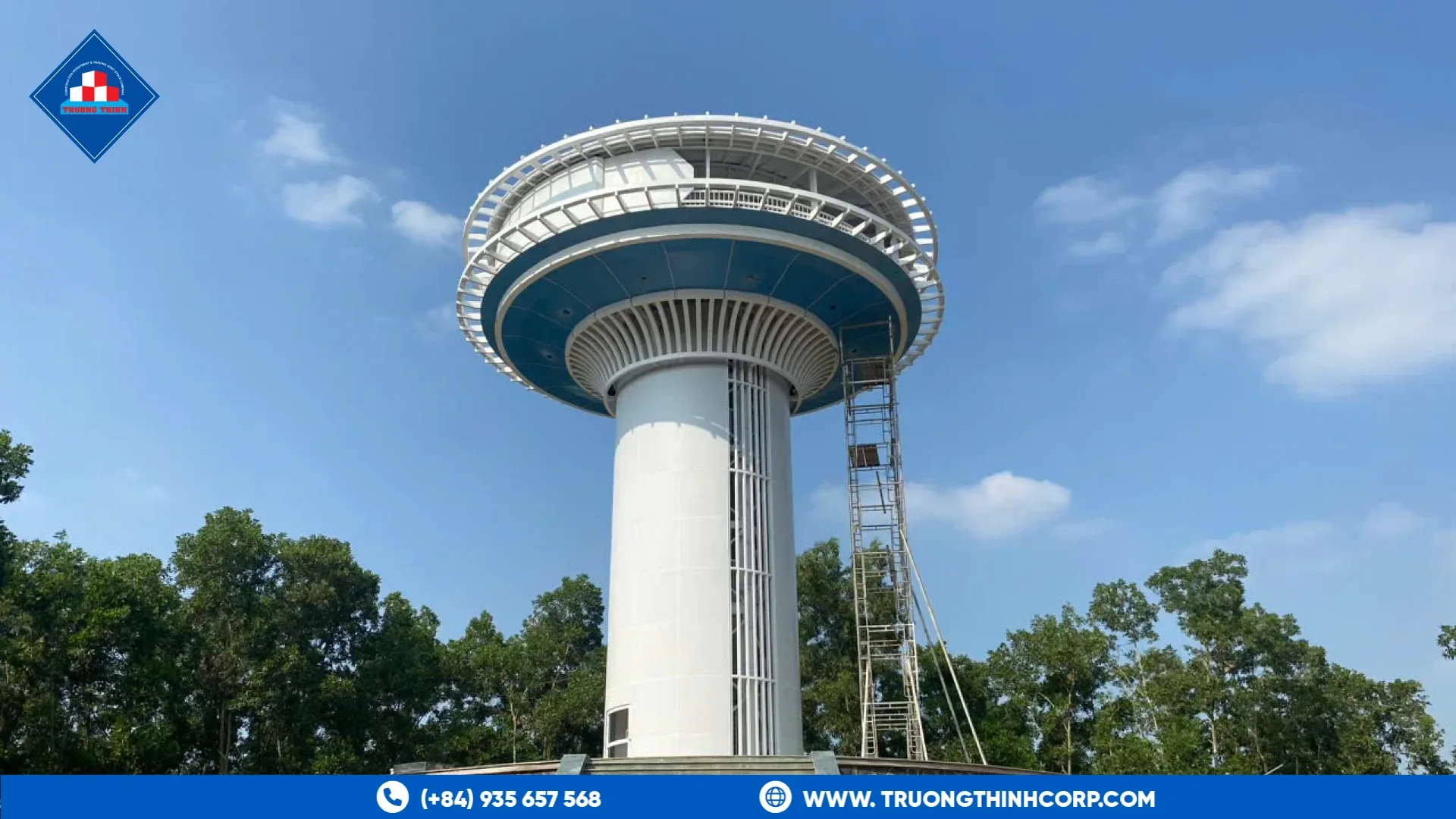
3. Fabrication accuracy for bolted lattice and monopole sections
Lattice tower sections in particular rely on precise, repeatable hole placement across many similar members so the structure bolts together correctly on site — the same CNC-cutting and shop-drawing discipline used across Truong Thinh Corp’s repetitive structural steel work applies directly to tower component fabrication.
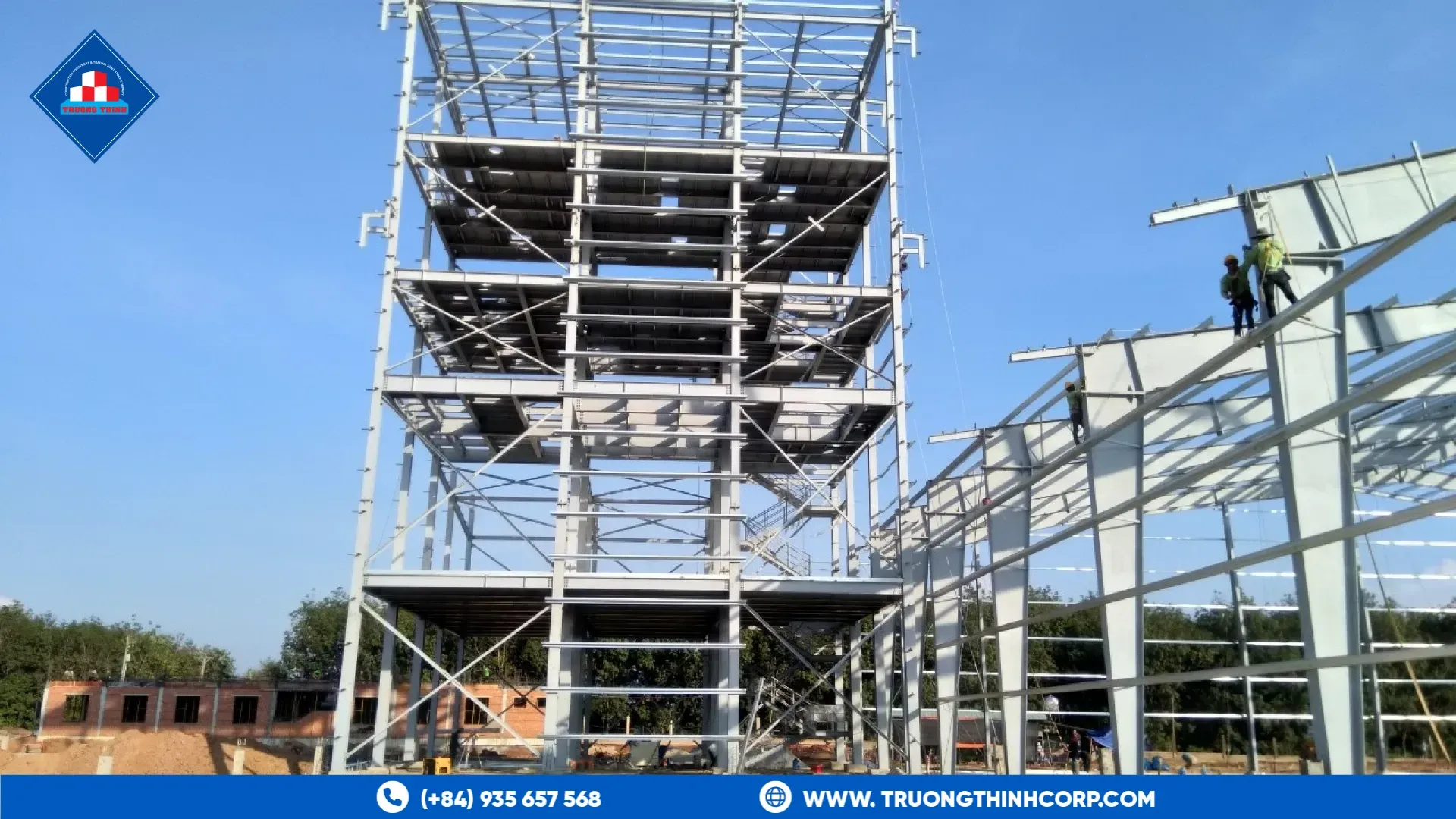
Getting the equipment loading schedule and site wind data confirmed before fabrication begins is the single most important step in a tower project, since it is far more disruptive to reinforce a tower after erection than to size it correctly from the start.
Frequently Asked Questions
Why does wind govern tower design more than it does for buildings?
As a structure gets taller and more slender, the ratio of wind force to structural self-weight increases, so tower design starts from the site’s design wind speed rather than from gravity loads.
What is the difference between a lattice tower and a monopole?
A lattice tower is an open, triangulated frame that presents less surface area to wind and is generally more material-efficient for taller towers, while a monopole is a single tapered shaft with a smaller footprint, often preferred where ground space is limited.
Why does the equipment loading schedule need to be finalized before fabrication?
Antennas, dishes, and equipment platforms feed directly into the tower’s design, and underestimating future equipment loads is one of the most common causes of costly reinforcement after the tower is already erected.
Free quotation · Reply within 24 hours
Request a quotation for steel tower structure
Need a steel canopy, observation tower or corrosion-resistant structure? Send the span, height and site conditions and we will return a tailored quotation.
Need an answer faster? Call our engineers directly.
Mon–Fri 8:00–17:30 · Sat 8:00–12:00 (GMT+7)