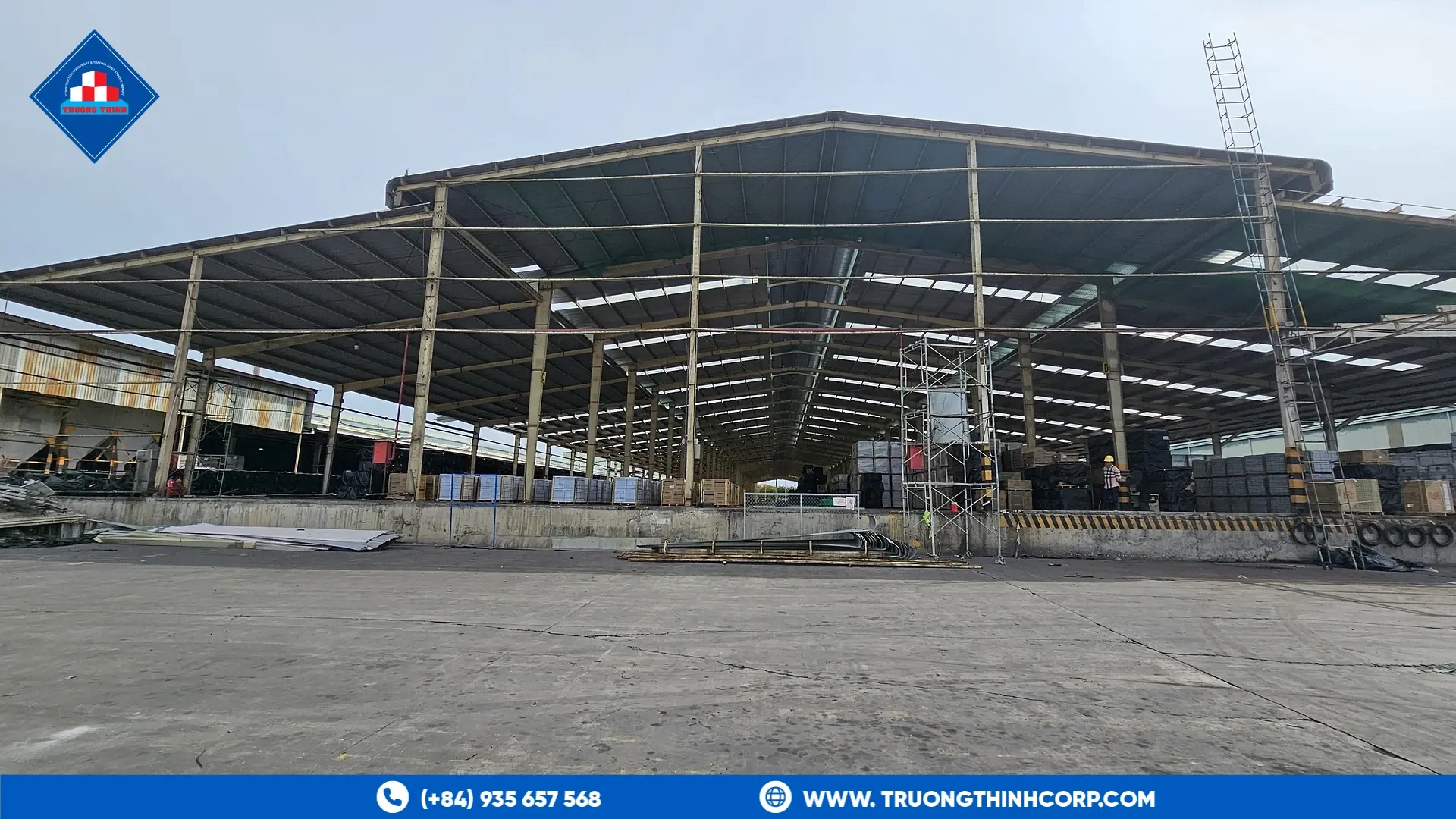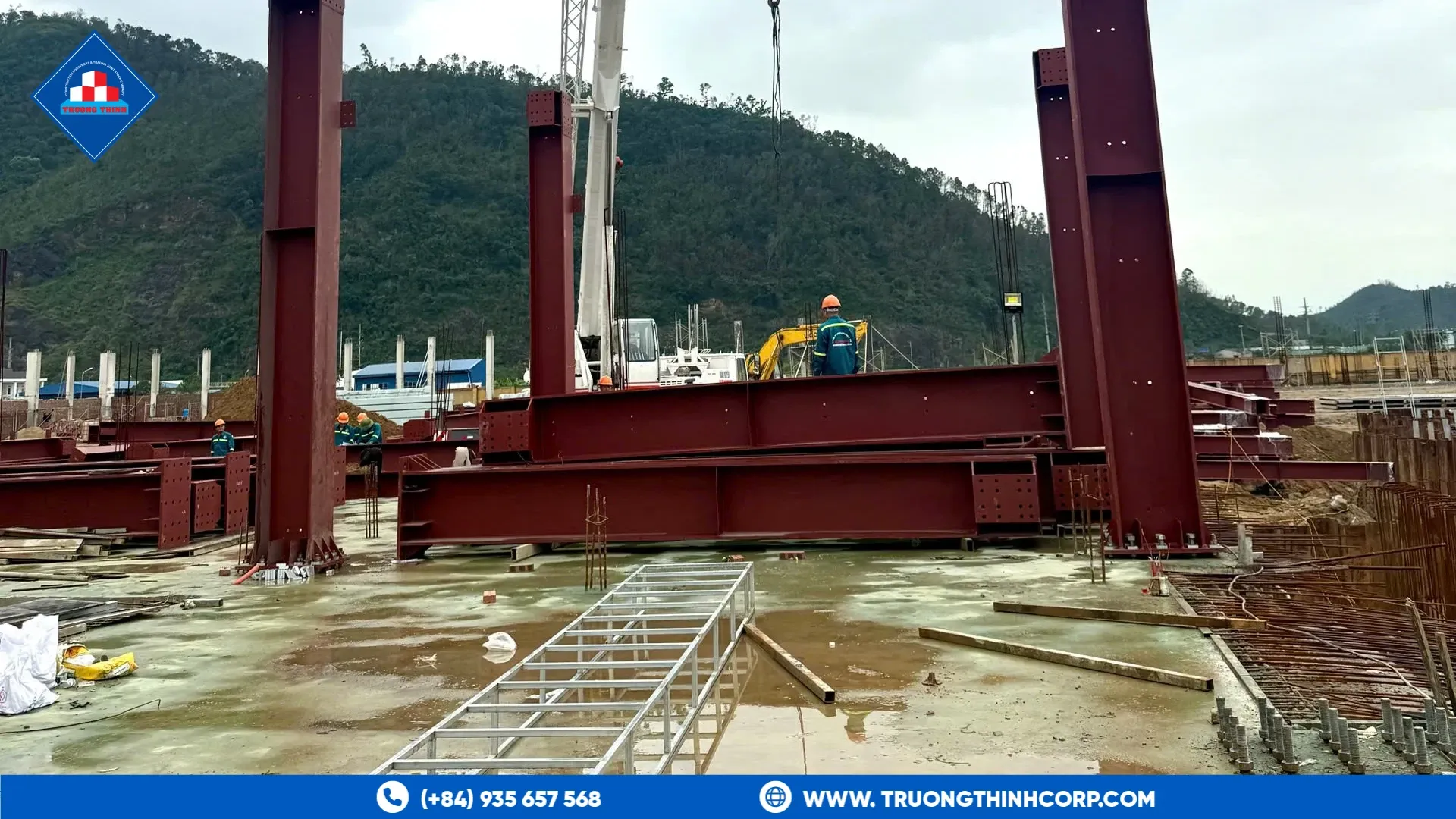


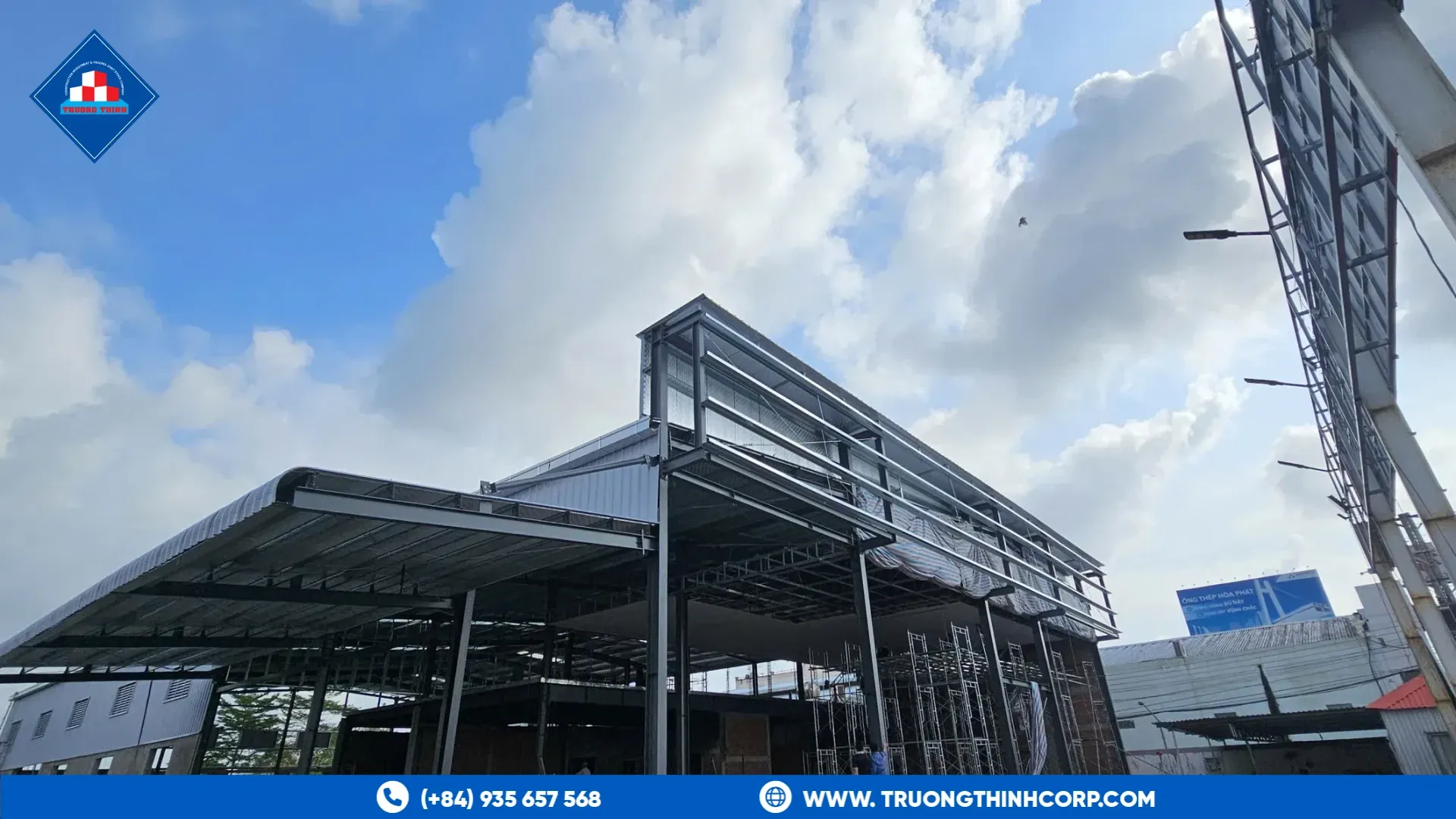
An automotive manufacturing plant’s structural steel has to serve a production line that is denser, heavier-loaded, and more frequently reconfigured than most industrial buildings — overhead cranes, conveyor systems, and heavy stamping or assembly equipment all impose loads directly on the frame, and the layout often changes as production lines are upgraded over the plant’s life.
1. Overhead crane and conveyor loads on the primary frame
Automotive assembly commonly uses overhead cranes and monorail conveyor systems to move body panels, engines, and sub-assemblies along the line — these loads, including dynamic effects from crane travel and lifting, are engineered into the primary frame’s crane runway beams and columns, not treated as a secondary addition after the building shell is designed.
1.1 Column grid set by production line layout, not just span efficiency
Where a warehouse’s column grid is optimized mainly for clear span and racking, an automotive plant’s grid has to also avoid interrupting conveyor paths, robotic work-cell envelopes, and line-side material staging — which usually means the structural engineer works from the production line layout, not the other way around.
1.2 Floor loading for stamping and heavy assembly equipment
Stamping presses and heavy assembly fixtures impose concentrated floor loads that the slab-on-grade design has to account for in coordination with the equipment supplier’s specifications, similar in principle to the process-equipment coordination needed in food processing or industrial plants generally.
2. Designing for phased expansion and line changes
| Planning item | Why it matters for automotive plants specifically |
|---|---|
| Future production line changes | Automotive lines are reconfigured more often than typical warehouse racking, so some structural allowance for future crane or conveyor loads is worth discussing early |
| Phased plant expansion | Column grid and end-wall bracing are laid out to accommodate the eventual footprint, even if only an initial phase is fabricated first |
| Crane runway beam sizing | Engineered against the specific crane load, wheel spacing, and fatigue-design requirements of the actual crane system to be installed |
3. Fabrication capacity for a demanding, precision-driven building type
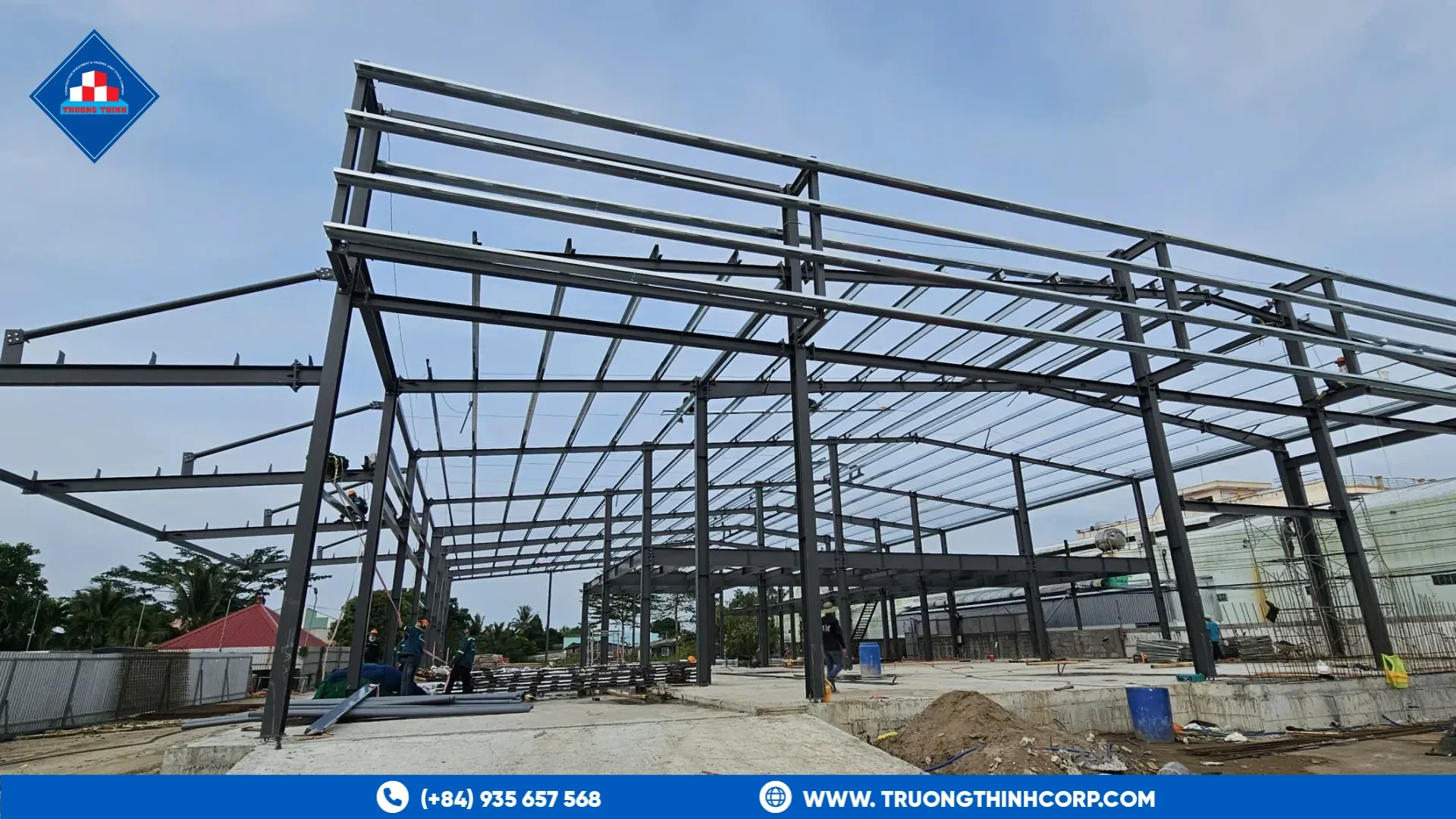
An automotive plant’s structural steel needs the same crane-runway engineering and dimensional accuracy already required for general industrial steel buildings with overhead cranes, applied with particular attention to the production line’s specific load and layout requirements.
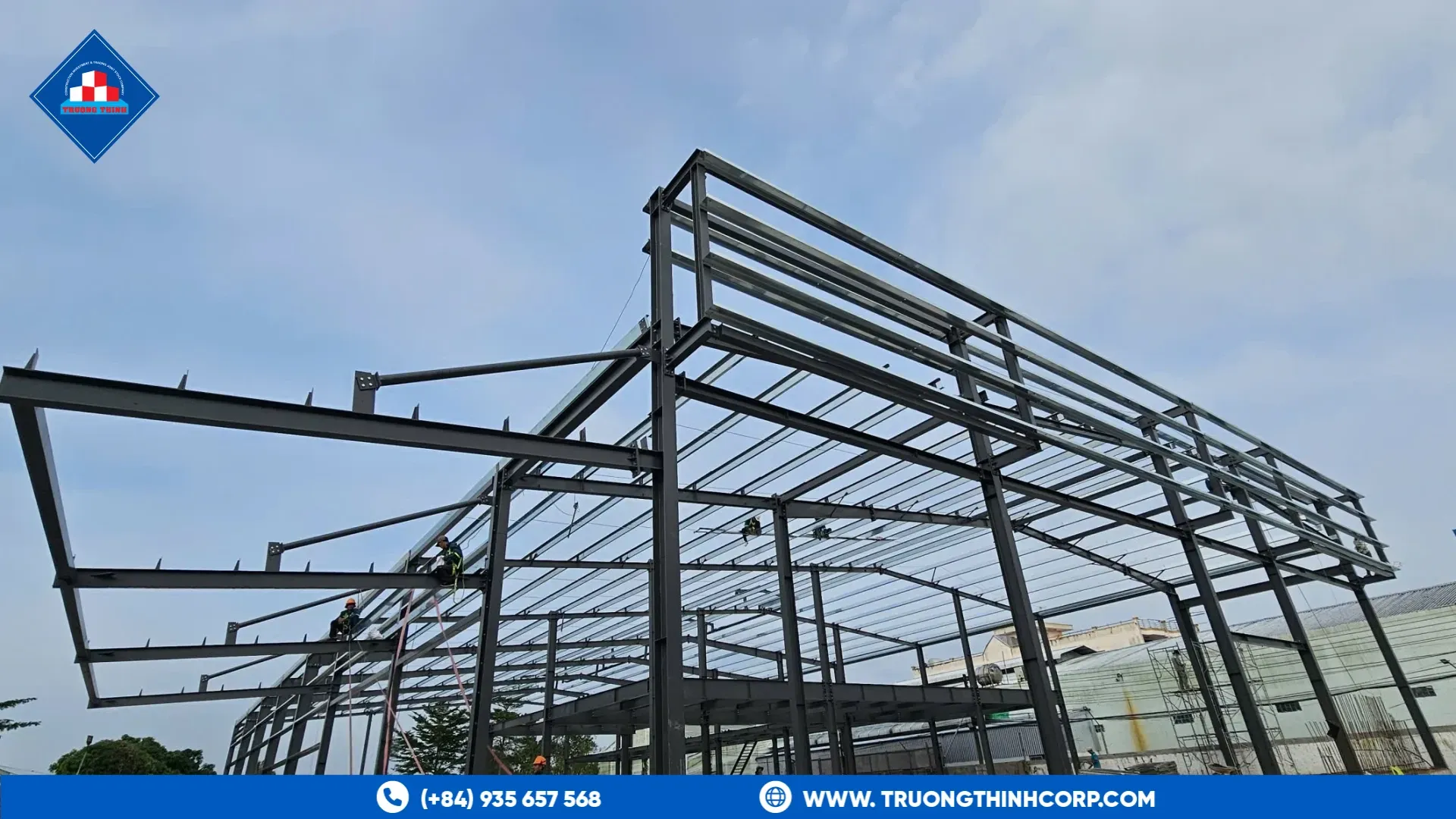
Truong Thinh Corp engineers crane runway beams and supporting columns for the specific crane load, wheel spacing, and fatigue-design requirements of the crane system involved — the same discipline our industrial steel building guide covers for factory buildings generally, applied to the higher demands of automotive manufacturing.
Frequently Asked Questions
How do overhead cranes and conveyors affect an automotive plant’s structural steel?
These loads, including dynamic effects from crane travel and lifting, are engineered directly into the primary frame’s crane runway beams and columns rather than treated as a secondary addition after the building shell is designed.
Why is the column grid in an automotive plant different from a standard warehouse?
It has to avoid interrupting conveyor paths, robotic work-cell envelopes, and line-side material staging, so the structural engineer typically works from the production line layout rather than optimizing span alone.
Should an automotive plant’s steel structure allow for future production line changes?
It is worth discussing at the design-brief stage, since automotive lines are reconfigured more often than typical warehouse racking and some structural allowance for future crane or conveyor loads can avoid costly retrofits later.
Free quotation · Reply within 24 hours
Request a quotation for steel structure automotive plant
Building a factory, warehouse or production plant? Send your drawings or building requirements and our engineering team will return a fabrication quotation with tonnage, lead time and delivery options.
Need an answer faster? Call our engineers directly.
Mon–Fri 8:00–17:30 · Sat 8:00–12:00 (GMT+7)