

A steel grade is a number on a mill certificate — S355, A572 Grade 50, SS400 — and every one of those numbers hides a real trade-off between how much load a member can carry, how easily it welds, and how it behaves after twenty years of weather. Specifying a grade without weighing those three together is how projects end up either overpaying for strength they never use, or underbuilding a connection that fatigues years early.
1. What the grade number actually tells you
Every structural steel standard is built around two numbers: yield strength (where permanent deformation begins) and tensile strength (where the material fails outright). Everything else — weldability, ductility, cost — follows from how the mill hit those two targets.
1.1 The grades Truong Thinh Corp fabricates most often, side by side
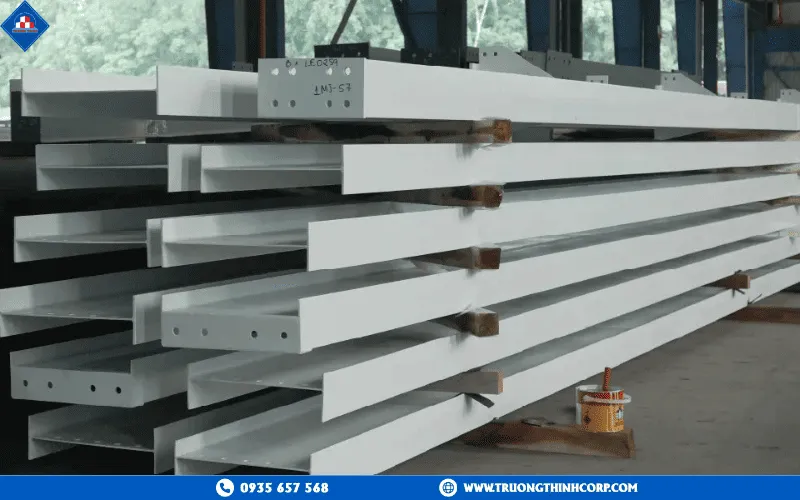
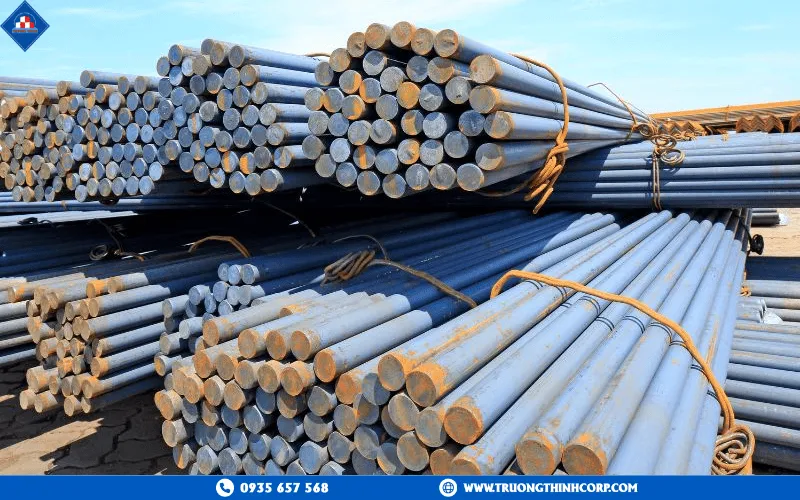
S235 and ASTM A36 sit at the entry tier — yield strength around 235–250 MPa, easy to weld, forgiving to fabricate, and the default choice for secondary framing and light industrial sheds. S275 and JIS SS400 (yield ~245–275 MPa) step up for general-purpose primary framing. S355 and ASTM A572 Grade 50 (yield 345–355 MPa) carry roughly 40–50% more load per unit cross-section than A36, which is why they show up in long-span trusses, crane-supporting columns, and anywhere member weight itself becomes a cost driver.
1.2 Weldability drops as strength climbs
Higher-strength grades achieve their yield through alloying and controlled rolling, which narrows the acceptable welding heat input window. A572 Grade 50 needs tighter preheat and interpass temperature control than A36 to avoid hydrogen cracking at the weld toe — a detail that affects welder qualification and inspection cost, not just material price.
1.3 Where the standards actually diverge
ASTM (US), JIS (Japan), and EN (Europe) grades that look equivalent on paper — A36 vs. SS400 vs. S235 — differ in allowable impurity levels and toughness testing requirements, which matters most in low-temperature or high-fatigue applications. Truong Thinh Corp specifies to the standard the destination market actually inspects against, not whichever is most convenient to stock.
2. Why the same grade performs differently on two different projects
Grade selection only sets the starting material. What actually determines service life is how that material is loaded and exposed once it’s in the ground.
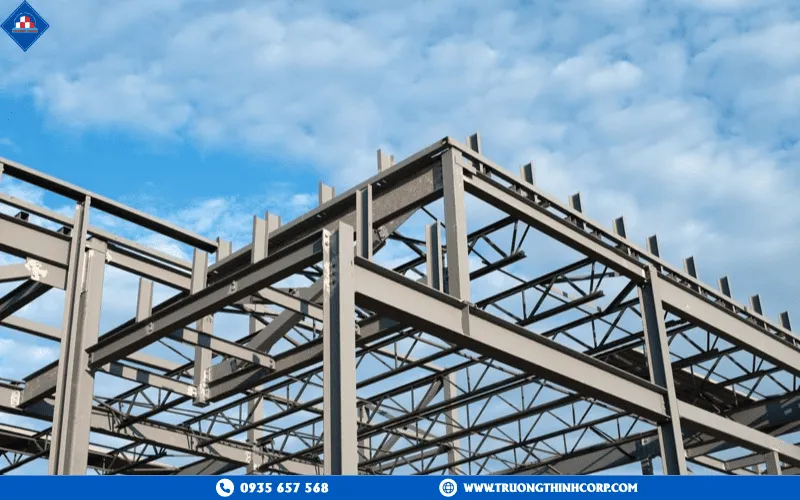
2.1 Corrosion removes cross-section, not strength
A corroded member doesn’t get “weaker steel” — it loses actual material thickness, and capacity drops with it. In coastal or industrial-humidity environments, uncoated structural steel can lose measurable section within a decade; the grade chosen barely matters if the protective system fails first.
2.2 Fatigue is a connection problem, not a material problem
Cracks under repeated loading almost always start at a stress concentration — a weld toe, a bolt hole, a sudden change in section — not in the middle of a plain plate. This is why fatigue-critical structures (crane runways, bridges, anything with daily dynamic load) are designed around connection detail category as much as base material grade; Truong Thinh Corp specifies smoother weld profiles and avoids abrupt section changes at high-cycle locations for exactly this reason.
2.3 What an inspection is actually looking for
A useful inspection checks specific failure precursors: paint film thickness at edges and welds (where coatings thin fastest), hairline cracking radiating from bolt holes, and section loss at ground-contact or drainage points — not a general visual pass. Catching these before they propagate is what turns a repaint into an avoided member replacement.
3. Protective systems, specified by exposure, not by default
The right coating system is chosen against the specific corrosion category of the site, not applied as a blanket standard.
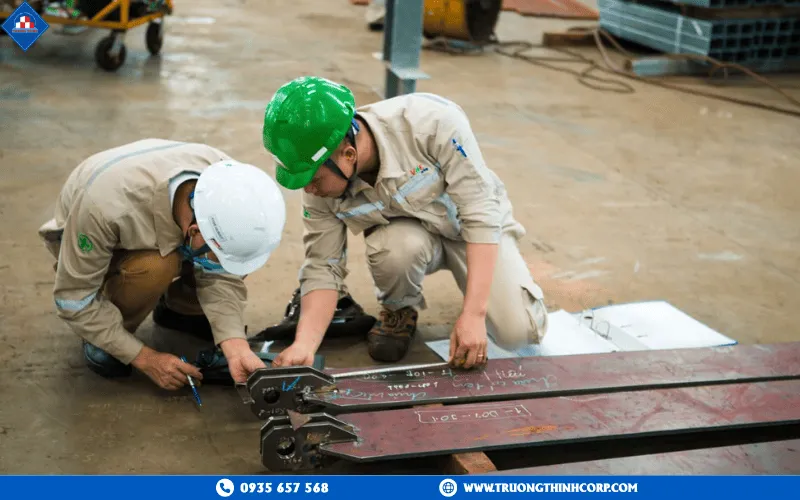
3.1 Hot-dip galvanizing
Galvanizing bonds a zinc layer that corrodes preferentially to the steel underneath — even a scratch through to bare steel stays protected because the surrounding zinc keeps sacrificing itself first. This is the default for structures exposed to saltwater, chemical vapor, or sustained high humidity — the same coastal exposure category that drives coating choices on seaside villa frames — and needs the least maintenance over a multi-decade service life.
3.2 Coating systems matched to the specific threat
Fire-rated intumescent coatings, chemical-resistant epoxy, and heat-stable paints solve different problems and aren’t interchangeable — specifying epoxy where fire rating is actually required, or vice versa, is a common and costly mismatch. Truong Thinh Corp selects the system per member based on what that member is actually exposed to, not a single spec across the whole structure.
4. Matching grade to project without over- or under-specifying
The most expensive mistake in grade selection isn’t choosing the wrong standard — it’s applying one grade uniformly across a structure with very different demands member to member.
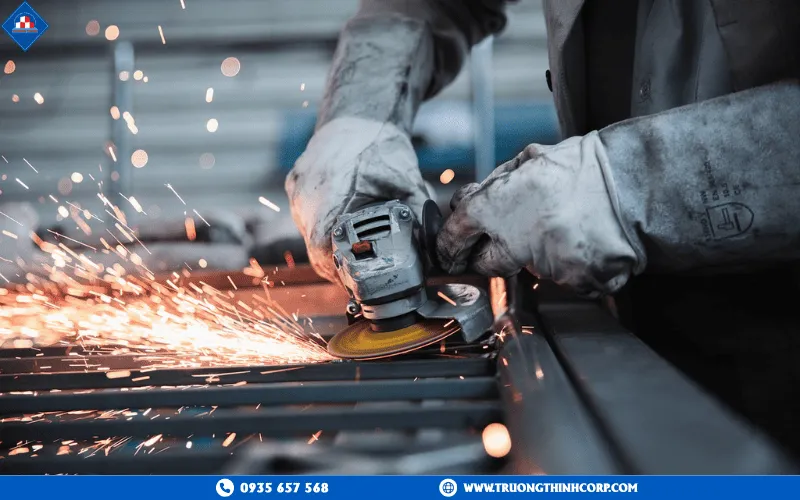
4.1 Sizing by what the member actually carries
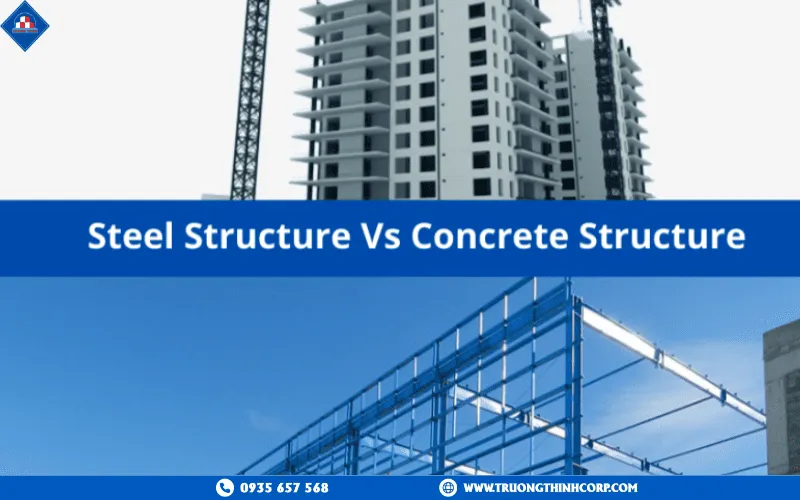
Long, column-free spans like those used in high-rise steel frames or crane-loaded industrial bays justify S355/A572 Grade 50’s higher yield strength because it directly reduces member weight and foundation load. Secondary framing, purlins, and bracing rarely need that premium — A36/S235 does the job at lower cost and easier fabrication.
4.2 Total cost of ownership beats sticker price
A cheaper grade that corrodes faster or fatigues at a lower cycle count costs more over a 30-year service life than a properly matched higher grade with correct protection. Truong Thinh Corp models this lifecycle comparison — material cost, expected maintenance interval, and protection system cost — rather than quoting on base material price alone.
Grade selection is a lifecycle decision, not a purchasing checkbox: the right choice balances yield strength against weldability, exposure, and fatigue detail — member by member, not uniformly across the structure. Truong Thinh Corp specifies and fabricates to this standard for every project. For consultation and support, contact us at sale@truongthinhcorp.com.
Not sure which steel grade you need?
Truong Thinh Corp selects and fabricates the right structural steel grade for your loads, environment and budget. Talk to our engineers for guidance and a free quotation.
Frequently Asked Questions
What are the common grades of structural steel?
Widely used structural grades include S235, S275 and S355 (EN, yield 235–355 MPa), and A36, A572 Grade 50 and A992 (ASTM, yield ~250–345 MPa), each suited to different load and fabrication demands.
Which structural steel grade is the most durable?
Higher grades such as S355 or A572 Grade 50 offer greater yield strength, but real-world durability depends more on matching the coating system to actual site exposure than on grade alone.
How do I choose the right steel grade for a project?
Grade selection balances load per member, weldability, fatigue exposure and lifecycle cost — Truong Thinh Corp specifies grade member by member rather than applying one grade uniformly.
Does steel grade affect corrosion resistance?
Standard structural grades corrode at similar rates; long-term protection comes from the coating system matched to exposure category, not from the base grade itself.