

Steel does not burn, but it softens as it heats, and an unprotected frame can lose its capacity in a fire. Fire protection for steel structures is how designers keep the frame standing for the time the building code requires. The method depends on the rating, the building use and the surface of the steel, so decide it before the steel is detailed.
Why steel needs protection
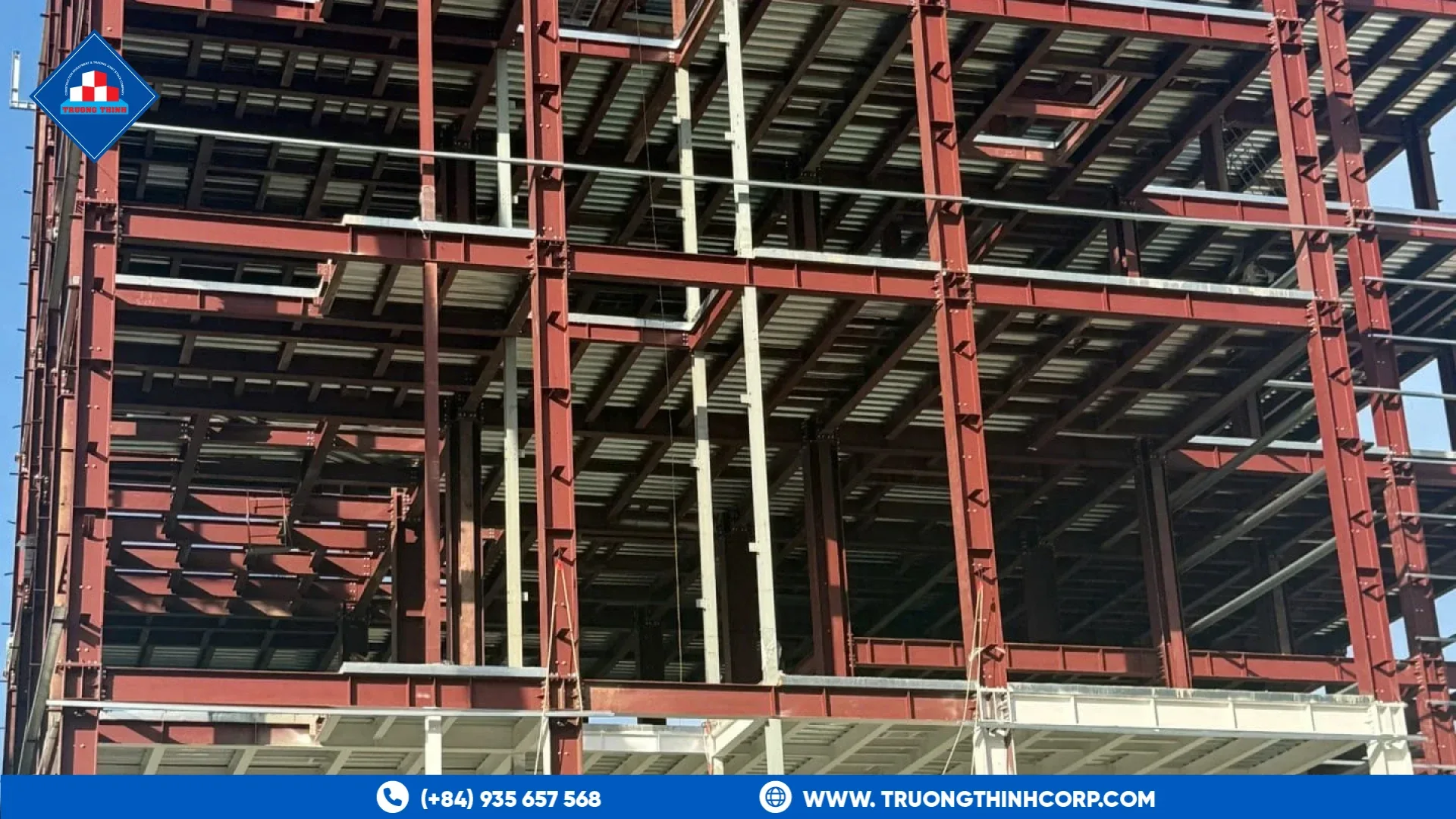
At normal temperatures steel keeps its strength. In a fire the steel temperature rises, and its strength and stiffness fall. A beam or column loaded close to its capacity may then fail sooner than a heavier member. Not every building needs protection: the requirement comes from the building code, the occupancy and the height. A low single-storey factory may need little or none, while a multi-storey building usually needs a rating. Check the national fire safety regulation for buildings and the advice of the fire engineer.
Fire protection for steel structures: the main options
- Intumescent coatings. A thin paint that swells when it is heated and forms an insulating layer. It keeps the steel visible, can be applied in the shop and suits exposed frames.
- Sprayed cementitious or fibrous coatings. A sprayed layer, usually on beams and columns that are hidden above a ceiling. It is economical on large areas, but it is rough and needs a clean-up.
- Boards. Fire-resistant boards fixed around the member in a neat box. Good finish, but slower to install and bulkier at joints.
- Concrete encasement. The traditional solution. It adds weight and form work, so it suits few modern projects.
A general description of the methods appears in this overview of fireproofing.
What decides the thickness of fire protection
The protection thickness depends on the required rating, the steel section and how much of it is exposed to the fire. A thin, exposed section heats faster than a heavy one and needs more protection. The supplier of the product gives the thickness from tested data. Do not copy a number from another project.
Coordinate with the rest of the coating system
Fire protection sits on top of the surface preparation and primer, so it must be compatible with them. Agree the system in the specification: blast grade, primer, fire product and any top coat. Our guides to Sa 2.5 blast cleaning and to corrosion-resistant steel structures explain the surface steps that come first.
Shop-applied intumescent coating shortens the site program, but the coated members need careful handling and protection from damage on the way to site. Damaged areas must be repaired before the steel is covered.
Questions to put to the designer
- What fire resistance rating applies to each member, and who sets it?
- Which parts of the frame are protected and which are left exposed?
- Which product and thickness are specified, and who certifies the supplier's data?
- Who applies it, in the shop or on site, and who inspects the thickness?
Plan for it early
Fire protection for steel structures changes the schedule, the detailing and the coating, so raise it in the first design meeting. Our articles on the disadvantages of steel structures and on the industrial steel building show where it fits in the wider design.
If your building has a fire resistance requirement, share the use, the floor area and the rating, and discuss your structural design requirements with our engineering team.
Frequently Asked Questions
Does every steel building need fire protection?
No. The requirement comes from the building code, the occupancy, the height and the size. Many single-storey industrial buildings need little or none. Ask the fire engineer.
Is intumescent paint better than boards?
Neither is better in every case. Paint gives a clean finish and shop application, while boards can suit high ratings and hidden members. Choose with the designer.
Can fire protection be added after the building is finished?
It can, but access, the existing coating and the program make it harder and more costly. It is simpler to decide at design stage.
Free quotation · Reply within 24 working hours
Request a quotation for fire protection for steel structures
Tell us about your steel structure project. Our engineering and sales team will reply with a tailored proposal, usually within 24 working hours.
Need an answer faster? Call our engineers directly.
Mon–Fri 8:00–17:30 · Sat 8:00–12:00 (GMT+7)