

Welding defects in structural steel are flaws in the weld metal or the surrounding steel. Some are cosmetic, and some weaken the joint. Knowing the common types helps a buyer read an inspection report, and helps a fabricator prevent the problem. Acceptance limits come from the project specification, not from a general rule.
Common welding defects in structural steel
- Porosity. Small gas holes in the weld, caused by moisture, contamination or poor shielding.
- Lack of fusion. The weld metal did not bond to the parent steel or to the previous pass. Often caused by low heat input or a bad technique.
- Incomplete penetration. The weld does not reach the full depth of the joint.
- Undercut. A groove melted into the parent metal beside the weld, weakening the section.
- Cracks. Fractures in the weld or heat-affected zone. They are the most serious defect type and are usually not acceptable.
- Slag inclusions. Non-metallic residue trapped in the weld.
- Distortion. Not a flaw in the weld itself, but a movement of the steel from heat. See steel column fabrication tolerances.
The general processes are outlined in this overview of welding.
What causes welding defects in structural steel
Most weld defects trace back to a few causes: wrong procedure settings, poor joint preparation, damp or dirty consumables, unsuitable preheat, weather and wind at the joint, or a weak technique. A controlled welding system addresses each one. Our guide to welding procedure specifications explains how procedures set the variables.
How defects are found
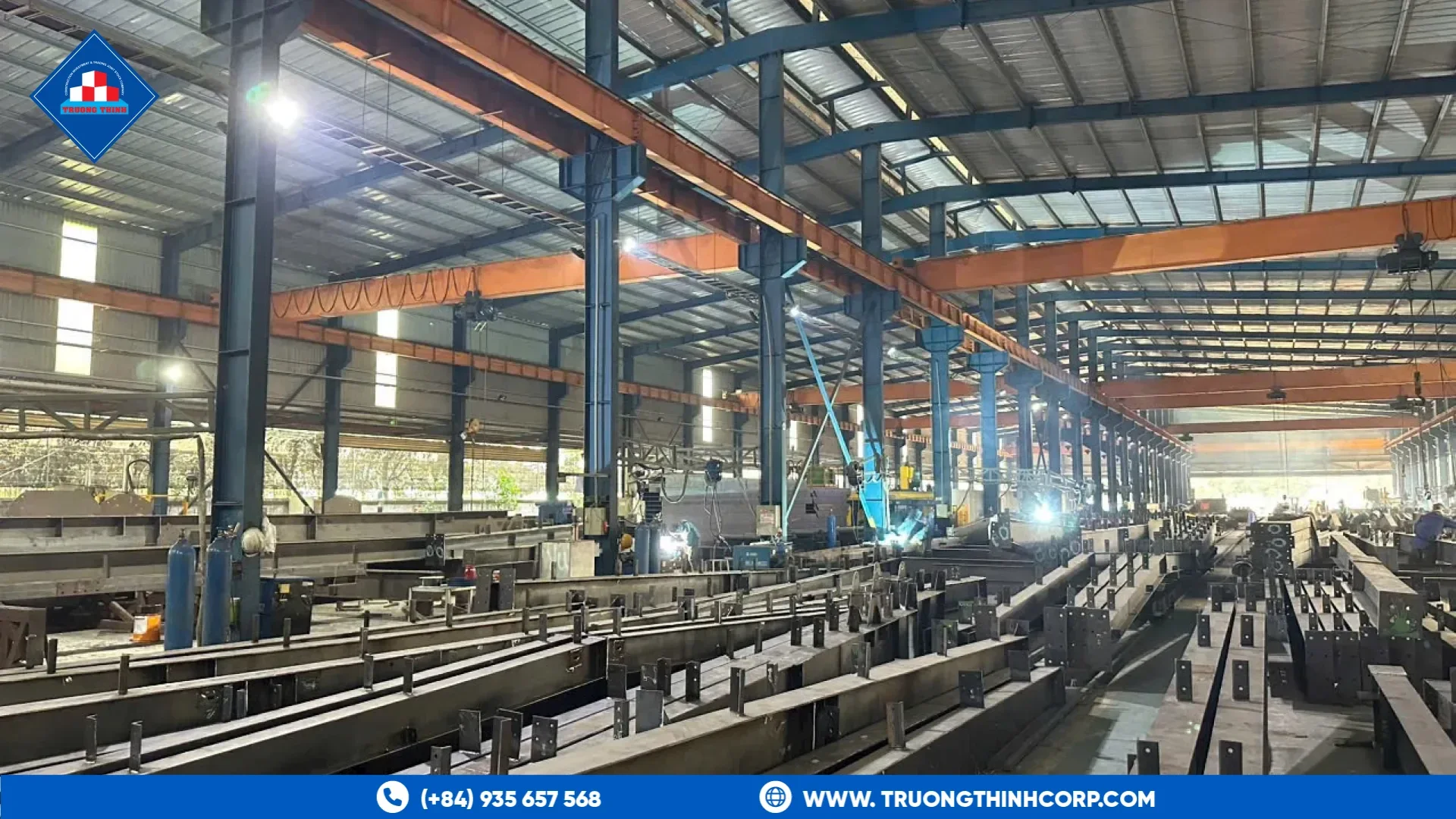
Visual inspection finds surface defects. Non-destructive testing, such as ultrasonic, magnetic particle and penetrant testing, finds hidden or surface-breaking ones. The scope depends on the specification and on the importance of the joint. Records show what was tested and the result.
How a fabricator prevents defects
- A qualified procedure for each joint type
- Qualified welders and a welding coordinator
- Dry, correctly stored consumables
- Clean, well-prepared joints
- Controlled preheat and interpass temperature where needed
- Inspection at set points, with records
- Corrective action when a defect is found
These are the same topics covered by a welding quality system. Our explanation of EN ISO 3834-2 welding certification describes how they are organized, and our guide to welding quality certificates shows how to verify one.
Repair of defects
Repair is part of normal fabrication, but it must be controlled. The repair procedure should say how the defect is removed, how the joint is prepared again, which welding procedure is used and which tests follow. Keeping this record shows that the weld was brought back to the required quality.
A defect is removed by grinding or gouging and re-welded under a repair procedure, then retested. Repeated repairs in one place are a warning sign, so the cause should be found and fixed. Do not paint over a defect, and keep the repair record.
What to ask structural steel fabricators
When you compare structural steel fabricators, ask for the weld acceptance criteria they apply, the inspection plan, the repair procedure and a sample inspection report. At Truong Thinh, the quality control department inspects dimensions and welds to AWS D1.1 before delivery. Our guide to bolted or welded connections explains where welds are the better choice, and our overview of steel factory quality control shows the full routine.
If you need to agree weld acceptance criteria for a project, send the specification, and discuss your structural design requirements with our engineering team.
Frequently Asked Questions
Is every weld defect a reason to reject a member?
No. Acceptance depends on the type, size and position of the defect and on the specification. Cracks are generally not accepted.
Can welding defects appear after delivery?
Some can, such as fatigue cracks from repeated loading. Good procedures and inspection reduce the risk.
Who decides acceptance criteria?
The project specification, by reference to a standard. Agree it before fabrication starts.
Free quotation · Reply within 24 working hours
Send your project details to our engineering team
Tell us about your steel structure project. Our engineering and sales team will reply with a tailored proposal, usually within 24 working hours.
Need an answer faster? Call our engineers directly.
Mon–Fri 8:00–17:30 · Sat 8:00–12:00 (GMT+7)