

Bolted and welded connections both join steel members into one structure, and most projects use both. Welding gives a continuous connection with no site fastening, but it needs controlled fabrication and inspection. Bolting allows faster site assembly and easier adjustment, but it depends on hole accuracy, bolt tightening and the condition of the joint over time. The right choice depends on the member, the load, the fabrication setting and the erection method, and it should be confirmed by the structural engineer.
How each connection carries load
A welded connection makes the members behave as one piece at the joint, so the load passes through the weld metal. The weld size, length and quality decide the capacity. A bolted connection transfers load through bearing of the bolts on the holes or through friction between the plates, depending on how the bolts are tightened and designed. Both types must be checked for their own failure modes, such as weld cracking or bolt shear and plate tearing.
Where welding is usually preferred
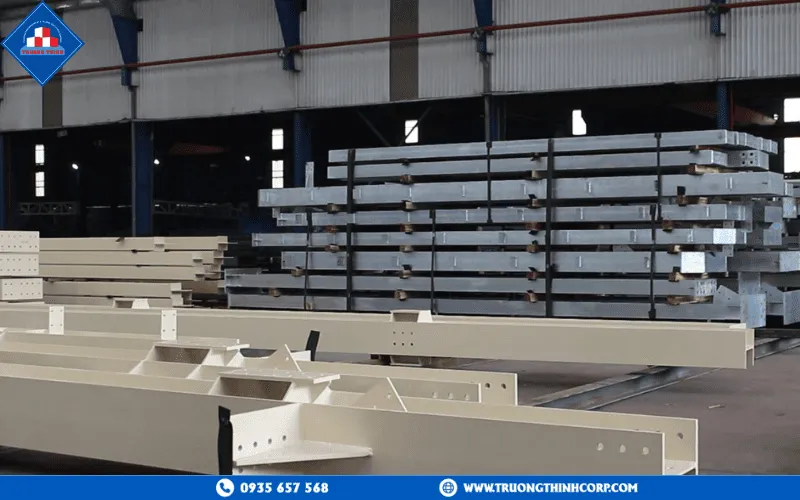
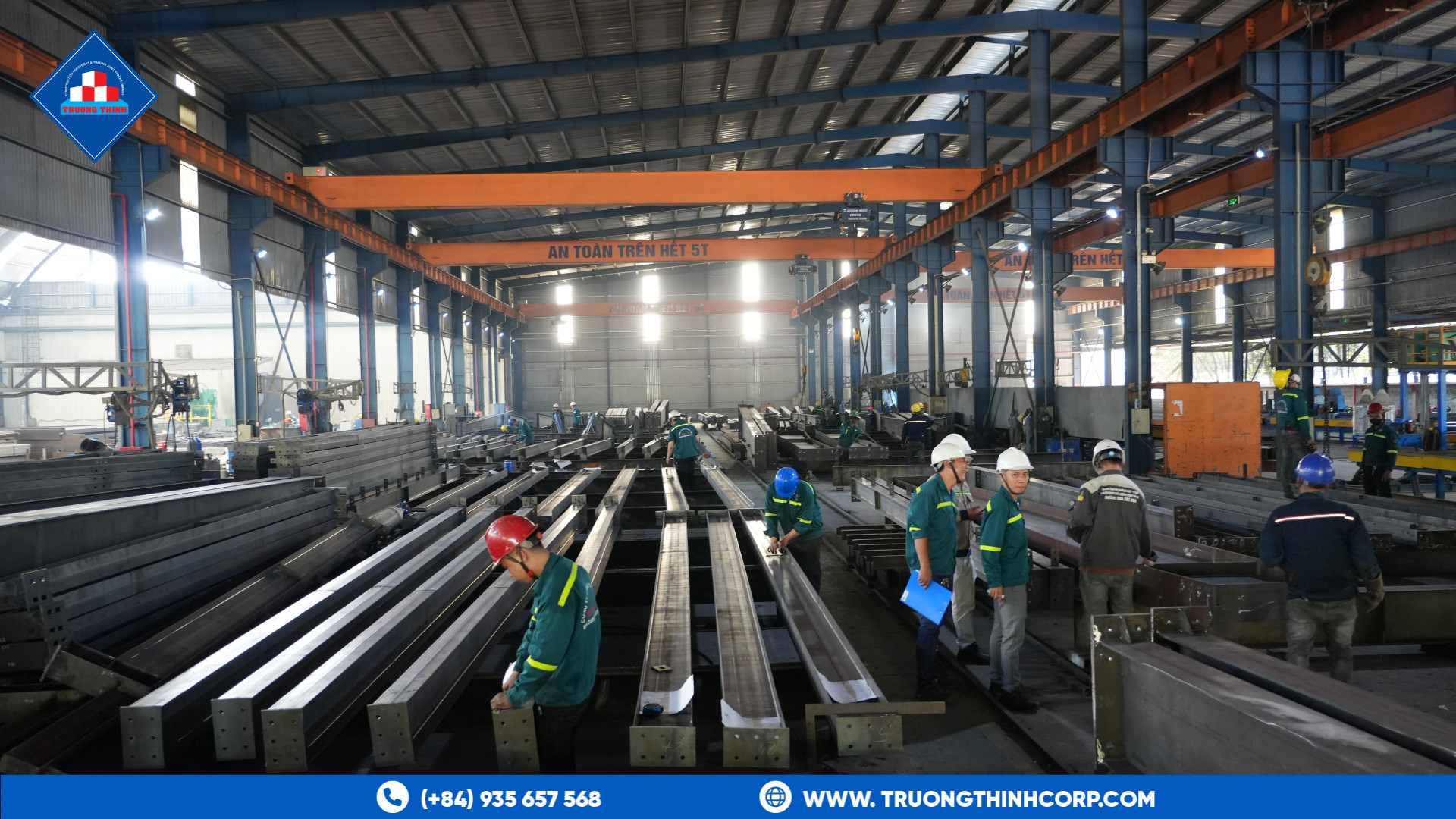
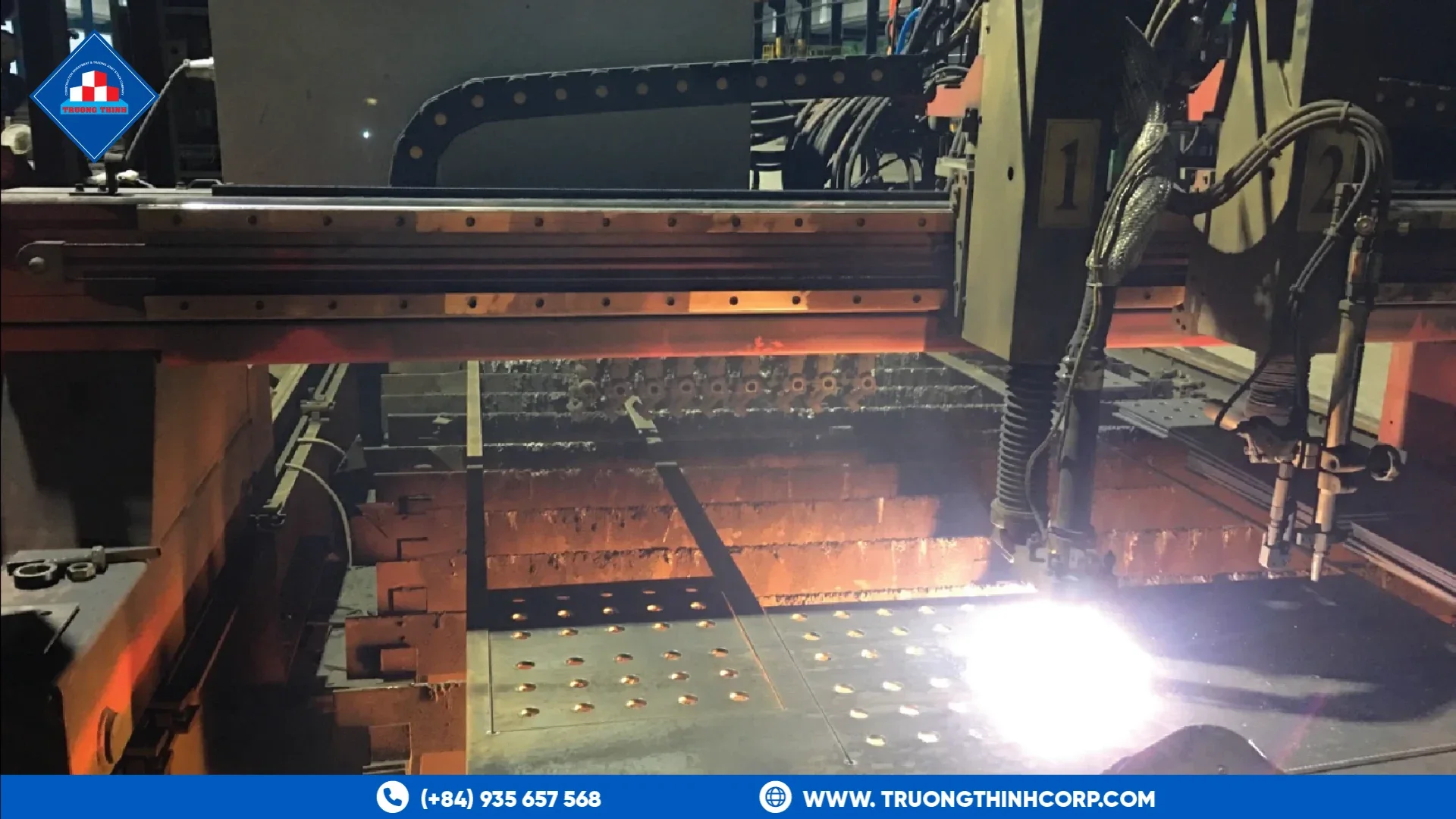
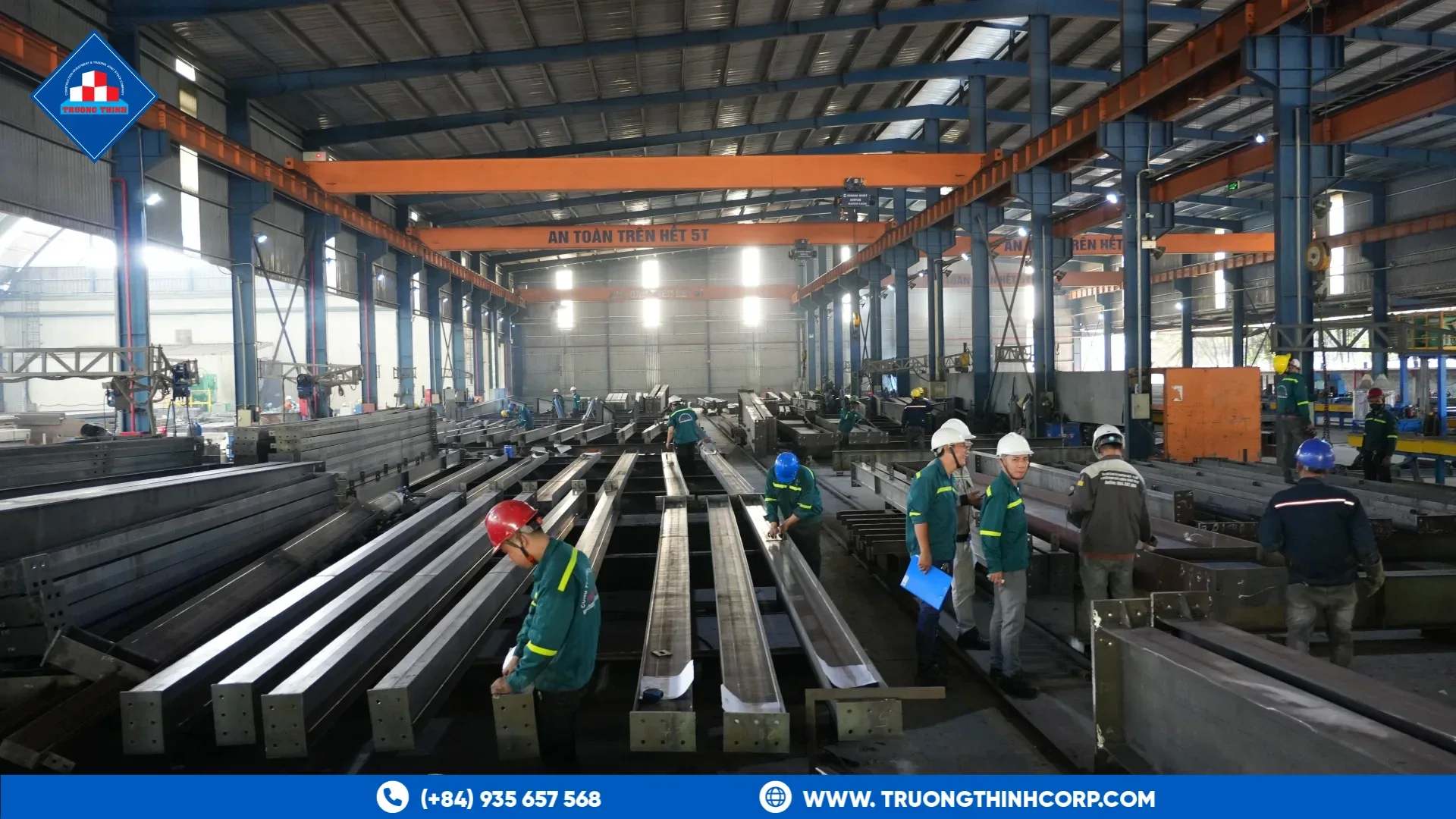
- Shop connections, where the members are fabricated in a controlled environment and can be inspected before delivery.
- Built-up sections and plate assemblies, such as column bases and gusset connections, where a continuous path is needed.
- Connections that must avoid slip or loosening under repeated load.
At Truong Thinh, the quality control department inspects dimensions, welds and coatings according to AWS D1.1 before delivery.
Where bolting is usually preferred
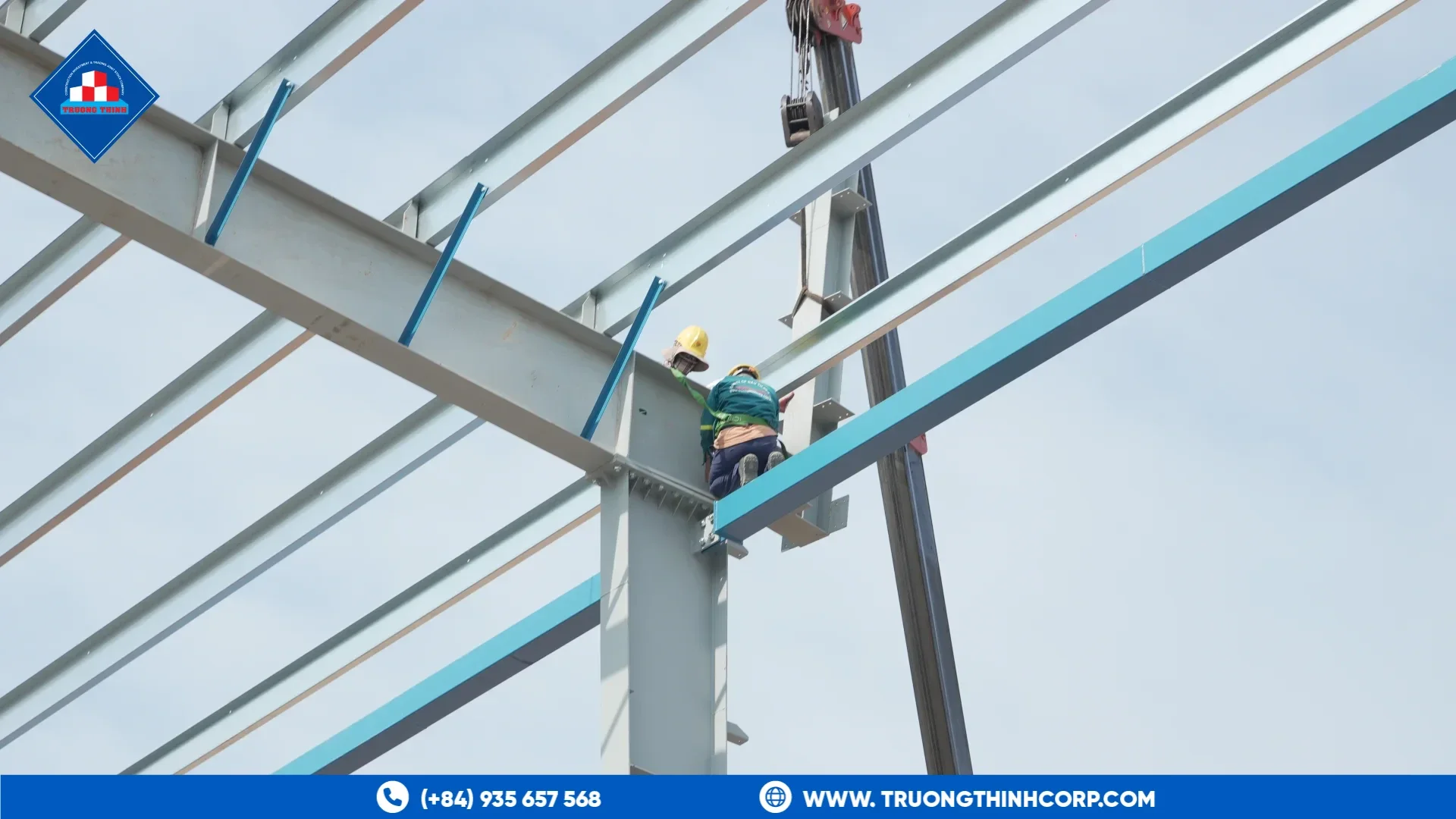
- Site connections, where the members come in separate pieces and must be assembled in sequence.
- Connections that may need adjustment during erection, because the hole pattern gives tolerance.
- Projects where welding on site is difficult, exposed to weather, or hard to inspect.
Bolted joints still need accurate fabrication. Misaligned holes and damaged threads cause delays that are often blamed on the bolts, when the cause was the hole position.
Factors that decide the choice
- Fabrication setting: whether the connection can be welded in a shop with controlled conditions.
- Erection method: the crane access, the sequence and the temporary stability needed before the joint is completed.
- Inspection: whether the joint can be checked visually and, where required, by non-destructive testing.
- Future work: whether the connection will need to be modified or extended later.
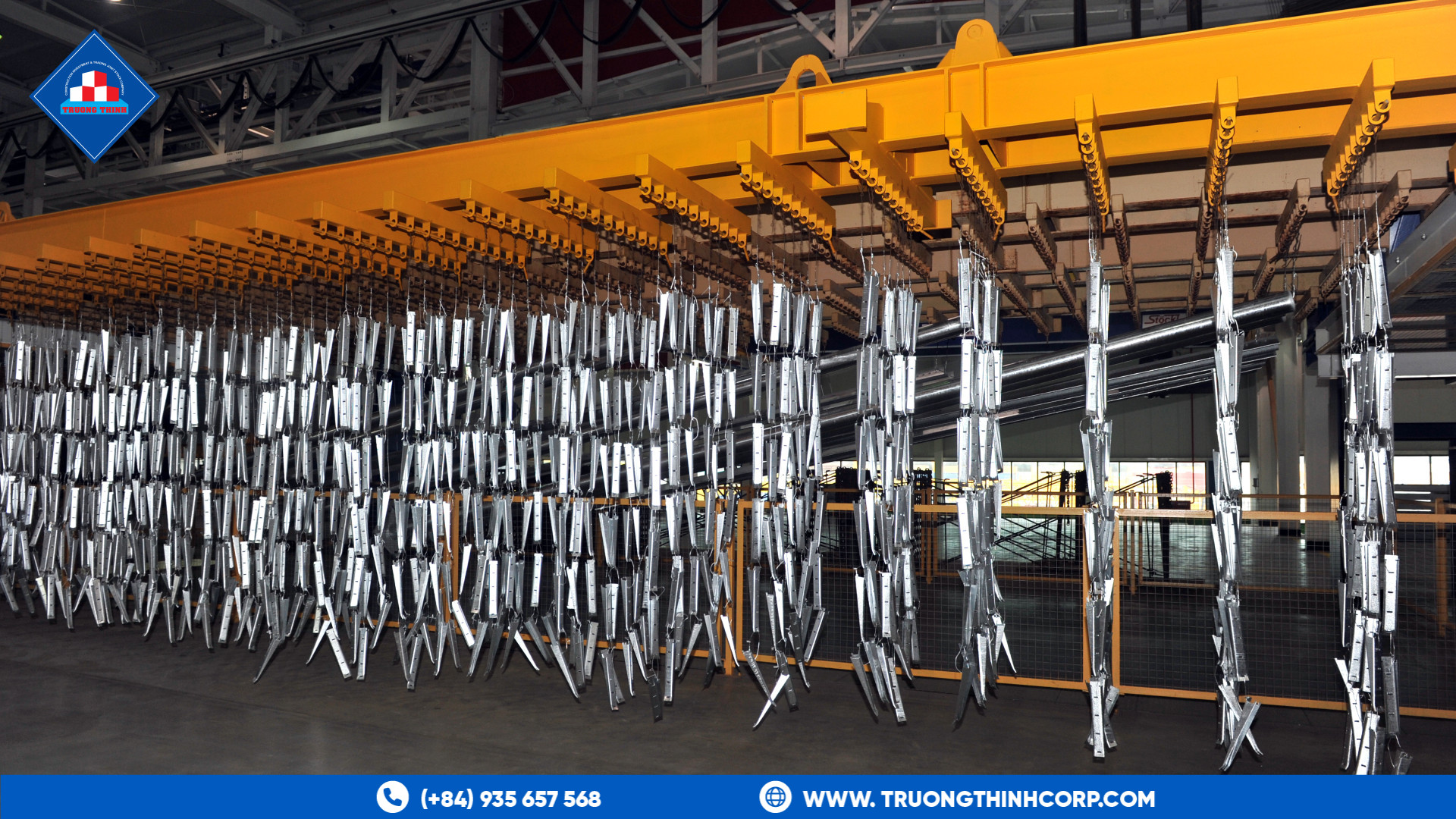
- Corrosion: crevices between plates and bolts can trap water, so the coating and drainage must be detailed for bolted joints as well as welded ones.
How to check a connection on site
For welded joints, check the weld size, length and visible quality against the drawings, and confirm that the welder and procedure match the qualification in the project specification. For bolted joints, check that the bolts are the specified grade, that the holes line up, and that the tightening method is recorded. Any deviation should be reported to the engineer before the joint is covered or loaded.
Frequently Asked Questions
Is a welded connection always stronger than a bolted one?
Not automatically. Both can be designed to carry the same load. The better choice depends on the detail, the fabrication conditions and the erection method, and the design check decides the capacity for each joint.
Why are some joints bolted when the frame is welded in the shop?
Members are often welded in the factory and then bolted on site, because bolting makes assembly and transport practical. The site joints are designed for the erection sequence and the loads that act on the completed structure.
What records should be kept for connections?
Keep the drawings, the welding procedures and the inspection records for welded joints, and the bolt grade, tightening method and inspection results for bolted joints. These records are needed for handover and for any future modification.
If you have a connection detail or a frame layout to review, discuss your structural design requirements with our engineering team. Share the drawings and the loads, and we will advise which connection type suits each joint.
Free quotation · Reply within 24 working hours
Request a quotation for bolted or welded steel connections
Tell us about your steel structure project. Our engineering and sales team will reply with a tailored proposal, usually within 24 working hours.
Need an answer faster? Call our engineers directly.
Mon–Fri 8:00–17:30 · Sat 8:00–12:00 (GMT+7)