

For a roof or floor span, a steel beam is usually the simpler solution when the span is moderate and the available depth is limited. A steel truss becomes the more efficient option when the span is long, when the roof must carry purlins over a wide clear area, or when services need to run through the depth of the structure. The right choice depends on loads, span, depth and fabrication logistics, and should be confirmed by the structural engineer.
How each system carries load
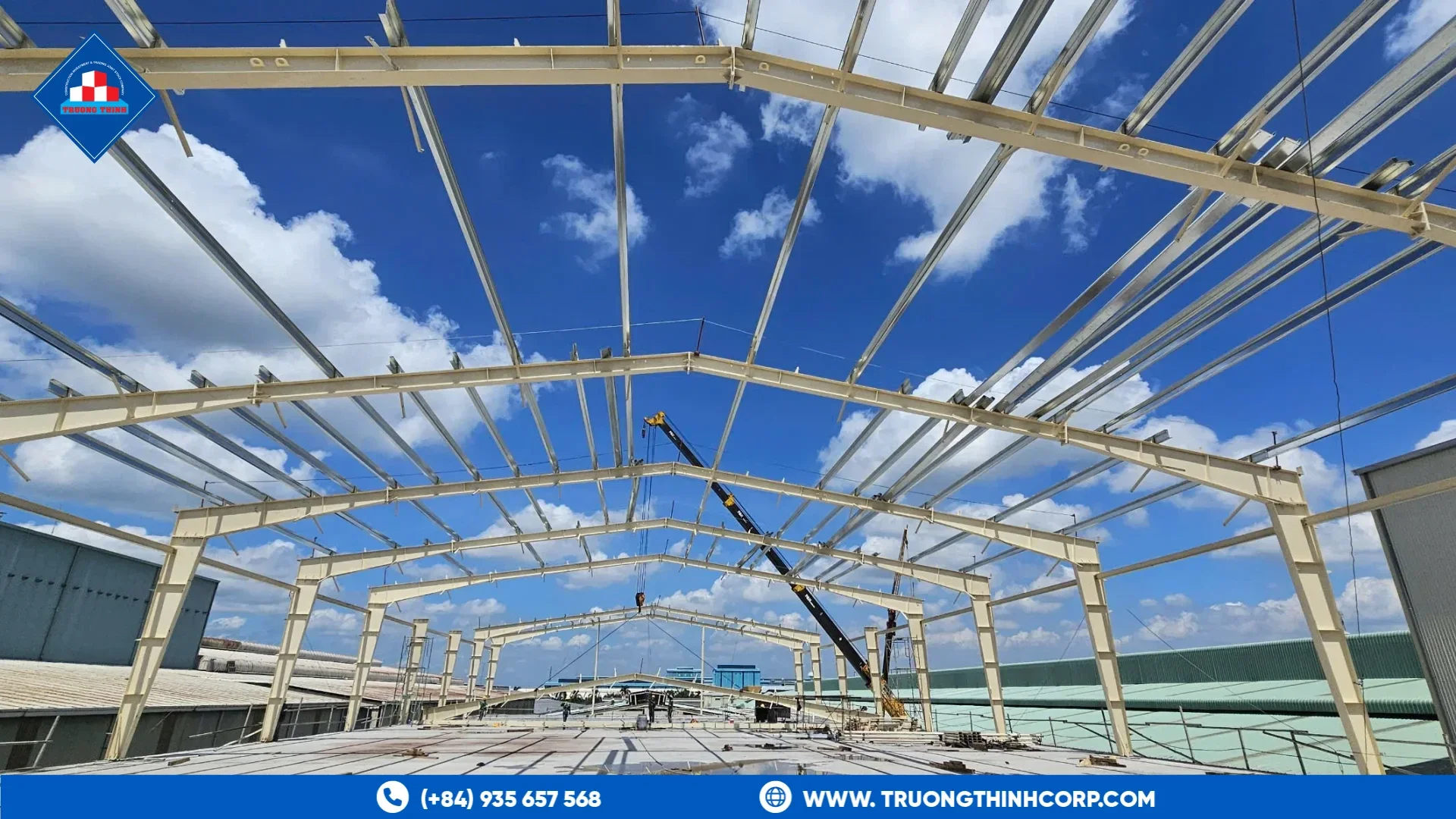
A steel beam is a single member that resists load mainly through bending. Its depth controls stiffness, so a longer beam needs more depth or a heavier section to keep deflection within limits. A steel truss distributes load through a network of top chords, bottom chords and web members that work mainly in axial tension and compression. Because the depth of a truss is used structurally, it can cover long spans with less material than a solid beam of the same depth.
When a steel beam is the better choice
- Moderate spans, such as mezzanine floors, canopies or secondary framing, where a simple connection detail is preferred.
- Limited structural depth, where a deeper truss would reduce usable headroom.
- Repetitive bays, where the same steel beam section can be repeated across the building and erected in sequence.
Beam sizes are still governed by load and deflection checks, so the section should be confirmed against the design loads for each project.
When steel trusses make more sense
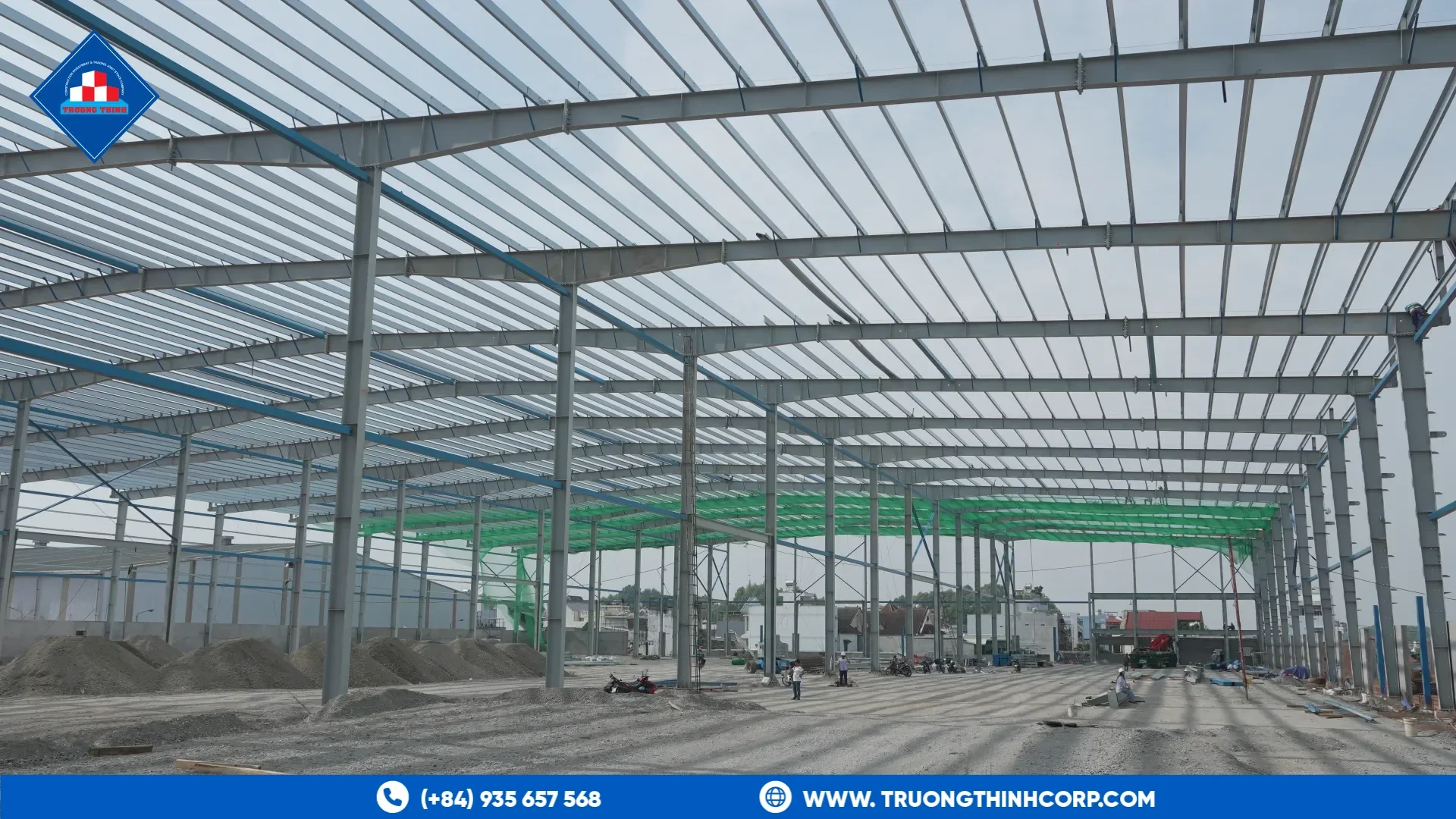
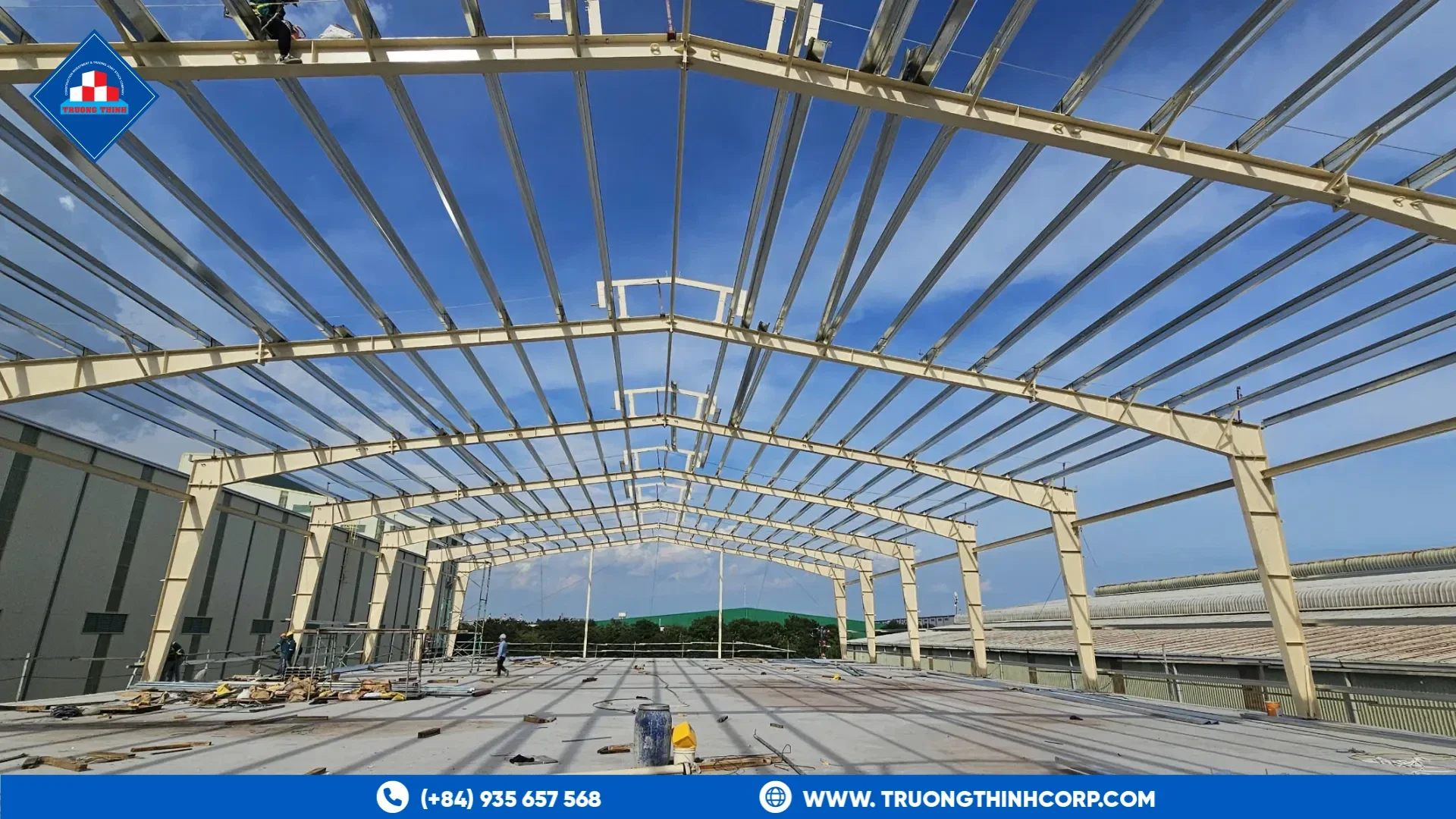
- Long clear spans in factories, warehouses, exhibition halls and convention halls, where interior columns would interrupt the floor plan.
- Large roofs that carry purlins and cladding over a wide area with a light overall structure.
- Services through the depth, where mechanical, electrical and ventilation runs pass through the truss instead of below a solid member.
Checks to agree with your structural engineer
- Clear span and bay spacing
- Roof loads, including wind uplift and any crane or equipment loads
- Available depth and required headroom
- Service routing and openings through the web or depth
- Transport length and lifting limits for each member
- Connection details and erection sequence
- Coating system for the expected environment
How Truong Thinh supplies trusses and beams
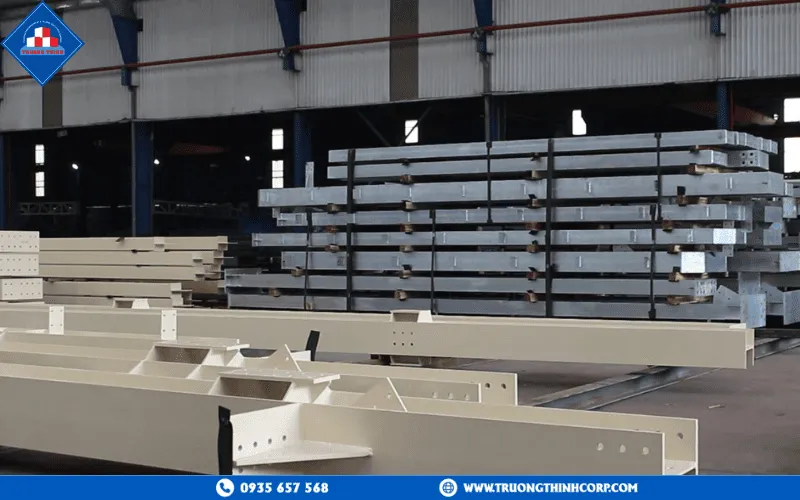
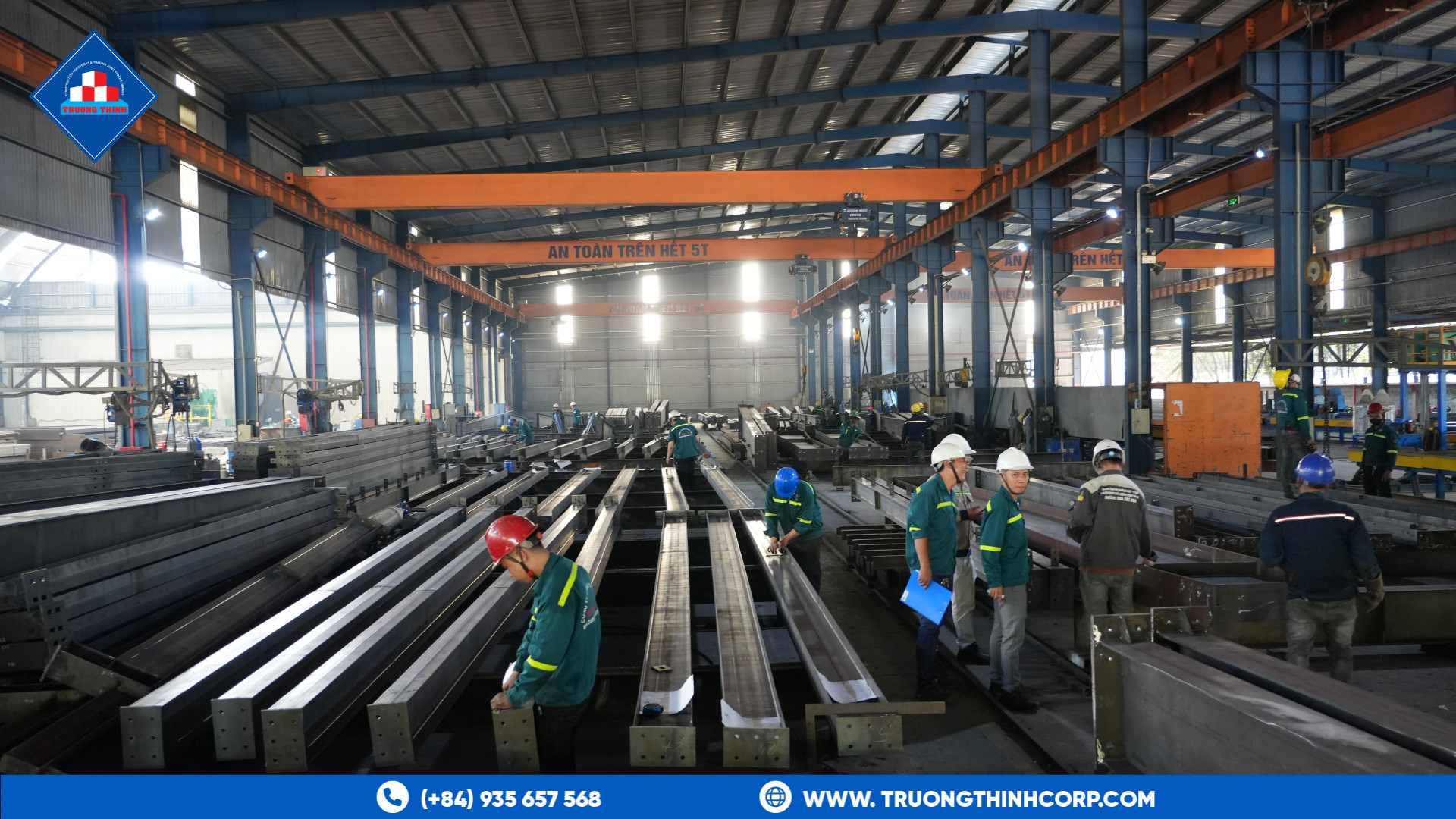
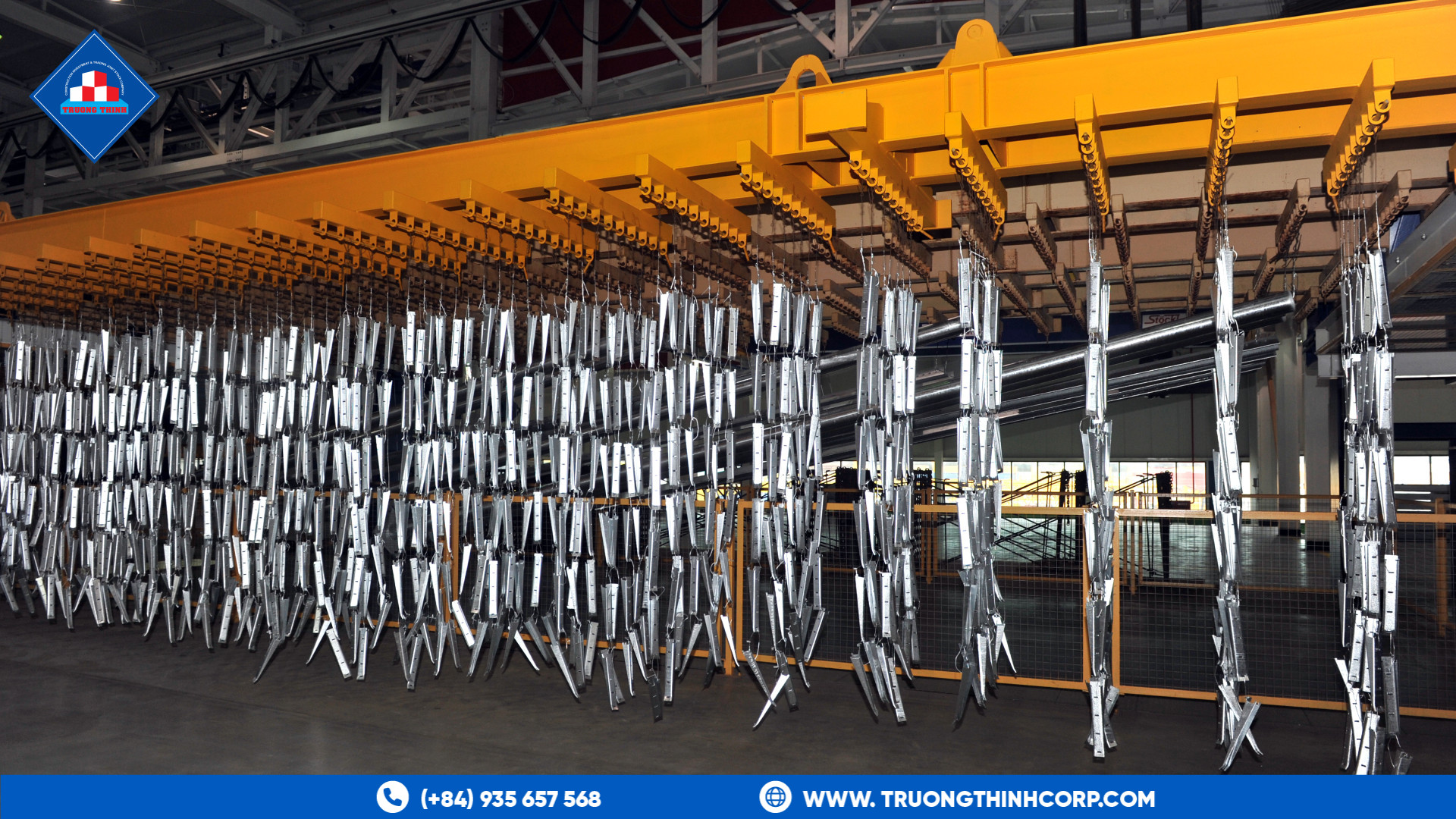
At Truong Thinh, steel trusses are fabricated through design, automated cutting and welding, and finishing stages, with quality control at each stage before final delivery. Steel beams are manufactured in lengths from 4 to 15 meters from high-strength low-alloy steel, under a production system managed to ISO 9001:2015. Both products carry a 12-month standard warranty. For either option, our engineers can support design review, detailed drawings and structural analysis before fabrication starts.
If you already have a span, a load case or a drawing set, discuss your structural design requirements with our engineering team. Share the span, roof loads and available depth, and we will advise which option fits the project.
Frequently Asked Questions
Is a steel truss always cheaper than a steel beam?
Not always. A truss can use less steel over long spans, but it adds fabrication and connection work. Compare total cost, including fabrication, transport and erection, rather than steel weight alone.
Can a steel beam replace a truss on a long span?
Sometimes, but a solid beam over a long span usually needs more depth or weight to control deflection. Confirm the option with a structural analysis that includes the loads and serviceability limits of the building.
What information do you need to compare the two options?
Send the clear span, bay spacing, roof and floor loads, available depth, service requirements and any drawings or sketches. Our engineers will review them and advise which option is more suitable.
Free quotation · Reply within 24 working hours
Request a quotation for steel truss or steel beam
Tell us about your steel structure project. Our engineering and sales team will reply with a tailored proposal, usually within 24 working hours.
Need an answer faster? Call our engineers directly.
Mon–Fri 8:00–17:30 · Sat 8:00–12:00 (GMT+7)