

Sourcing fabricated steel from Vietnam has become a practical option for Malaysian developers and contractors managing rising local fabrication costs and workshop capacity constraints. Truong Thinh Corp works as a steel structure contractor for Malaysia, fabricating structural steel in Ho Chi Minh City and exporting it directly to Malaysian project sites through established regional freight lanes.
Why Malaysian Buyers Look to Vietnam for Fabricated Steel
Three factors drive the sourcing decision for a steel structure company in Malaysia evaluating overseas fabrication: fabrication cost per ton that is typically more competitive than domestic capacity during peak local demand periods; short shipping distance across the Gulf of Thailand/South China Sea corridor relative to sourcing from China, Japan, or Korea; and a Vietnamese fabrication sector with two decades of experience serving FDI industrial construction, meaning welding and QC discipline are already tuned to export-grade specifications.
Malaysia is an established export lane, and the underlying export logistics process — documentation, container/break-bulk packing, customs paperwork — is already a routine operation that Truong Thinh is extending to other nearby Southeast Asian markets.
How the Vietnam-to-Malaysia Fabrication Process Works
- Design review: structural drawings are reviewed or produced in-house using Tekla Structures for detailing and SAP2000 for structural analysis, coordinated in Revit where architectural/MEP models are involved.
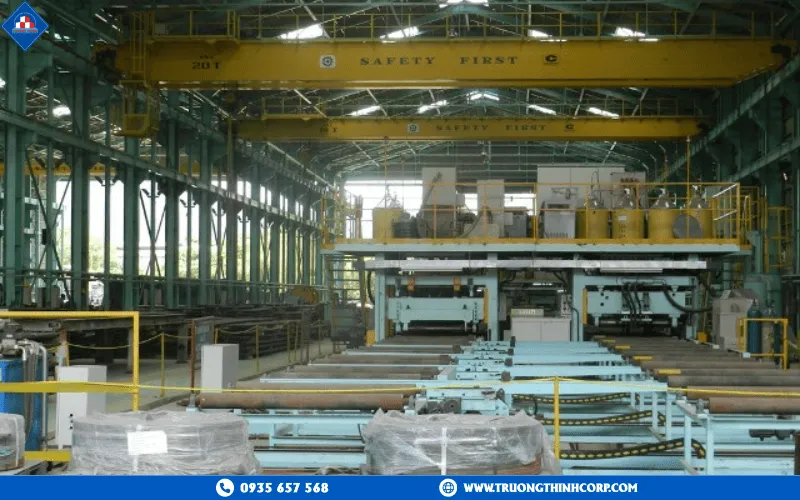
- Fabrication: CNC plasma/laser cutting, automatic and horizontal welding lines, beam straightening, and Sa 2.5 sandblasting/coating at the 25,000 m² Ho Chi Minh City plant, under ISO 9001:2015 quality control with welders qualified to a recognized welding-qualification scheme, confirmed against the project’s applicable code.
- Export packing and documentation: pieces are marked, crated, and documented for customs clearance into Malaysia.
- Freight: shipment via container or break-bulk depending on piece size and tonnage, coordinated through the B2B steel structure transportation service.
- Site delivery: steel arrives ready for bolt-up per the shop-drawing erection sequence, packed and marked for the buyer.s own erection team or local contractor.
Cost and Lead-Time Considerations
| Factor | What Malaysian Buyers Should Confirm |
|---|---|
| Fabrication cost basis | Per-ton fabrication rate vs. Malaysian domestic quotes, including freight to destination port |
| Plant capacity | Confirm current loading against a 1,200–1,500 tons/month rated capacity to validate your delivery window |
| Customs classification | HS code and duty treatment for fabricated structural steel imports into Malaysia |
| QC documentation | Mill certificates, weld records, and dimensional inspection reports for site acceptance |
| Piece size limits | Maximum shippable dimensions for container vs. break-bulk/RoRo freight |
Quality Assurance for Cross-Border Buyers
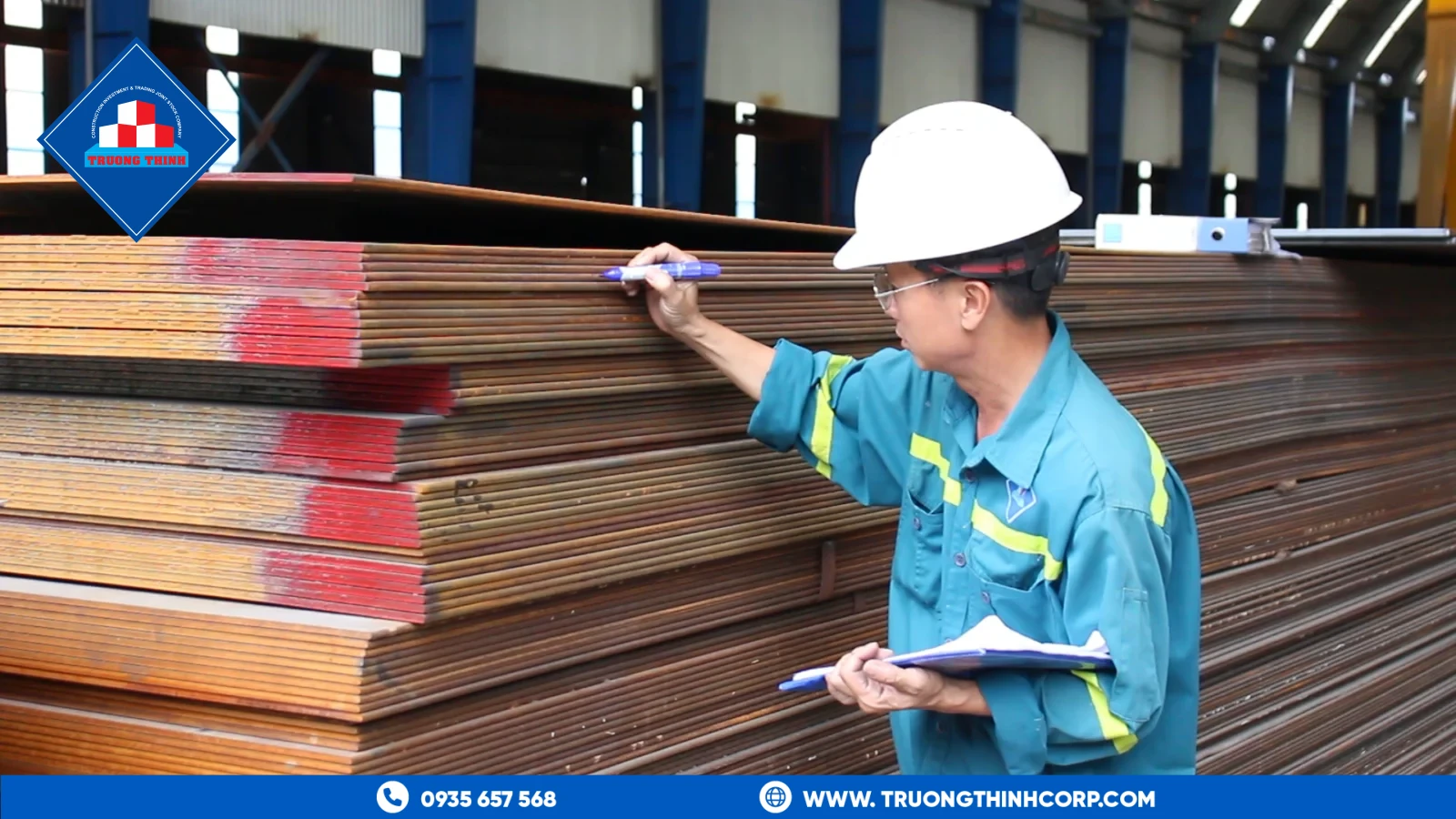
Buying steel structure that will be erected in another country raises the stakes on quality documentation, because remedying a defect after international shipment is far costlier than catching it at the fabrication stage. Truong Thinh’s ISO 9001:2015 system generates inspection records at each stage — material intake, cutting, welding, straightening, and coating — that ship with the delivery documentation, and welder qualification records (against a recognized welding-qualification scheme, confirmed against the project’s applicable code) are available on request for site QA teams reviewing import acceptance.
Case Study: Regional Export Fabrication
Truong Thinh has fabricated and exported structural steel for a trade center project in Phnom Penh, Cambodia, using the same design-fabricate-export workflow that applies to Malaysian shipments: Tekla Structures detailing, SAP2000 analysis, fabrication in the Ho Chi Minh City plant, and coordinated freight to the destination site. See the global network of manufacturing and export destinations for the current footprint.
Regulatory and Standards Alignment Between Vietnam and Malaysia
Malaysian structural approval typically references British Standard/Eurocode-based provisions under the Uniform Building By-Laws, while Vietnamese fabricators commonly design against TCVN as the domestic default. This is not a barrier — SAP2000 and Tekla Structures both support Eurocode and other international load combinations and section libraries — but it needs to be specified explicitly in the design brief rather than assumed. Malaysian buyers should confirm at quotation stage which code the structural analysis will be run against, and ensure connection design (bolt grade, weld category) matches what the Malaysian checking engineer or authority having jurisdiction will expect to see stamped on the drawings.
Freight Options: Container vs. Break-Bulk
Smaller sections and purlins typically ship in standard or open-top containers, while long primary members (columns, main rafters) may exceed container length and require flat-rack or break-bulk shipping depending on piece dimensions. The choice affects both cost and schedule — break-bulk vessels sail less frequently than container lines on some routes — so it is worth confirming piece-length limits during the design stage rather than discovering a shipping constraint after fabrication is complete. Truong Thinh’s logistics coordination factors this into the fabrication plan, splicing oversized members into shippable lengths with field-bolted connections where the structural design allows it.
A Simple Way to Compare Local vs. Imported Fabrication
The clearest comparison is a landed-cost quotation built from the same structural take-off: send the same drawing set to a Malaysian fabricator and to Truong Thinh, and compare fabrication cost, freight to your destination port, duty, and total lead time from order to site delivery side by side — not fabrication cost alone. Buyers sometimes anchor the decision purely on the per-ton fabrication rate and are surprised later by freight or duty costs that erode the saving; a proper landed-cost comparison avoids that mistake.
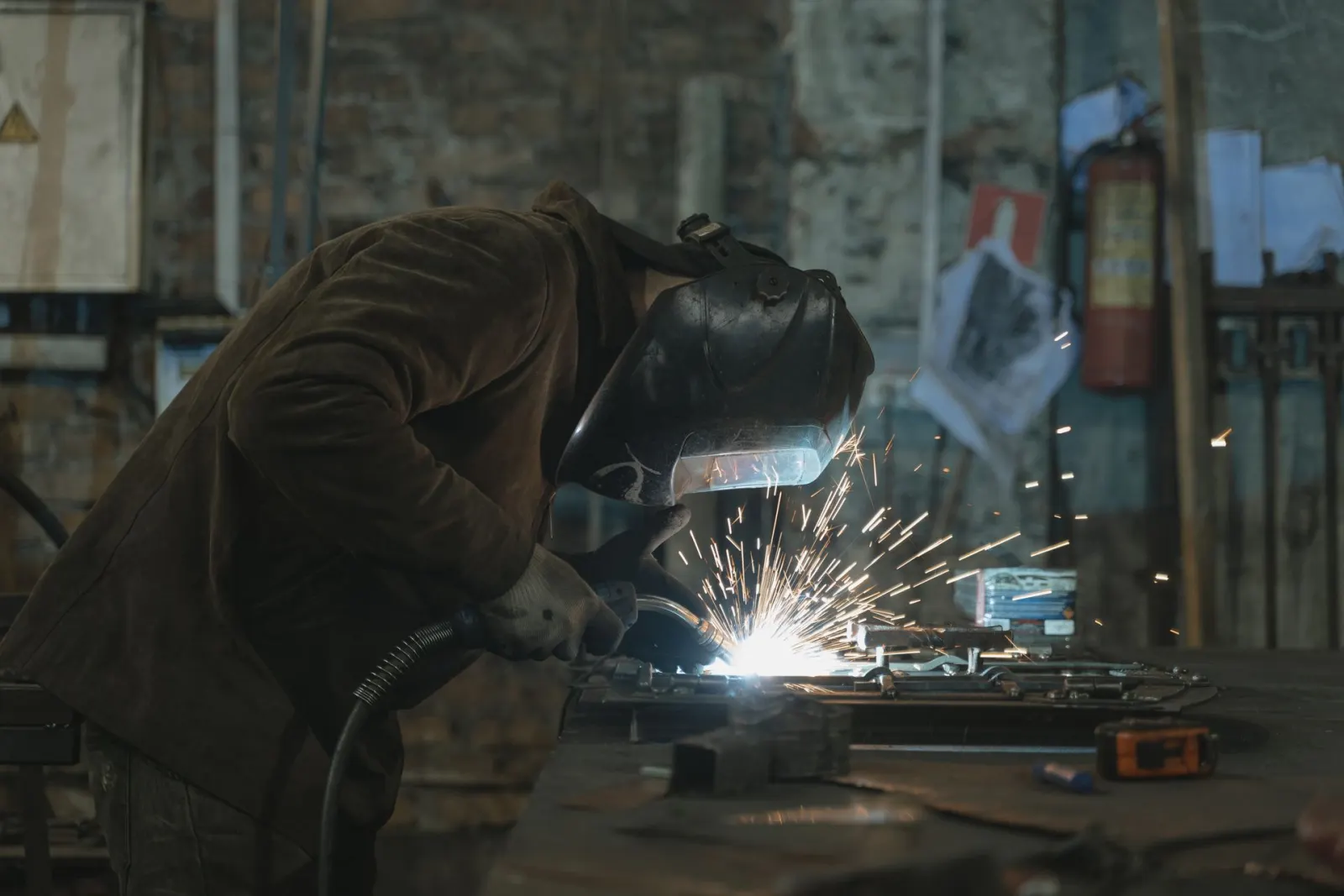
Malaysian developers researching a steel structure contractor malaysia option are usually comparing three things: local fabrication cost, lead time, and quality assurance. Truong Thinh works with these buyers as both a steel structure supplier and a full contractor, so the same due-diligence checklist used to evaluate steel building manufacturers at home can be applied directly to the Vietnam-sourced option.
Frequently Asked Questions
Is it cheaper to import fabricated steel structure from Vietnam than to fabricate locally in Malaysia?
It depends on current local capacity and steel pricing, but Vietnamese fabrication rates plus freight are frequently competitive with Malaysian domestic quotes during periods of tight local workshop capacity — request a like-for-like quotation to compare.
How long does shipping take from Vietnam to Malaysian ports?
Ocean freight within the regional Southeast Asia corridor is typically measured in days rather than weeks; exact transit time depends on the shipping line and destination port, and is confirmed at quotation stage alongside fabrication lead time.
What documentation is needed for Malaysian customs clearance?
Standard export documentation (commercial invoice, packing list, certificate of origin, bill of lading) plus mill certificates and QC reports if required for site acceptance; the transportation team assembles the package as part of freight coordination.
Does Truong Thinh also export to Thailand and the Philippines?
Malaysia is an established export destination, and Truong Thinh is expanding its Southeast Asian export reach to nearby markets including Thailand and the Philippines — contact our team to confirm current lead times and logistics for your destination.