

A Tekla Structures license on its own does not guarantee fabrication accuracy; what matters is whether the 3D model is actually controlled, approved and connected to the shop-floor workflow. This guide explains where Tekla-based detailing genuinely reduces rework and what a buyer should ask a steel structure fabrication company to confirm before relying on it.
Tekla is a process tool, not a magic certificate
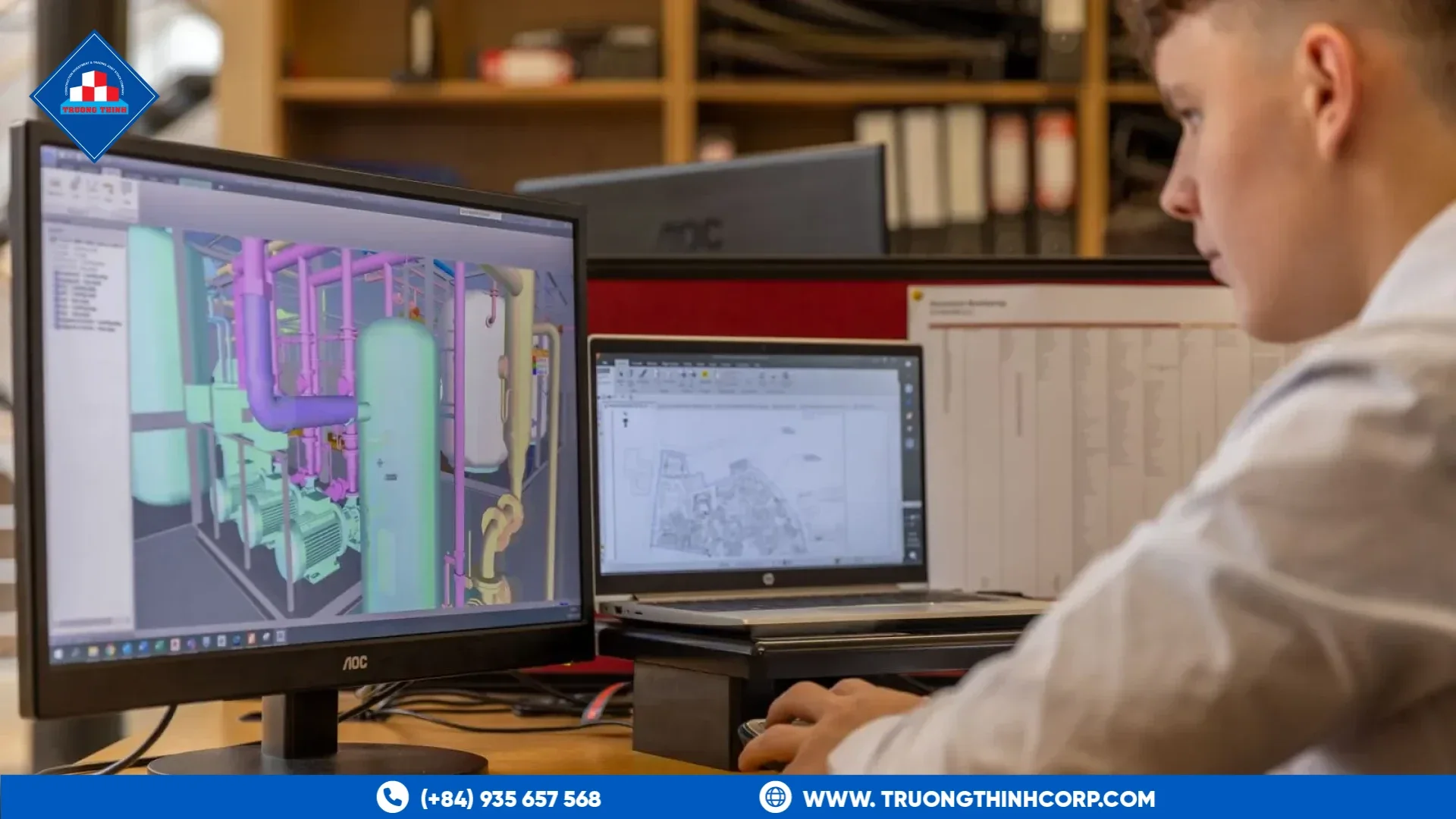
A 3D model can improve coordination when it is controlled, approved and connected to the fabrication workflow. The buyer should focus on how model information is used to reduce conflicting details and revision errors.
Truong Thinh states that its engineering team uses Tekla Structures together with other engineering platforms.
Coordination before cutting steel
Model-based coordination can bring together frames, connections, secondary steel and interfaces before fabrication. This is valuable when projects have many repeated components or tight connection tolerances.
However, model quality depends on the design inputs and review process.
From model to shop information
A strong workflow creates a traceable path from approved model to shop drawings and production information. Revision control matters because a late change can affect multiple components.
Ask the supplier how model revisions are recorded and how released drawings are distinguished from superseded versions.
What to request from the fabricator
For a serious procurement process, request an example drawing package, model coordination workflow, approval gates and the list of documents supplied at release for fabrication.
This reveals more about operational maturity than simply seeing a software logo. See how this fits into Truong Thinh’s fabrication workflow.
The business value
The commercial value of coordinated detailing appears in fewer rework events, clearer fabrication information and smoother erection. These outcomes are project-dependent and should be measured through the project QA process rather than promised as a universal percentage.
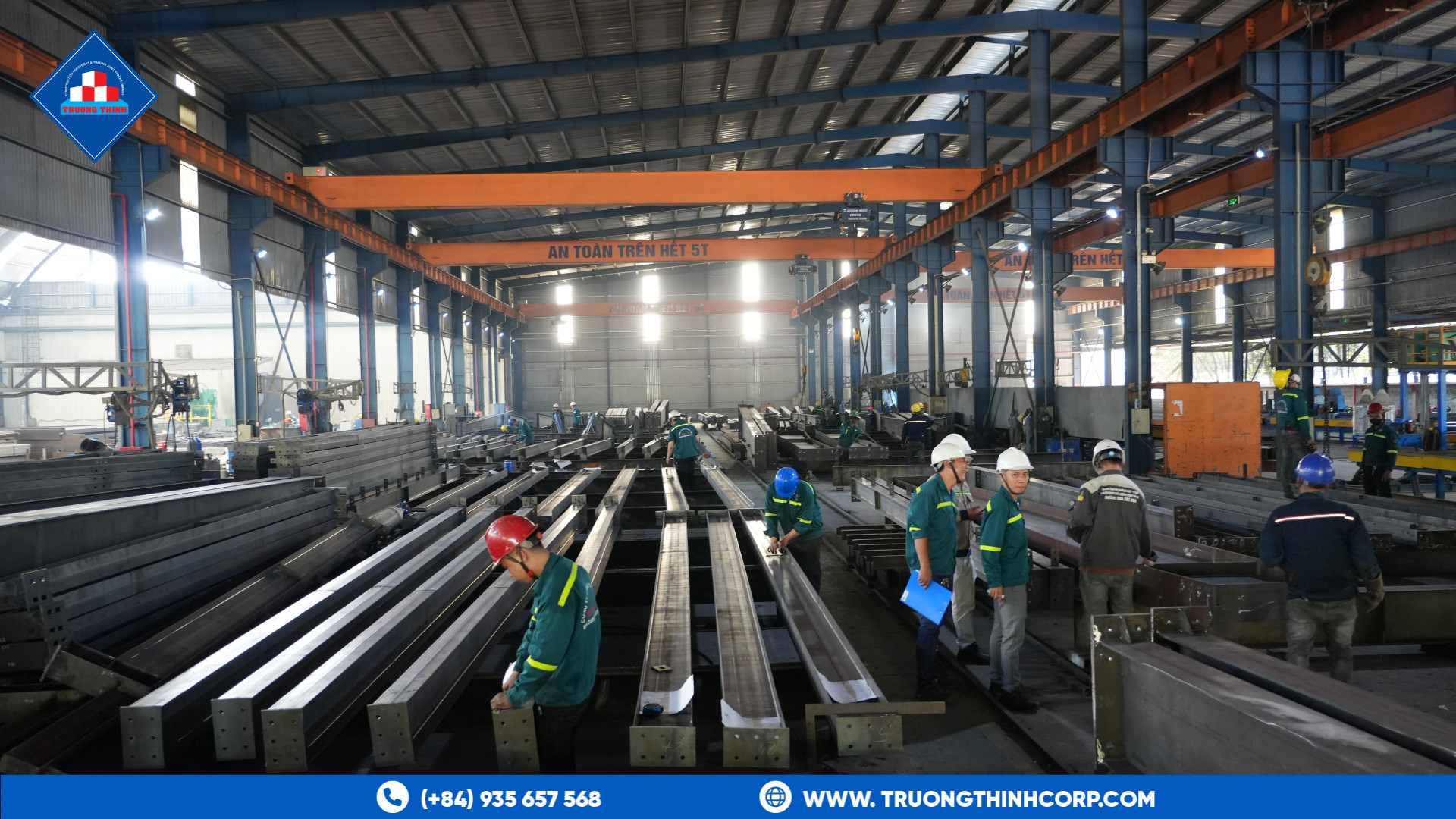
Full Tekla-based coordination is an investment most job-shop operations skip. In practice, it’s the structural steel fabricators that also operate as a complete steel structure manufacturer (running design, fabrication and QC as one workflow) that tend to have it, more than a shop taking on isolated cutting and welding work under someone else’s drawings.
Frequently Asked Questions
Does using Tekla Structures guarantee accurate steel fabrication?
No. A 3D model only improves coordination when it is controlled, approved and connected to the fabrication workflow; model quality still depends on the design inputs and review process behind it.
What does model-based coordination actually help with?
Bringing frames, connections, secondary steel and interfaces together before fabrication starts, which is most valuable on projects with many repeated components or tight connection tolerances.
What should a buyer request to check a fabricator’s detailing workflow?
An example drawing package, the model coordination workflow, approval gates, and the list of documents supplied at release for fabrication; this shows more about operational maturity than a software logo alone.
How should revision control be handled in a Tekla-based workflow?
There should be a traceable path from the approved model to shop drawings and production information, with a clear record of how revisions are logged and how released drawings are distinguished from superseded versions.
Free quotation · Reply within 24 hours
Request a quotation for steel frame manufacturer
Tell us about your steel structure project. Our engineering and sales team will reply with a tailored proposal, usually within 24 hours.
Need an answer faster? Call our engineers directly.
Mon–Fri 8:00–17:30 · Sat 8:00–12:00 (GMT+7)