

“From shop drawing to delivery” is the part of steel structure fabrication in Vietnam that buyers rarely get full visibility into until something goes wrong on site. This guide walks through the five stages a fabrication order actually passes through (design information, cutting, assembly/welding, surface treatment, and packing/logistics) and what to ask a steel structure fabrication company to confirm at each one.
1. Design and fabrication information
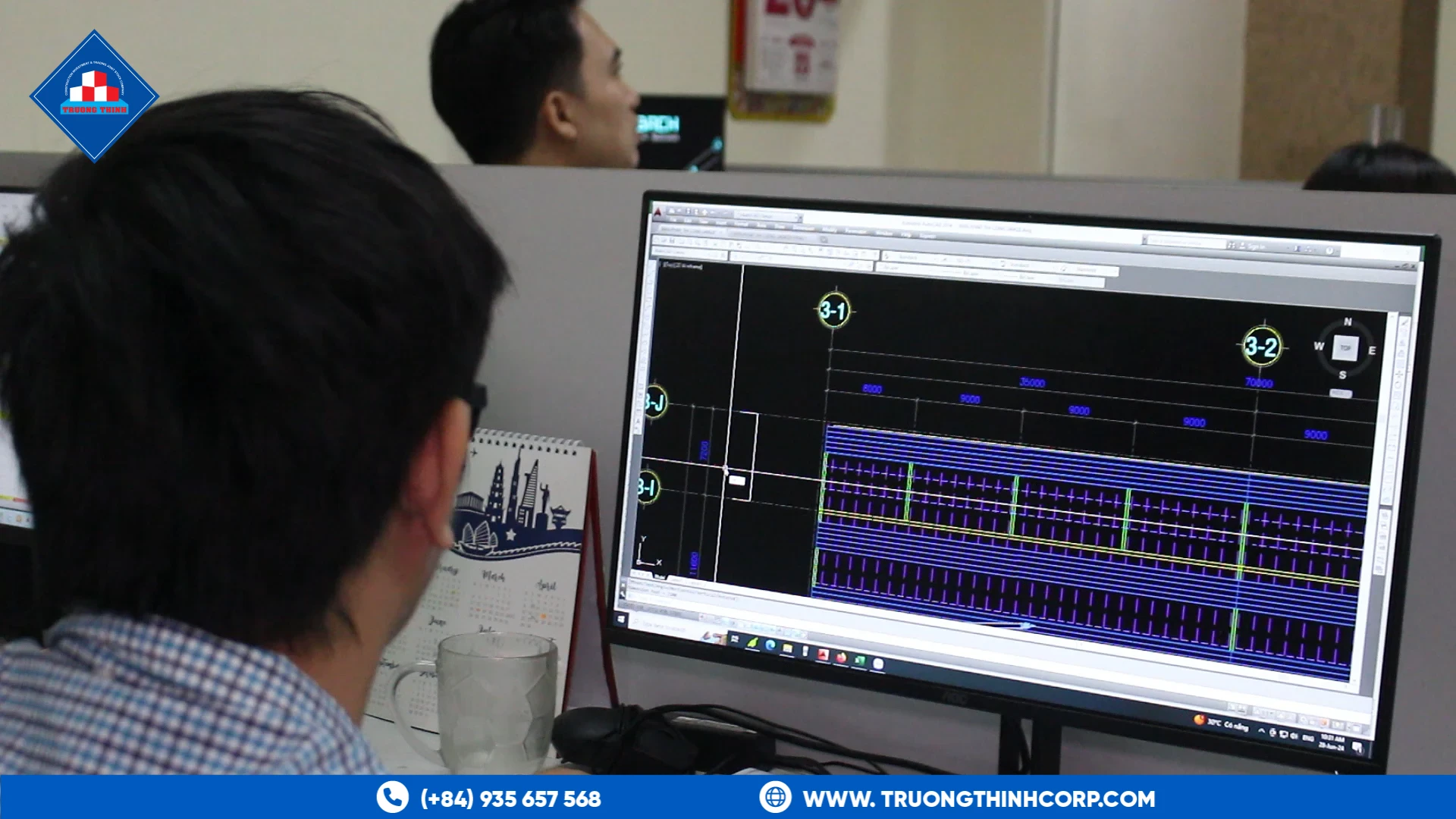
Fabrication quality starts before steel reaches the cutting line. The manufacturer needs an agreed design basis, coordinated drawings, member information, connection details, material requirements and revision control.
Truong Thinh presents a workflow that uses BIM/Tekla together with AutoCAD, Revit and SAP2000. For buyers, the key control is a single approved information set that production can follow without conflicting revisions.
2. Material preparation and cutting
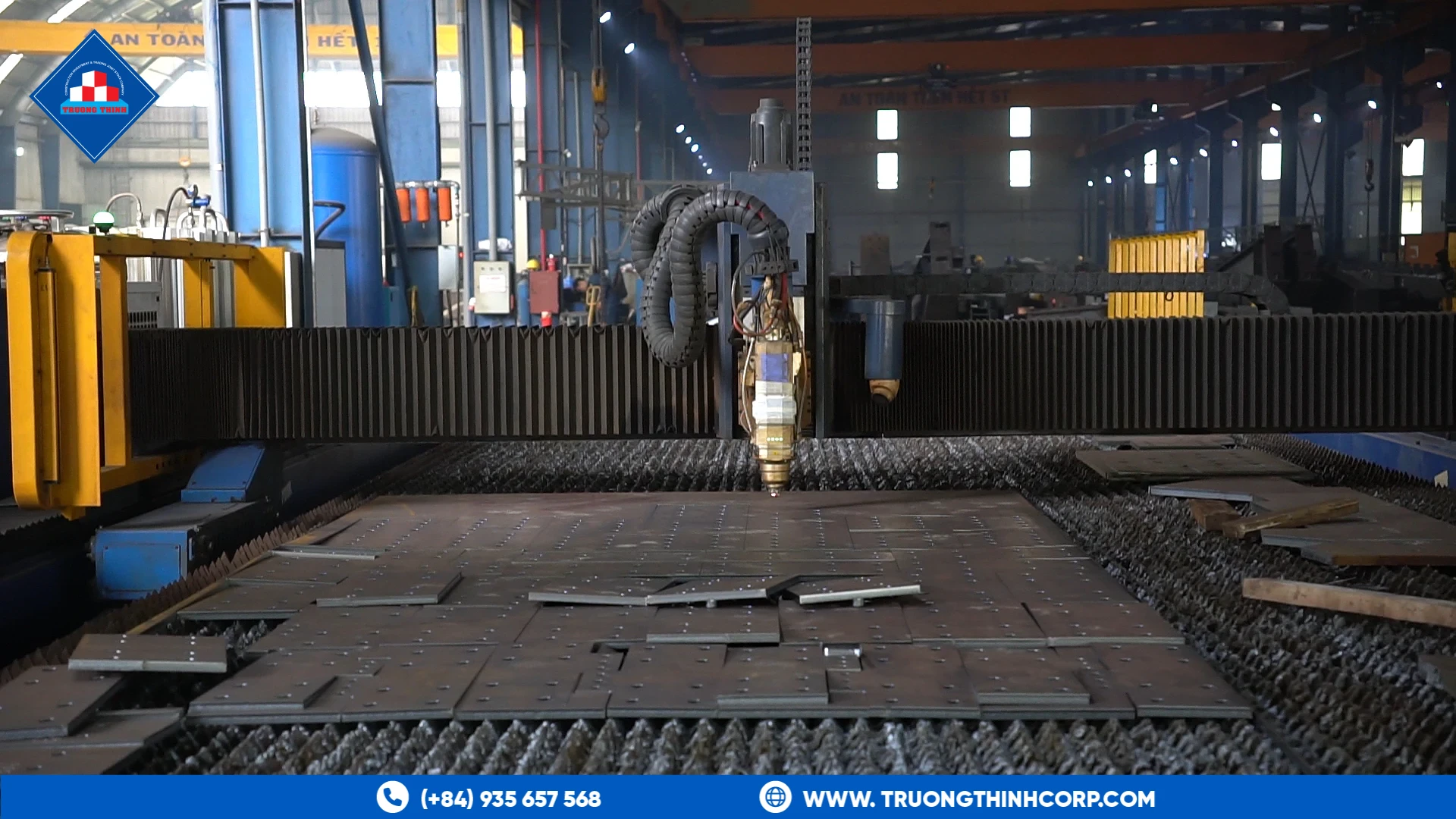
Steel members must be cut and prepared against the approved fabrication information. CNC cutting can improve repeatability, but machine capability does not replace dimensional inspection and correct input data.
Procurement teams should ask how material is identified through production and how nonconforming pieces are isolated and corrected.
3. Assembly and welding
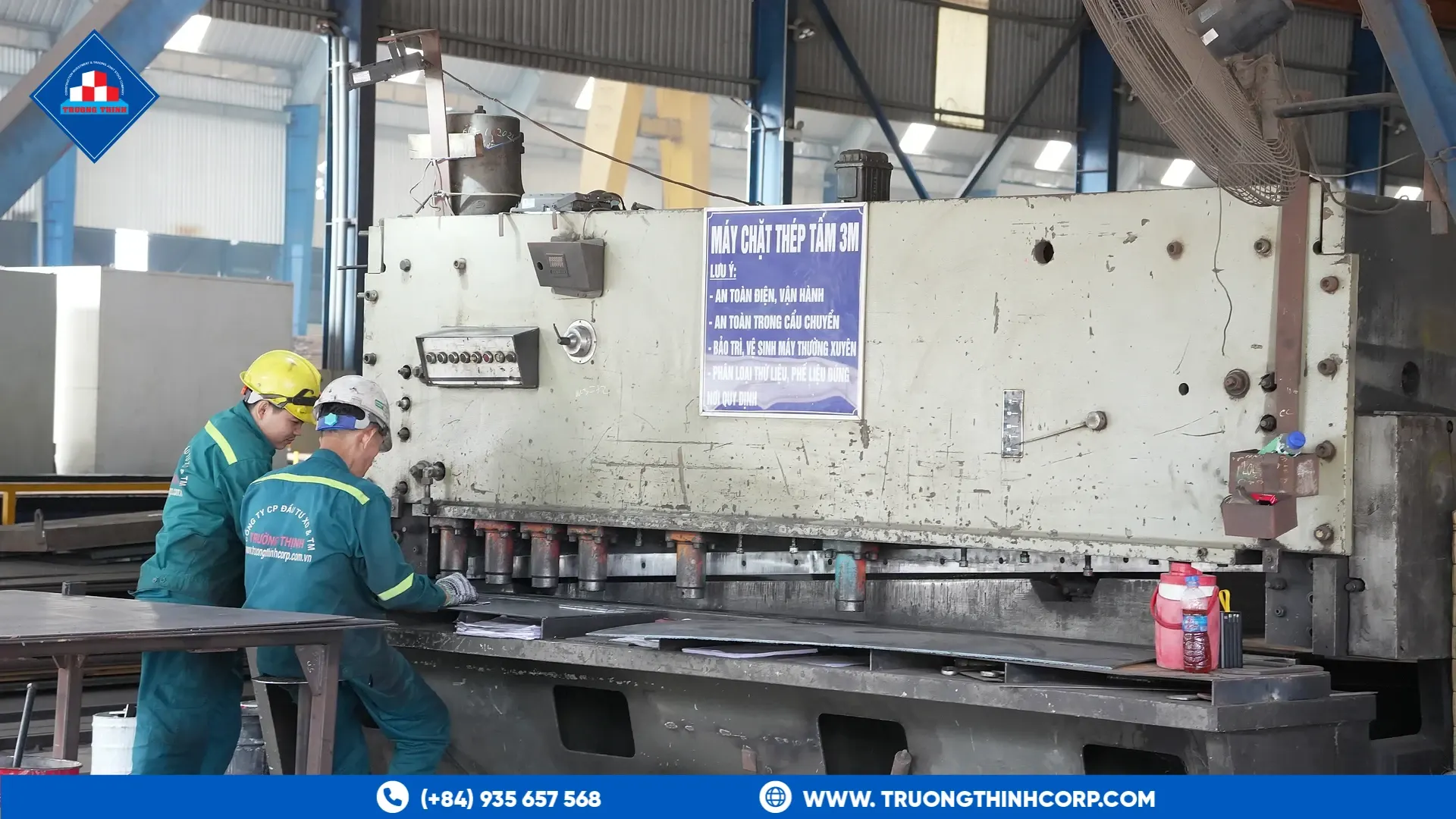
Fabrication normally moves from fit-up to welding and dimensional correction. The project specification should identify welding procedures, inspection requirements and acceptance criteria.
Truong Thinh’s site describes automated welding lines and a closed-loop production process with quality control. Any project-specific welding code, inspection level or third-party inspection requirement should be confirmed in the technical specification before production.
4. Surface treatment and final QA/QC
Surface treatment is not merely cosmetic. It influences durability, maintenance and the suitability of the fabricated components for their destination environment. Coating system, surface preparation, dry film thickness and inspection method need to be tied to the project specification.
Before shipment, the buyer should receive the agreed inspection records, packing list and traceability documents.
5. Packing, logistics and delivery
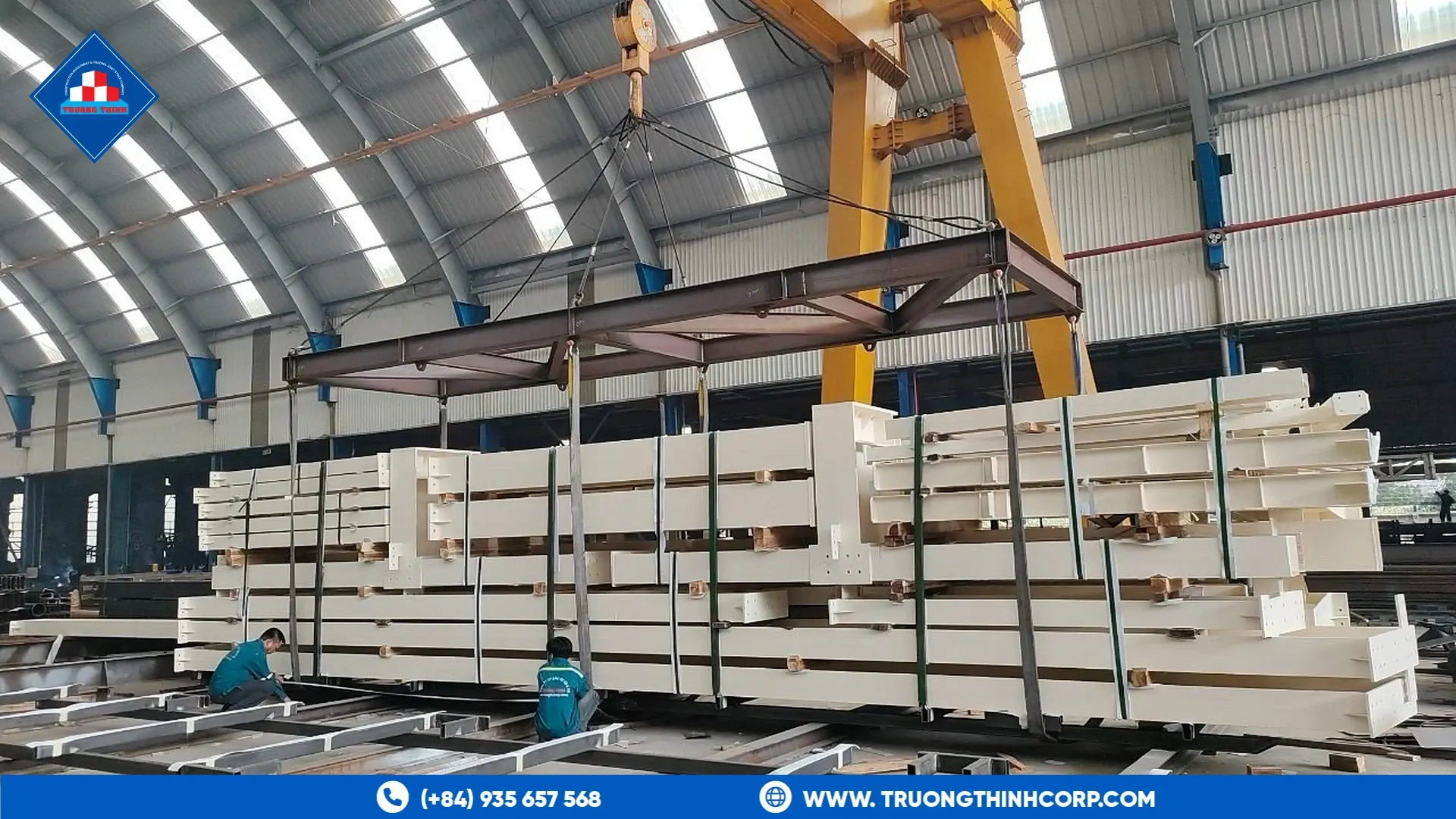
Steel arrives at site as a coordinated set of components. Poor packing or weak identification can turn a successful fabrication job into a difficult erection process.
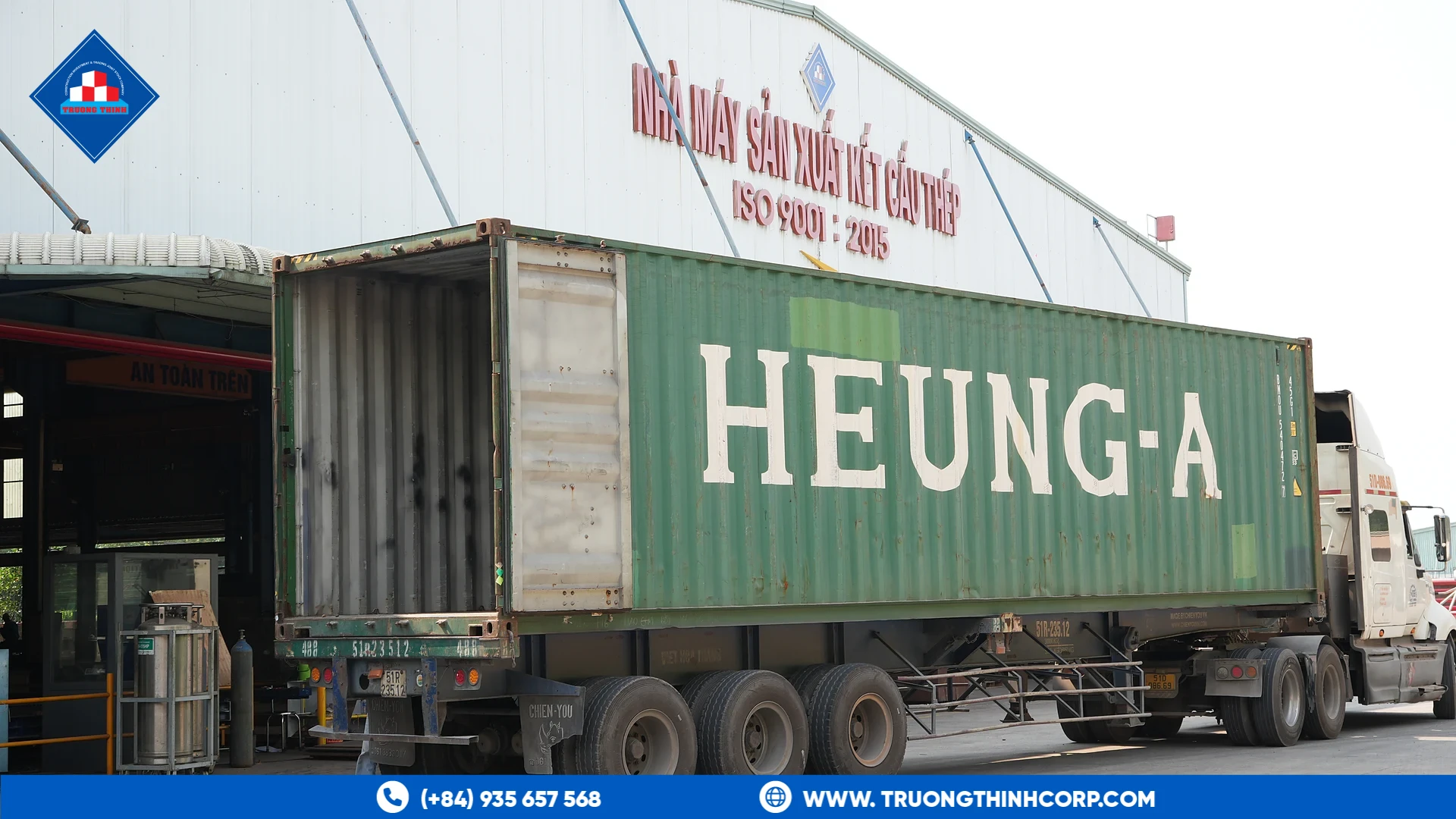
An export-oriented supplier should define the packing sequence, markings, document package and dispatch plan early, particularly when components move across borders. See our manufacturing capacity page for the current production scope.
A surprising number of companies marketed as a steel structure fabrication company actually subcontract cutting, welding, or coating to someone else’s shop, and that handoff is usually where schedule slippage and quality problems start. When evaluating a steel structure fabricator in Vietnam, ask directly which stages happen on their own floor. The answer says more about a steel structure manufacturer’s real capability than anything printed on a website.
Frequently Asked Questions
What is the first control point in structural steel fabrication?
An agreed design basis with coordinated drawings, member information, connection details, material requirements and revision control; production cannot reliably start from conflicting or unapproved information.
Does CNC cutting remove the need for dimensional inspection?
No. CNC cutting improves repeatability, but machine capability does not replace dimensional inspection and correct input data; nonconforming pieces still need to be identified and isolated.
What should be confirmed before welding starts on a project?
The welding procedures, inspection requirements and acceptance criteria in the project specification, plus any project-specific welding code or third-party inspection requirement.
How can a buyer tell if a fabricator subcontracts part of the work?
Ask directly which stages (cutting, welding, coating) happen on the company’s own floor. Many companies marketed as a steel structure fabrication company subcontract part of the process, and that handoff is a common source of schedule slippage.