

Vetting a pre-engineered steel building manufacturer in Vietnam is a fixed step in due diligence for most international contractors and EPCs; the wrong supplier shows up later as redesign, rework, and missed delivery windows, not at contract signature. This guide sets out what a PEB manufacturer in Vietnam should be able to show a buyer before an RFQ goes out, using Truong Thinh Corp’s own published capacity and process information as a worked example.
Start with the project, not the factory
For a PEB project, the first question is not simply “How many tons can the factory make?” The procurement team needs to know whether the supplier can work from the project drawings, design criteria, scope split and delivery conditions that actually govern the job.
A useful RFQ should define building use, approximate dimensions, span, bay spacing, roof/wall requirements, applicable codes, site location, target schedule, coating requirements and the documents expected at each stage. This gives the manufacturer enough context to price and engineer a real scope rather than a generic tonnage.
Check engineering-to-fabrication continuity
Truong Thinh states that its engineers use AutoCAD, Revit, SAP2000 and Tekla Structures, and that its workflow links structural design and simulation to fabrication. For a buyer, the value is not the software name by itself; the real question is whether the approved engineering information is translated consistently into shop drawings, part information and fabrication instructions.
The project team should therefore ask for the drawing register, approval flow, revision control process and the documents that will be available before fabrication starts.
Look at measurable factory information
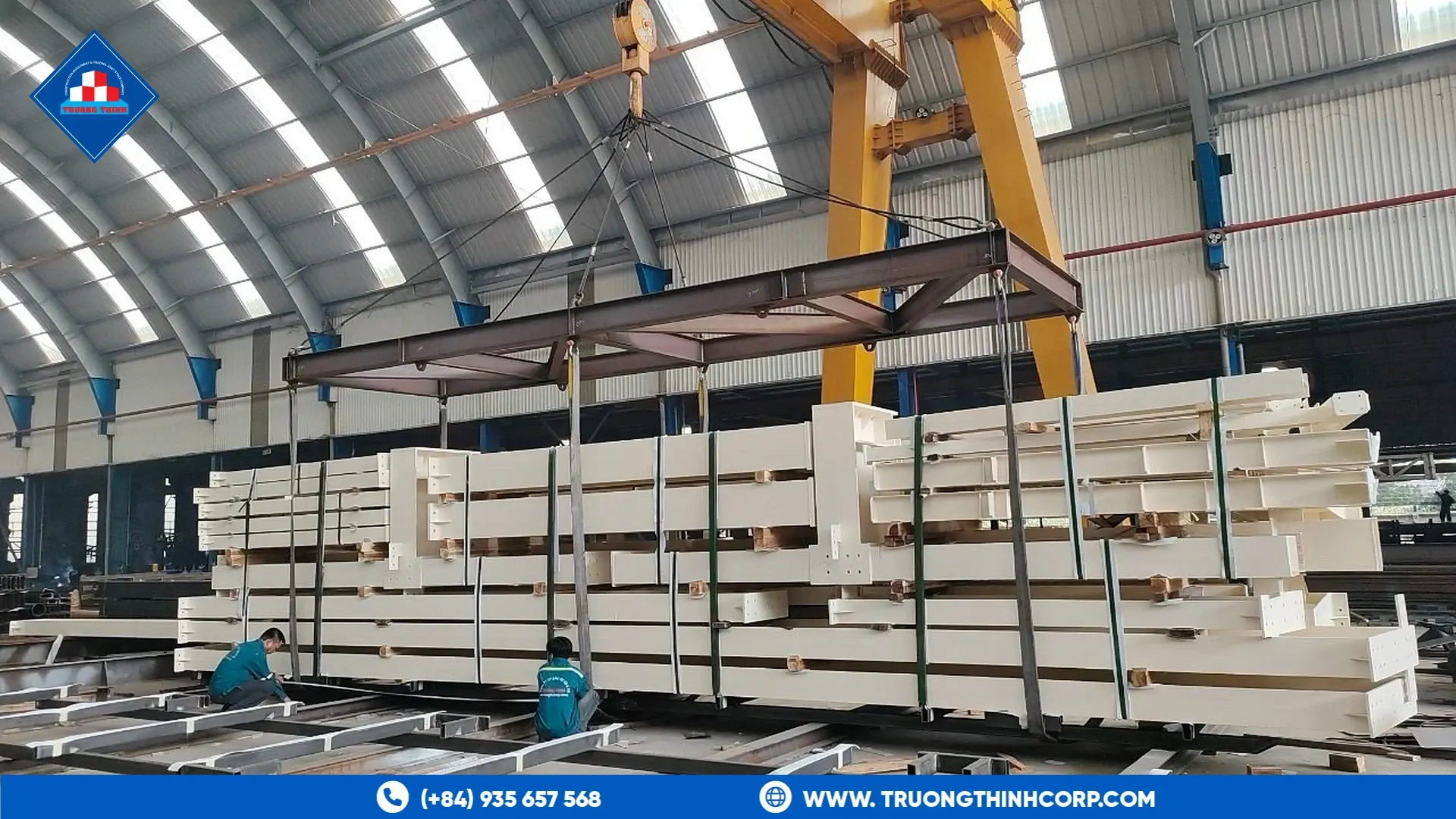
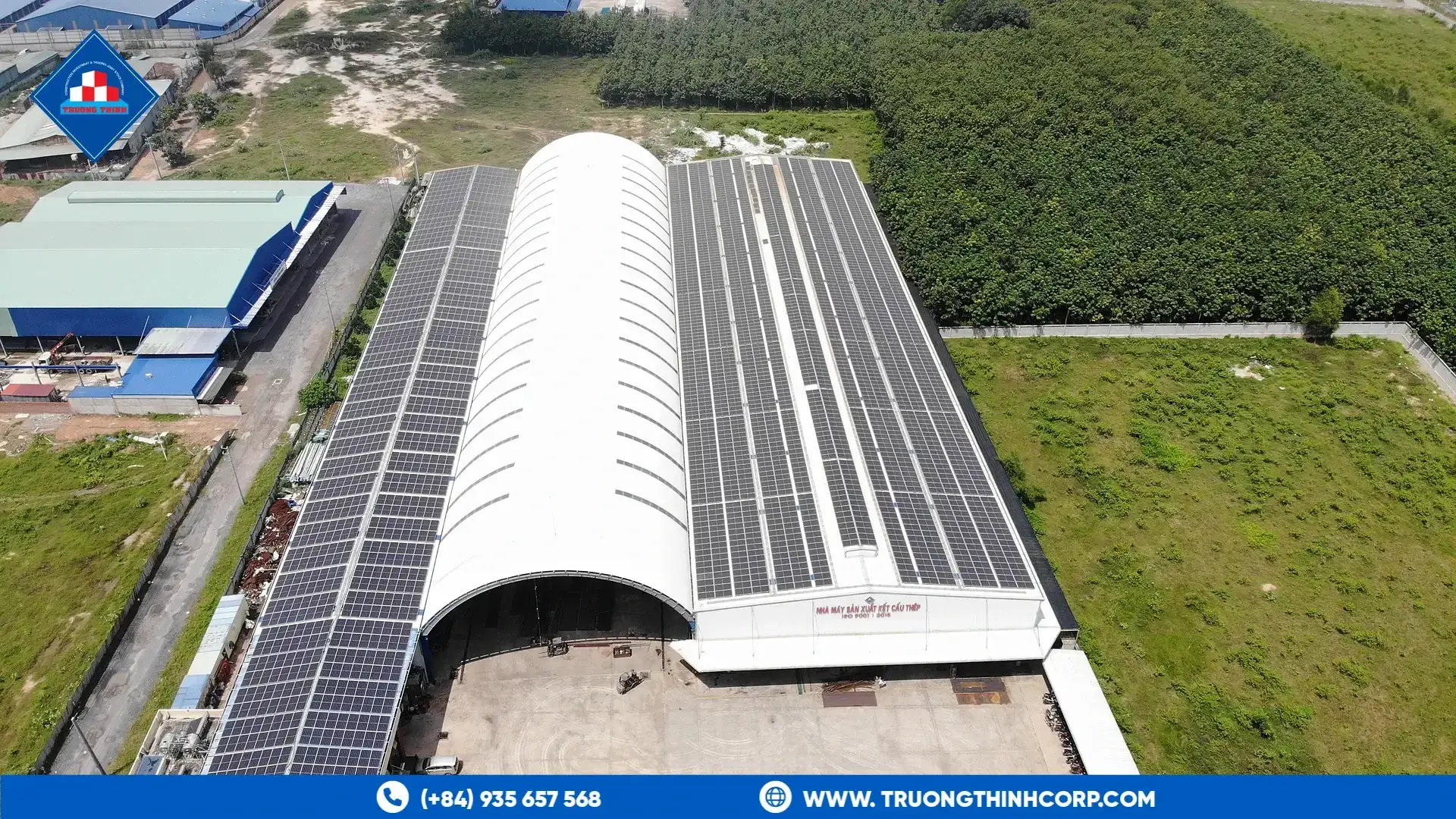
Truong Thinh’s facility spans 25,000 m², with 15,000 m² of production workshops and 10,000 m² of yards/offices, and its published capacity is 1,200–1,500 tons per month, depending on product mix. These are useful starting points for procurement discussions, but buyers should request the latest capacity allocation before placing a large order.
Capacity matters because schedule risk is often created by congestion between cutting, assembly, welding, coating, packing and dispatch. A supplier with a clear production plan can explain when the project will enter fabrication and how it will be sequenced.
Quality evidence is more important than adjectives
Terms such as “high quality”, “international standard” or “precision” have little procurement value unless they are linked to inspections and documents. Buyers should ask what material certificates, welding inspection records, dimensional checks, coating records and traceability documents will accompany the shipment.
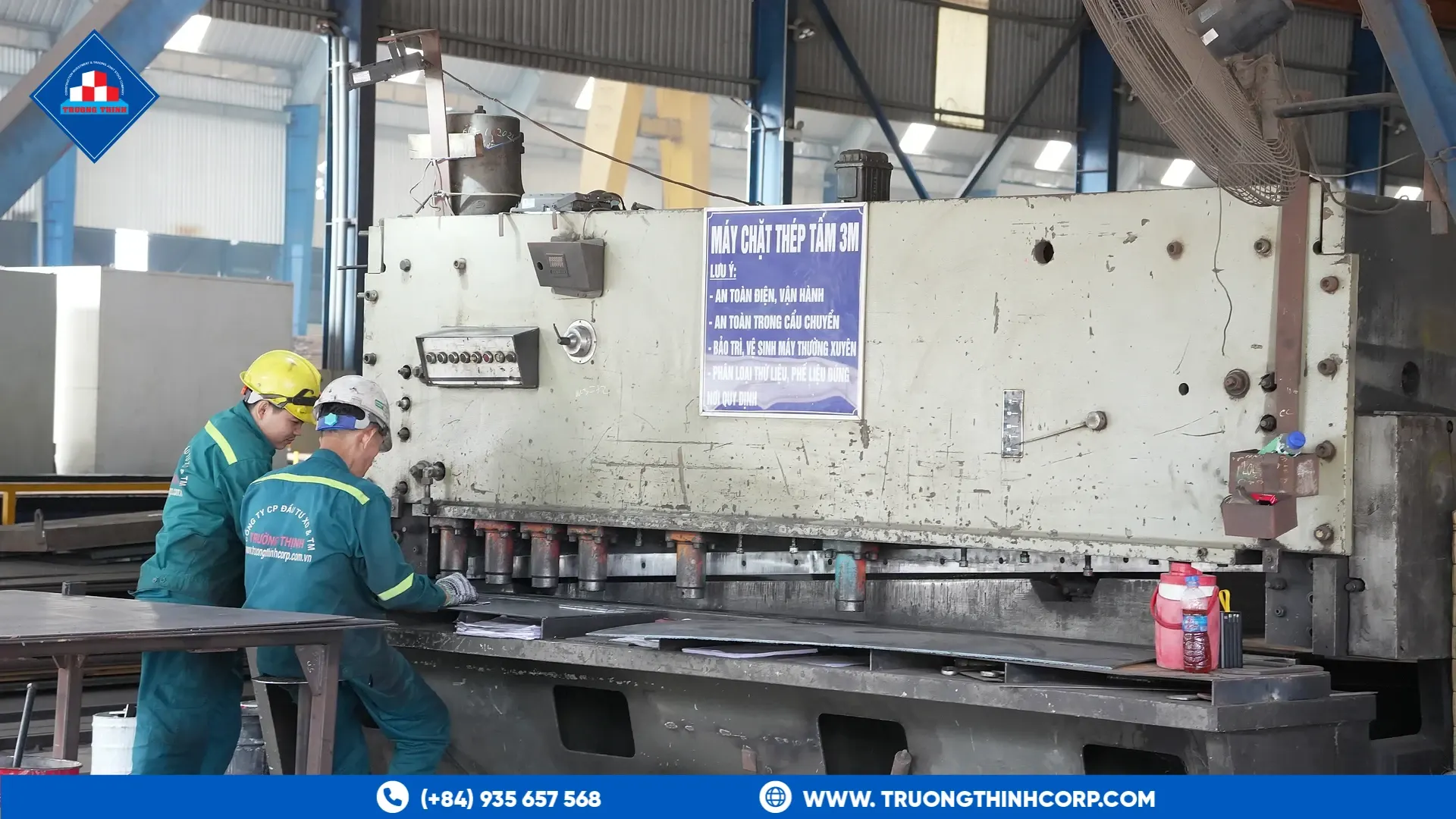
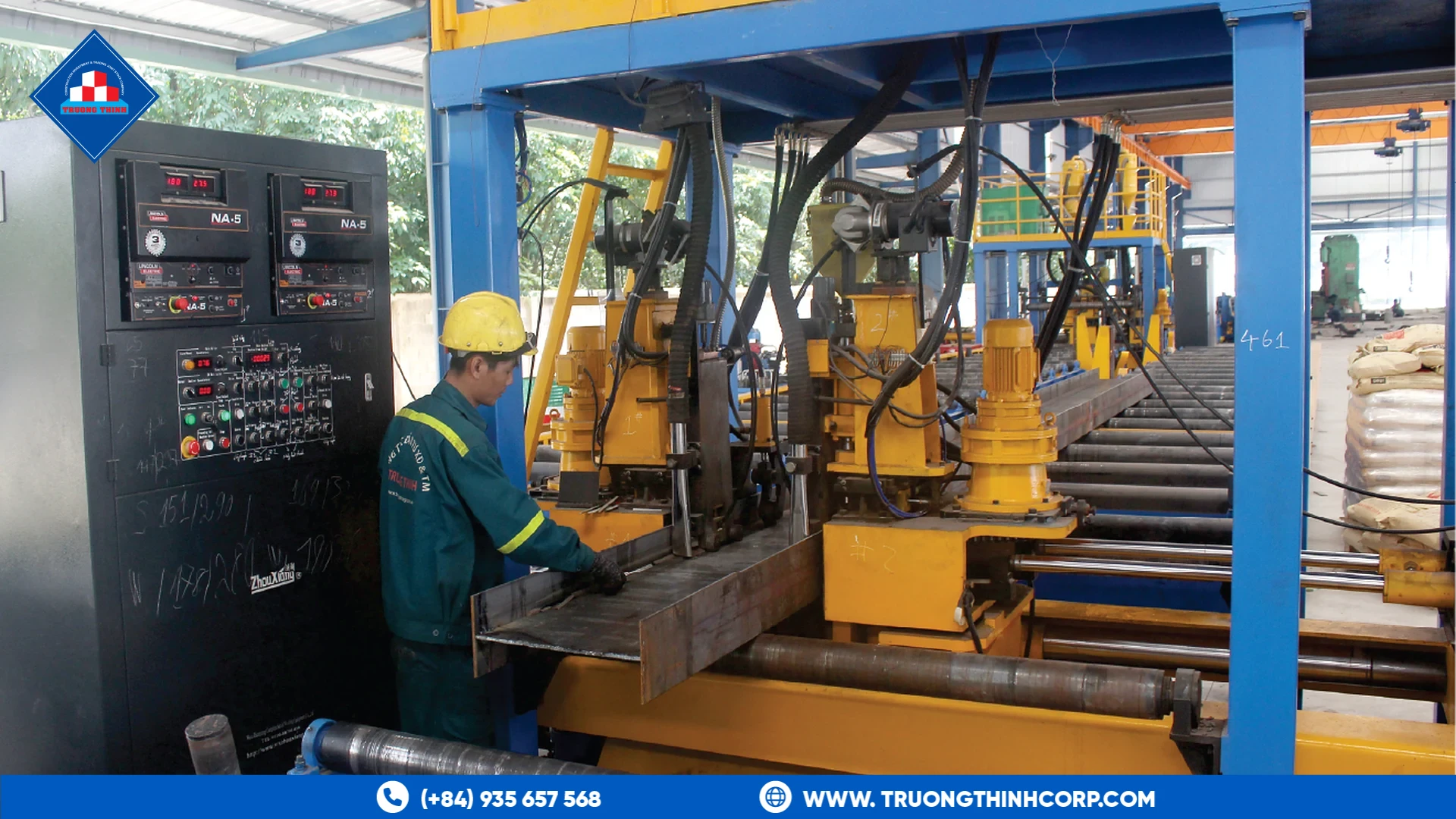
Truong Thinh’s site describes ISO 9001:2015, CNC plasma cutting, automated welding, 3D drilling and beam straightening. Treat these as the starting evidence set, then match them against the specific project specification.
Before issuing the RFQ
A good sourcing decision compares scope, documents, schedule, quality controls, logistics and commercial assumptions together. The lowest fabrication rate is not necessarily the lowest project cost when redesign, rework, missing documents or delivery changes are considered.
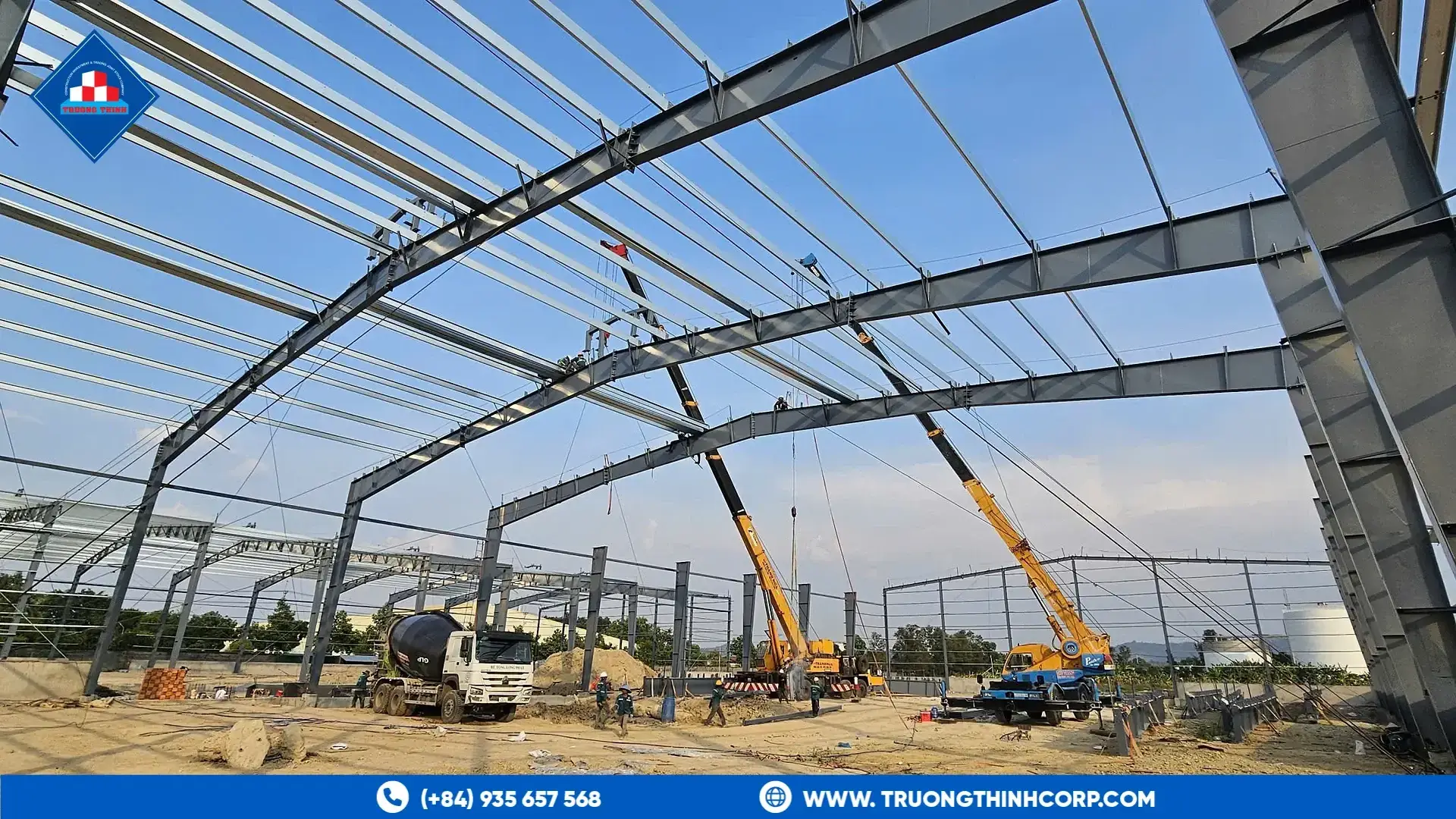
For international projects, an RFQ should also define delivery location, Incoterm where applicable, packing requirements, document language, inspection hold points and the responsibility for site erection. See our pre-engineered steel building product page for the standard scope Truong Thinh fabricates against.
Contractors sometimes use pre engineered steel buildings, pre engineered steel structure and PEB interchangeably; in practice, any credible steel structure manufacturer should be able to explain which of its documented capabilities apply to each term. Truong Thinh is one of the Vietnamese steel building manufacturers publishing its facility and process information for exactly this kind of due diligence.
Frequently Asked Questions
What should international contractors verify before selecting a PEB manufacturer in Vietnam?
Verify design-to-fabrication continuity (drawing register, approval flow, revision control), current factory capacity allocated against your schedule, and documented quality evidence (material certificates, welding inspection records, dimensional checks) rather than marketing adjectives.
Is a large factory area enough to judge a steel structure manufacturer’s capability?
No. Factory area and monthly tonnage are useful starting points, but buyers should request the current capacity allocation and production plan for their specific schedule, since congestion between cutting, welding, coating and dispatch is what actually creates delay.
What information should a PEB RFQ include for an accurate quotation?
Building use, approximate dimensions, span, bay spacing, roof/wall requirements, applicable codes, site location, target schedule, coating requirements, and the documents expected at each project stage.
Does Truong Thinh Corp handle both PEB design and fabrication in-house?
Truong Thinh states that its engineering team works in AutoCAD, Revit, SAP2000 and Tekla Structures, with a workflow that links structural design through to fabrication at its Ho Chi Minh City plant.