

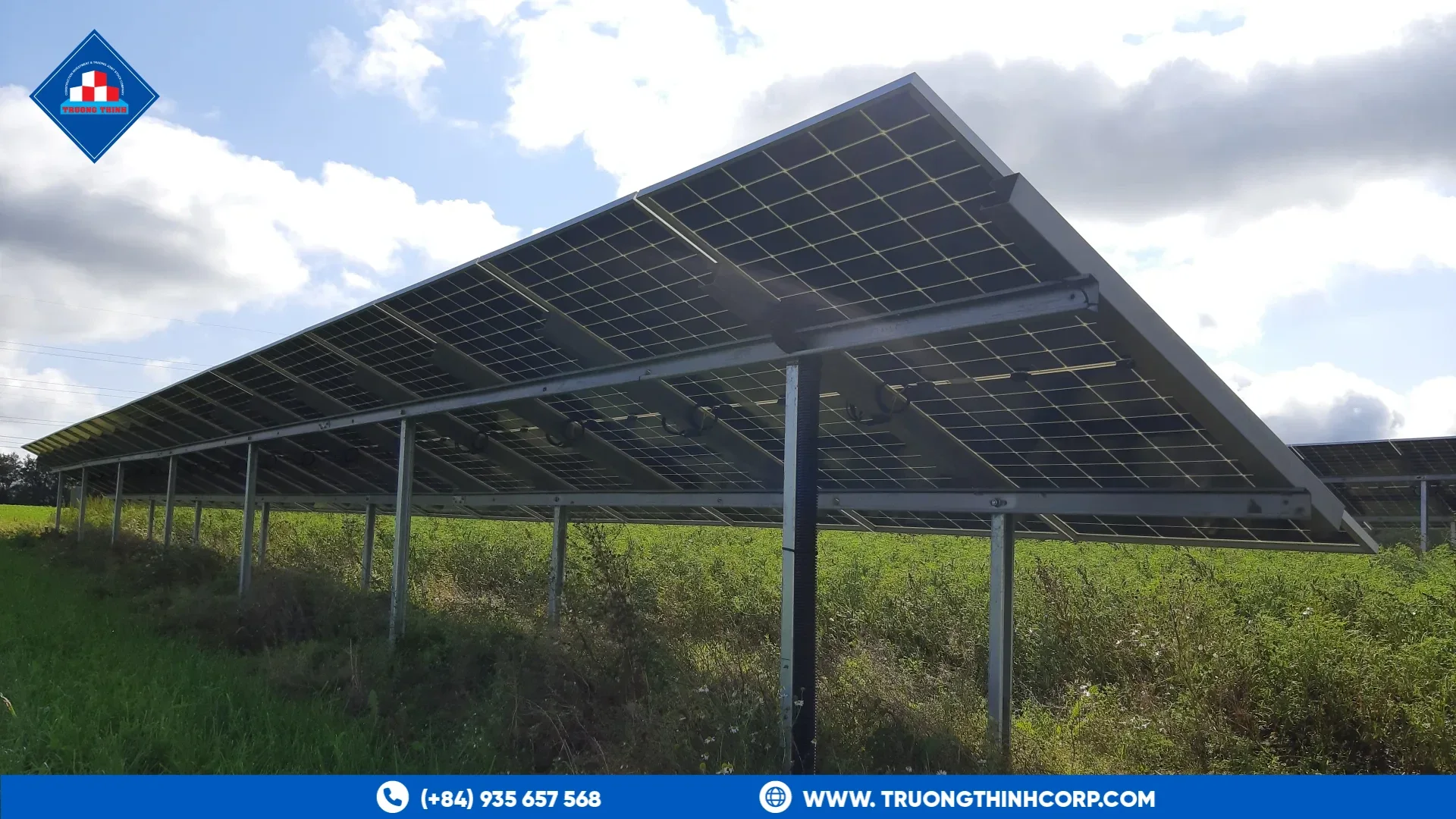
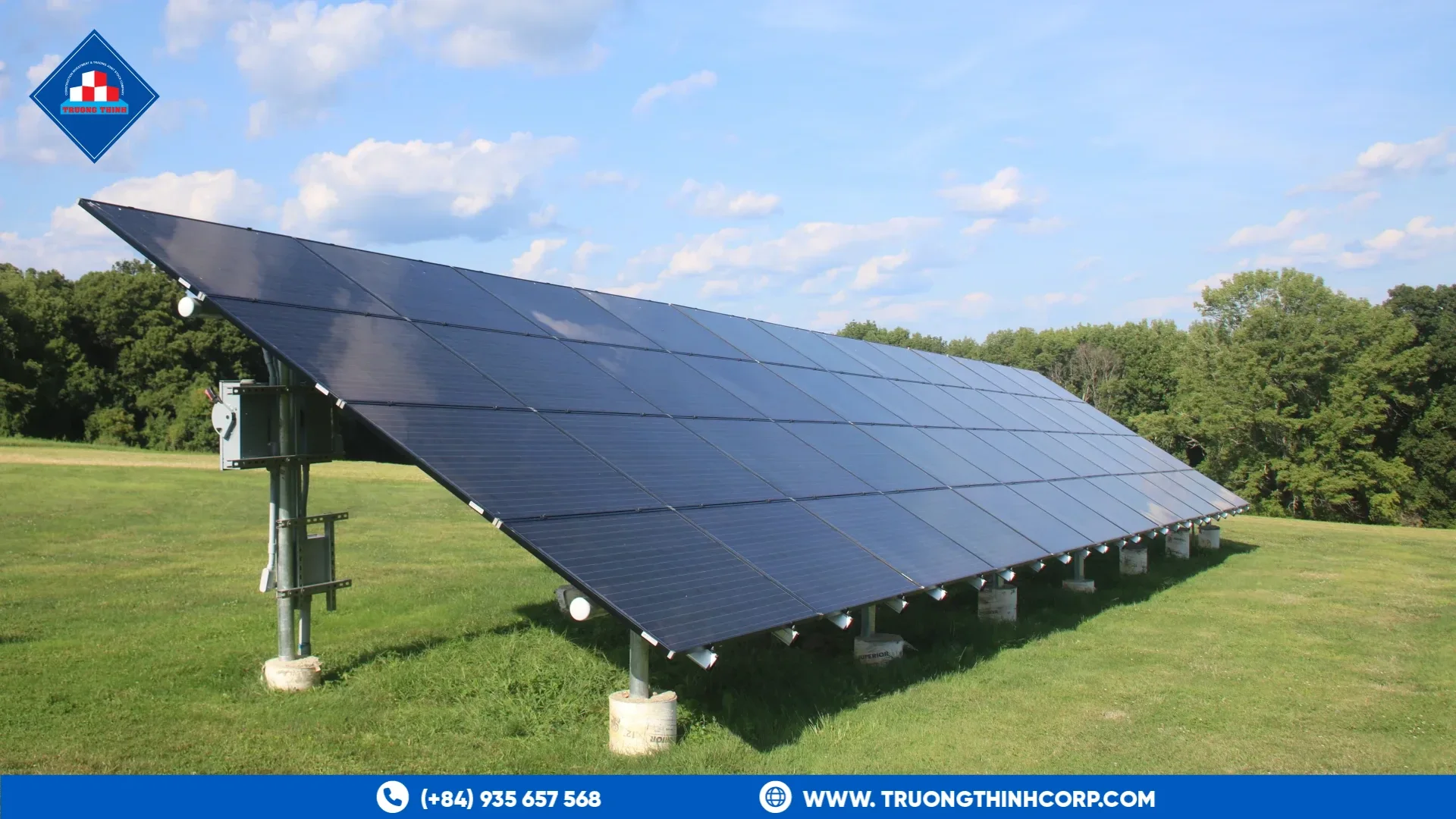
A solar farm’s mounting structure is a lighter, more repetitive relative of a purlin system: instead of supporting roof cladding, it supports panel rows across thousands of repeated connection points, and it has to hold panel alignment within a tight tolerance over a 20-plus year service life outdoors.
1. Fixed-tilt vs. tracker mounting: different structural demands
A fixed-tilt mounting structure is a static steel frame set at one angle; a single-axis tracker structure includes a rotating torque tube and drive mechanism, which adds dynamic loads (wind on a rotating panel row behaves differently than wind on a fixed one) and a fatigue consideration from repeated daily rotation that a fixed system does not have.
1.1 Wind and snow load governs the structure, not the panel weight
The panels themselves are light; wind uplift and, in some regions, snow load on the panel array typically govern the mounting structure’s design — which is why mounting structures are engineered per project site and wind zone rather than sold as one generic design for every location.
1.2 Corrosion protection for a 20-plus year outdoor service life
Solar mounting steel is almost always hot-dip galvanized, since the structure sits outdoors for decades with minimal maintenance access once installed — the galvanizing needs to be specified to the actual design life and exposure category of the site, not a generic coating thickness.
2. Fabrication tolerance and panel alignment
| Structural element | Why fabrication tolerance matters here |
|---|---|
| Driven or screw piles / foundations | Out-of-tolerance pile placement is corrected at the adjustable post connection, not by re-fabricating steel |
| Purlins/rails | Hole spacing must be consistent across a full production run so panel clamps align across every row |
| Torque tube (tracker systems) | Straightness tolerance affects bearing wear and rotation smoothness over the tracker’s service life |
3. Why this is a fabrication-volume business, not a one-off build
A solar farm mounting order is measured in tonnage across thousands of repeated small components rather than a handful of large members — closer in fabrication character to purlin and girt production than to a building frame.
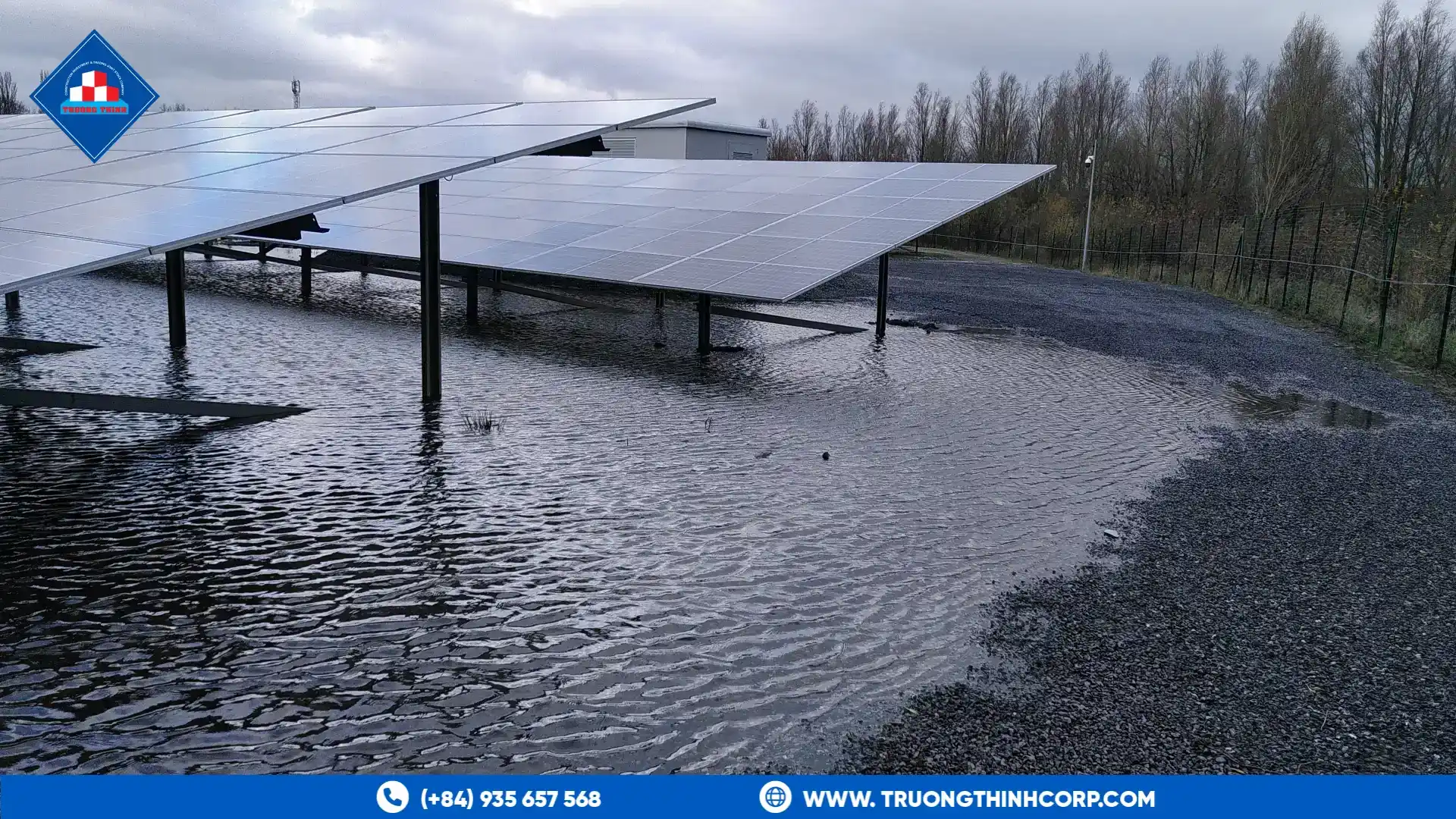
Truong Thinh Corp’s CNC cutting and galvanized-coil supply chain, already set up for high-volume purlin and girt production, applies directly to solar mounting component runs, where consistent hole spacing and coating quality across thousands of identical pieces matters more than any single component’s complexity.
Frequently Asked Questions
What is the main structural difference between fixed-tilt and tracker solar mounting?
A tracker system adds a rotating torque tube and drive mechanism, which introduces dynamic wind loading on a rotating panel row and a fatigue consideration from repeated daily rotation that a static fixed-tilt frame does not have.
What actually governs the design load on a solar mounting structure?
Wind uplift, and in some regions snow load on the panel array, typically govern the structure’s design rather than the weight of the panels themselves, which is why mounting structures are engineered per project site and wind zone.
Why is fabrication tolerance especially important for solar mounting steel?
Hole spacing on purlins and rails has to stay consistent across the full production run so panel clamps align across every row, and torque tube straightness affects bearing wear over the tracker’s service life.
Free quotation · Reply within 24 hours
Request a quotation for steel structure solar farm
Planning a livestock barn, poultry house, cold storage or greenhouse? Tell us the building size and load requirements and we will reply with a tailored proposal, usually within 24 hours.
Need an answer faster? Call our engineers directly.
Mon–Fri 8:00–17:30 · Sat 8:00–12:00 (GMT+7)