

A tighter EU import quota mostly affects steel producers selling directly into Europe — but it has a second-order effect worth watching from Vietnam: when the EU restricts low-cost imports from major exporters like China, that displaced supply often gets redirected toward other markets, including Southeast Asia, which can shift raw material pricing for regional fabricators. Truong Thinh Corp tracks these trade policy shifts less for direct compliance and more because they move the input-cost baseline for every steel structure we quote.
The European Commission (EC) has unveiled a bold trade proposal to cut duty-free steel import quotas into the European Union by nearly 50% compared to 2024 levels, while doubling the out-of-quota import tariff to 50%. The move aims to safeguard the viability of domestic steel production, as EU steel mills are currently operating at only 67% of their total production capacity.
According to Reuters, the EC expects this new measure to raise capacity utilization in the EU steel industry to around 80%, which is considered a sustainable and economically viable level for producers.
Currently, EU steel imports are regulated under a safeguard mechanism that caps imports of 26 product categories, applying a 25% tariff on volumes exceeding those quotas. However, import levels have continued to rise annually despite weakening demand across the bloc. Under World Trade Organization (WTO) rules, these safeguard measures are due to expire by mid-2026, prompting the Commission to propose an alternative solution.
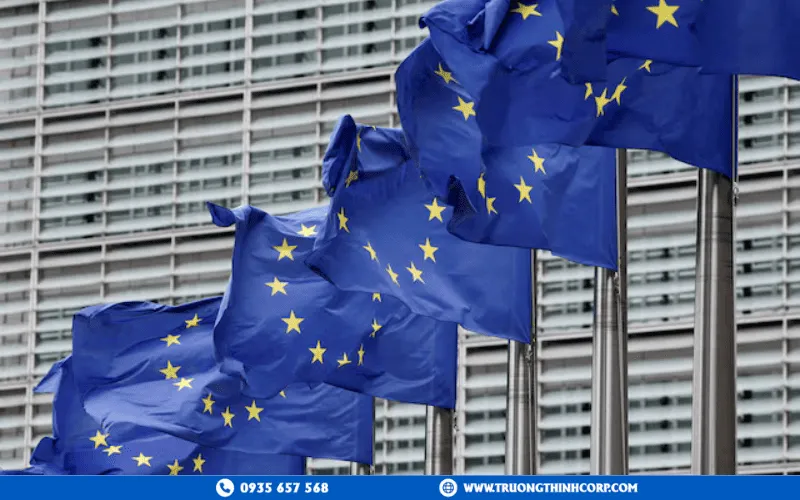
The latest proposal sets a duty-free import quota of 18.3 million metric tons per year, representing a 47% reduction from 2024, and raises the out-of-quota duty rate to 50%—aligning with tariff levels imposed by Canada and the United States, though U.S. tariffs apply from the very first ton imported.
The Commission stated that the new quota volume corresponds to 2013 import levels, marking the onset of global overcapacity issues in the steel sector. Importers will also be required to provide proof of origin for all steel products entering the EU market.
The proposal has been welcomed by European steelmakers, who have long called for stronger protection against low-cost imports, while the United Kingdom has voiced concerns that the move could disrupt cross-border supply chains and escalate trade tensions.
Industry experts view this policy shift as a clear signal of the EU’s determination to fortify its domestic steelmaking base amid intensifying global trade competition. It also reflects the bloc’s broader effort to reshape industrial supply chains and ensure strategic autonomy in heavy manufacturing.
The second-order effect worth watching from Vietnam
The direct impact of this proposal is on producers selling into the EU — a market Truong Thinh Corp doesn’t export raw steel into directly. What matters more from a Southeast Asian fabricator’s perspective is where the displaced volume goes: when the EU tightens duty-free quotas on major exporters, that supply doesn’t disappear, it gets redirected toward markets with fewer restrictions, which historically has meant increased competitive pressure on steel pricing across Asia. Whether that pressure shows up as lower input costs for Vietnamese fabricators or as tighter margins for regional steel producers depends on how the EU’s safeguard measure is finally implemented after the WTO deadline referenced above — worth tracking rather than assuming either direction.
(Source: Reuters – Author: Philip Blenkinsop, October 7, 2025)
Truong Thinh Corp is a leading Vietnam manufacturer of pre-engineered steel structures for factories, warehouses and industrial projects worldwide. Explore our steel structure services or request a free quotation.